
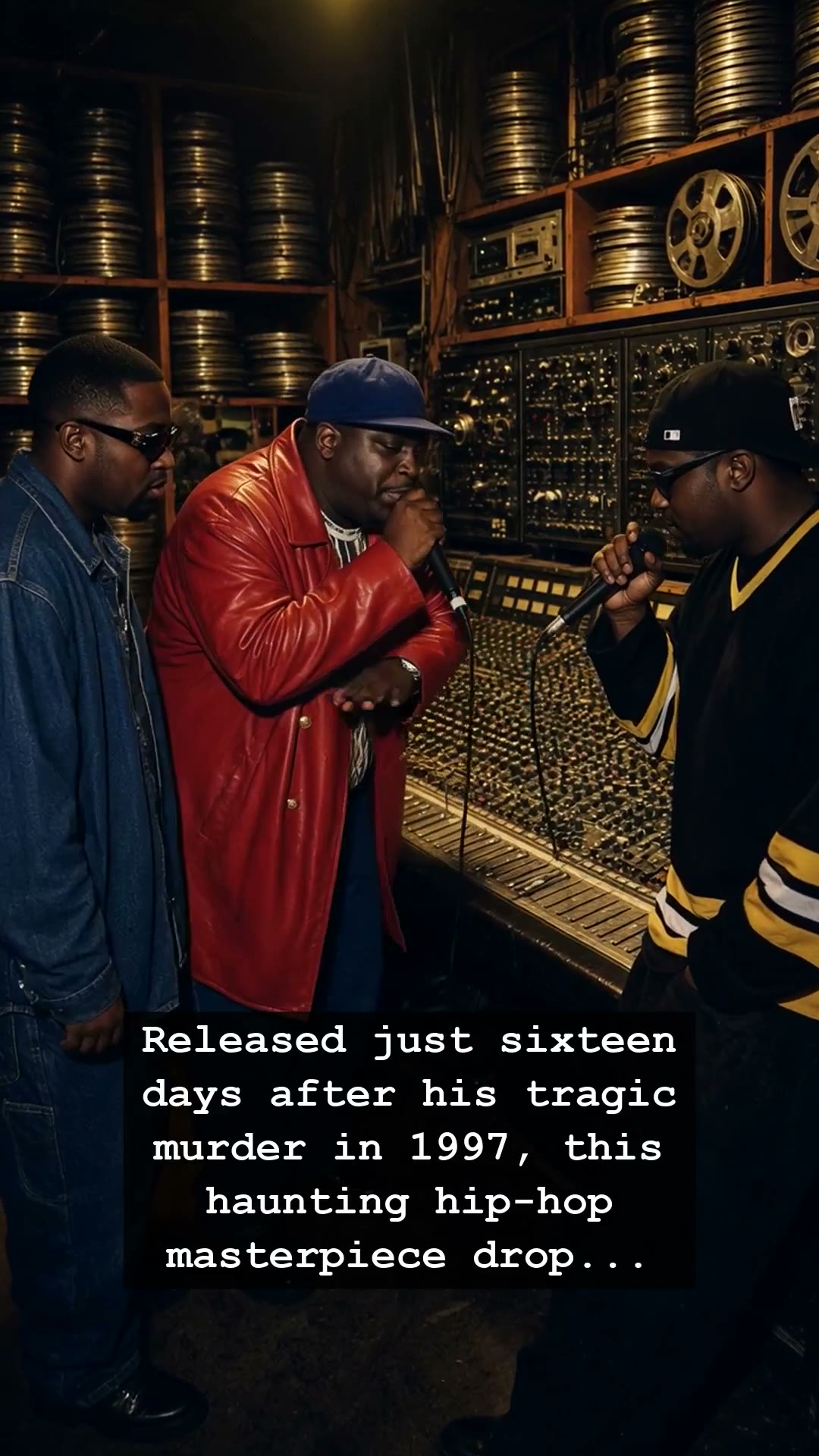
It is perhaps the most chilling coincidence in music history. On March 25, 1997, just sixteen days after the world was shaken by the news that The Notorious B.I.G. had been gunned down in a drive-by shooting in Los Angeles, the speakers of the world began to pulse with his posthumous double album. Life After Death did not just arrive as a collection of songs; it arrived as a ghost story, a haunting final broadcast from a voice that had been silenced in the middle of a deadly coast-to-coast war. The timing was too perfect, too painful, and entirely unforgettable for those who lived through the golden era of nineties hip-hop.
To understand the gravity of that release, one must transport themselves back to a time when the tension between the East and West Coast scenes was not merely a lyrical feud, but a terrifying reality. The airwaves were crackling with paranoia, and the industry felt like a powder keg waiting for a spark. The Notorious B.I.G., born Christopher Wallace, stood at the center of this hurricane. He was a master storyteller from Brooklyn, a man whose lyrical dexterity and heavy, effortless flow made him the undisputed King of New York. Yet, beneath the glamour and the meteoric rise, there was a mounting dread, a sense that the fame he had chased so aggressively was beginning to exact a lethal price.
When the first notes of the album began to play, listeners were struck by the eerie prescience of the tracks. The Notorious B.I.G. had titled his sophomore effort with a title that now felt like a cruel, pre-determined prophecy. The album captured the essence of a man caught between his humble beginnings and the high-stakes lifestyle that had become his cage. Through the crackle of the production and the heavy basslines that defined the era of the Walkman and the MTV music video revolution, Wallace’s voice felt vividly, painfully alive. It was as if he were addressing his own demise from beyond the veil, cementing his status as a martyr of the culture.
Every track on the double album served as a reminder of the artistic brilliance lost to senseless violence. The production shifted from polished, radio-ready anthems to dark, introspective narratives that probed the psychological toll of superstardom. The Notorious B.I.G. was a poet of the streets, capable of turning gritty, cinematic observations into pop-culture phenomena. His ability to humanize the gangster persona made him an icon for a generation, but it also painted a target on his back that he could never truly escape.
Even today, decades later, the shadow of that tragedy hangs over the music. The Notorious B.I.G. remains a titan of the genre, a storyteller whose voice still defines the sound of nineties nostalgia. Listening to that final album is more than a trip down memory lane; it is an act of remembrance for a talent taken far too soon. As the final notes fade away, we are reminded that some legacies are written in stone, long after the music has stopped playing.