
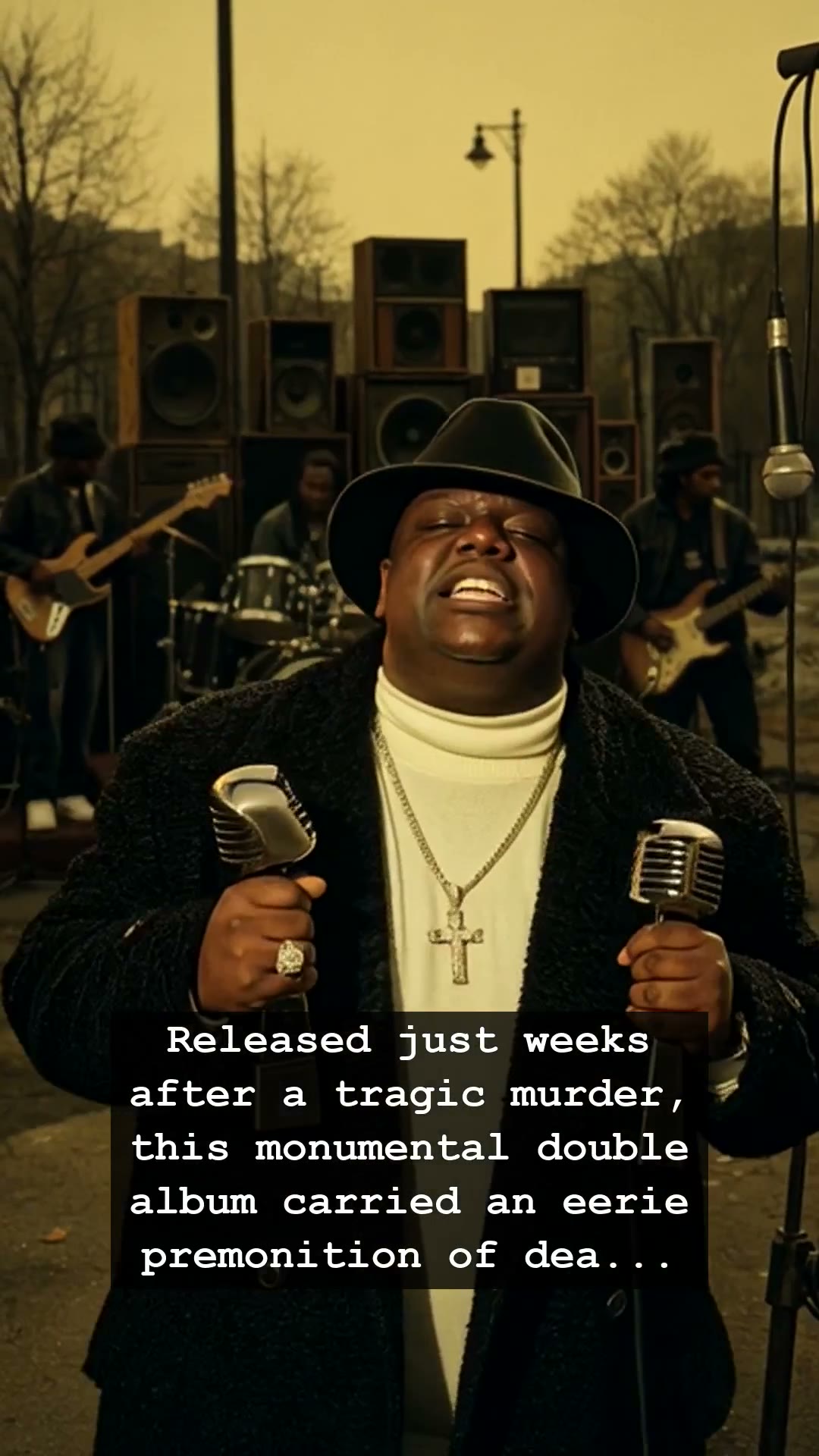
It was March 1997, and the world of hip-hop was reeling in the shadow of an unthinkable tragedy. Just sixteen days after the bullets tore through his SUV on a lonely Los Angeles street, Christopher Wallace, known to the world as The Notorious B.I.G., saw his magnum opus Life After Death hit the shelves. It was a moment of profound, chilling dissonance. While fans stood in record store lines clutching their Walkmans, waiting for the latest sounds from the East Coast legend, the industry was suffocating under the weight of his sudden, violent absence. The album arrived like a ghost, a double-disc masterpiece that felt less like a collection of songs and more like a final, haunting broadcast from the beyond.
There is an undeniable, spine-tingling quality to listening to this record today. Even decades later, the tracks feel laden with a strange, prophetic gravity. The Notorious B.I.G. possessed a lyrical precision that could paint a gritty street scene with the elegance of a classic novelist, but on this album, his usual flair for storytelling took a dark, introspective turn. Songs like Suicidal Thoughts, which had teased the reaper on his debut, now seemed to shadow every bar he rapped on this sophomore effort. As the bass lines thumped through speakers in clubs and bedrooms across America, listeners were struck by the realization that they were hearing the final musings of a man who seemed to know his time was running thin.
The East Coast versus West Coast rivalry had reached a fever pitch by the mid-nineties, fueled by media sensationalism and deep-seated industry tensions. Amidst this backdrop, The Notorious B.I.G. stood as the undisputed king of Brooklyn, a man whose rhymes dictated the cultural pulse of the era. Yet, the luxury of the Bad Boy Records lifestyle—the expensive suits, the fame, and the relentless pressure of stardom—masked a reality that was increasingly fractured. The tragedy that took his life in Los Angeles remains one of the most polarizing moments in music history, a grim reminder of how quickly the glamour of the studio can be eclipsed by the harsh realities of the streets.
What makes the album resonate so deeply even now is its sonic ambition. It was an arena-sized production, polished to perfection yet underscored by the raw, melancholic reality of a life cut short. When you listen to the tracks today, the ghost of The Notorious B.I.G. still commands the room, his voice a rich, baritone texture that defined a generation. It is a time capsule of the late nineties, capturing that strange transitional energy before the digital age fully took hold, when the CD era was at its peak and the myth of the rapper was being rewritten in real-time.
The Notorious B.I.G. left us with more than just hits; he left a blueprint of his own mortality. Every time the needle drops or the track begins, we are transported back to that sorrowful spring, reminded of the fragile nature of genius. He was a storyteller until his final breath, leaving behind a legacy that continues to haunt and inspire. As we look back, we realize we aren’t just listening to music—we are witnessing the echoes of a legend who told us exactly who he was, right up until the silence fell.