
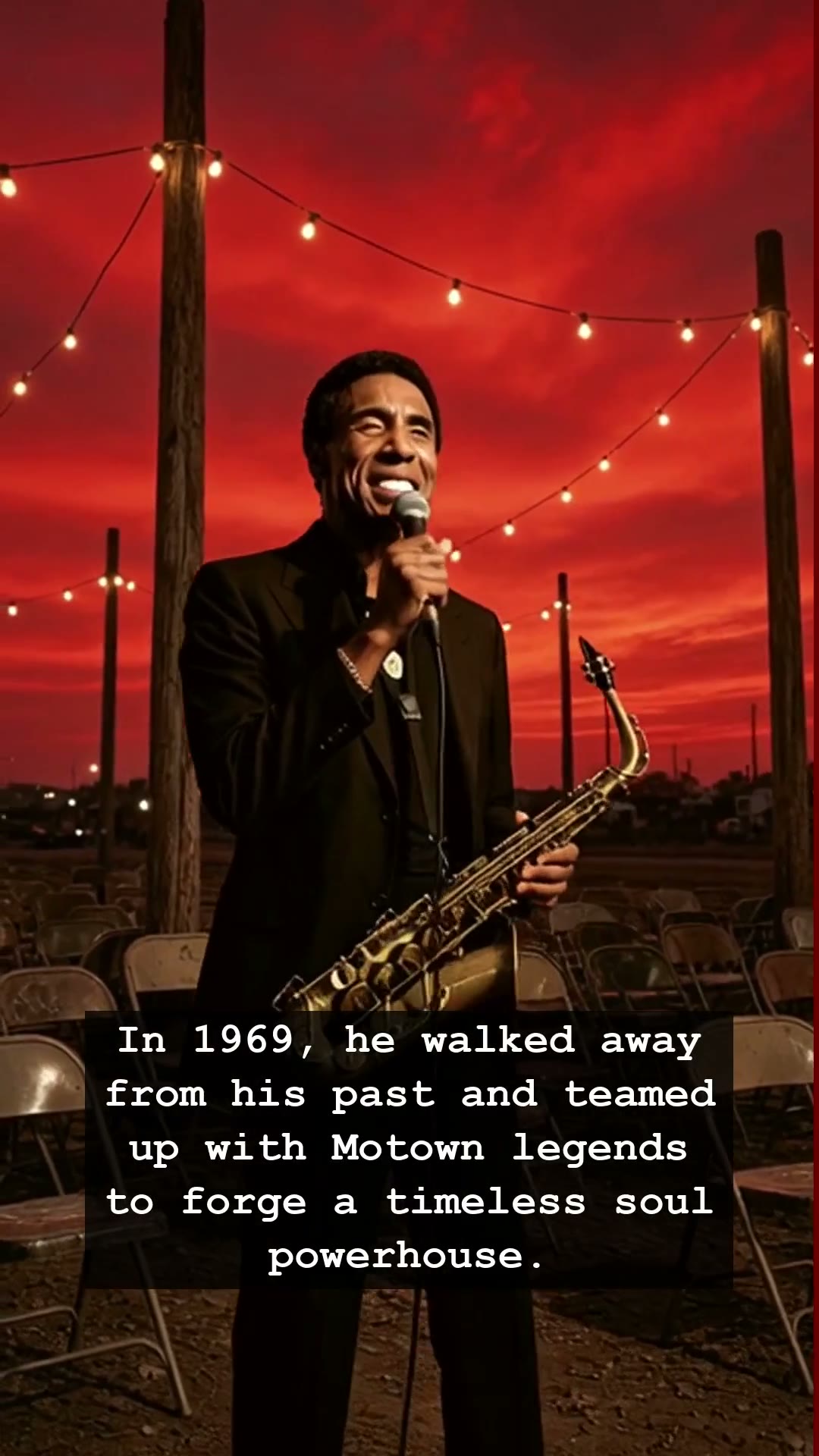
The year was 1969, a cultural tipping point where the psychedelic fog of the sixties was beginning to clear, revealing a new, sharper hunger for grit and groove. While the world watched the flickering black-and-white television screens for updates from Woodstock, a quiet but seismic shift was occurring in the studios of Detroit. General Johnson, a man whose voice carried the weight of a thousand Sundays, walked away from his past and stepped into the neon-lit, high-stakes world of Invictus Records. He was not just looking for a record deal; he was looking to forge a sound that would command the dance floors of the disco era and echo through the halls of soul history.
General Johnson was already a seasoned veteran of the music industry when he joined forces with the legendary songwriting team Holland-Dozier-Holland. Having left his previous life behind, he arrived at Invictus with a singular vision. This wasn’t merely about churning out radio hits; it was about capturing the kinetic energy of a soul powerhouse. He understood that the heartbeat of 1970s R&B wasn’t found in polished perfection, but in the raw, aching emotional honesty of a singer who had lived through the chaos of the decade. His transition to this new label was the catalyst for a golden age of soul, turning the studio into a laboratory for sonic alchemy.
There was an undeniable drama to the way General Johnson operated within the Motown-adjacent machine. He navigated the cutthroat industry with the grace of a street-smart diplomat. At a time when the Jukebox was the ultimate arbiter of cool, he ensured his tracks were the ones demanding every spare nickel in the room. He knew how to craft hooks that felt like old friends, yet carried a subtle, sophisticated edge that kept the listeners coming back. His work became the soundtrack for a generation finding its identity between the end of the civil rights struggle and the onset of the synthetic glitz of the coming disco revolution.
To listen to the recordings from this era is to step into a dimly lit room where the air is heavy with cigarette smoke and the promise of a Saturday night out. You can hear the influence of the Hammond organ and the sharp, punchy horn lines that became the signature of his tenure at Invictus. General Johnson possessed the rare ability to bridge the gap between gospel-drenched sincerity and the rhythmic demands of a changing culture. He was a master of the narrative song, telling stories of heartbreak and triumph that felt intensely personal even when played to a crowded club.
Even today, the echoes of his artistic evolution resonate with anyone who appreciates the foundation of modern R&B. General Johnson proved that you could pivot, reinvent, and thrive without losing your soul in the process. As we look back at the landscape of the 1970s, it is impossible to ignore his fingerprints on the classics. He remains a testament to the fact that while trends in music may fade, the power of a genuine voice, fueled by a desire to push boundaries, will remain timeless. It is time to turn up the volume, dust off the vinyl, and rediscover the man who helped define an era.