
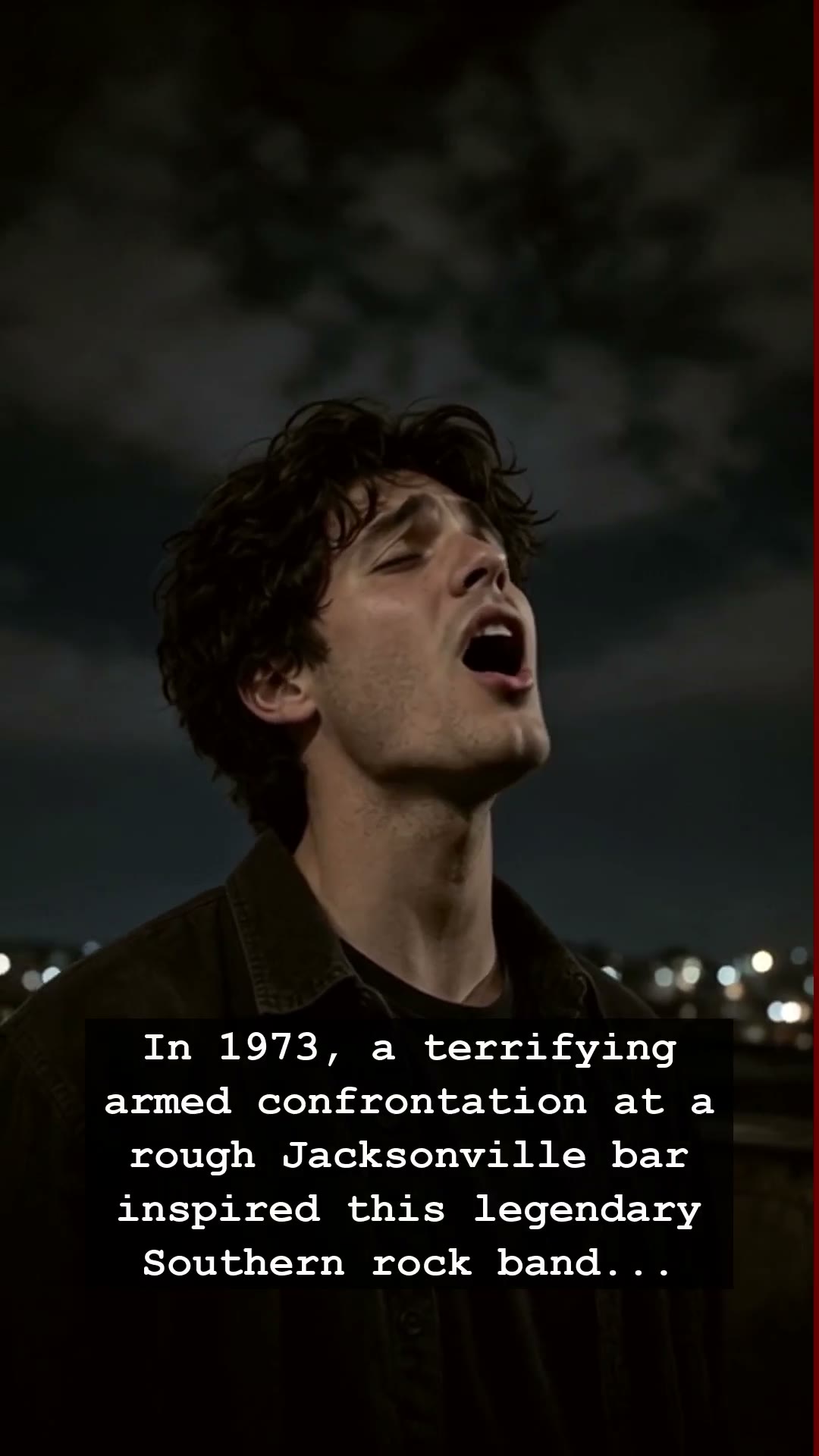
It was 1973, and the air inside a dimly lit, smoke-choked Jacksonville dive bar was thick with tension and the smell of cheap beer. For Ronnie Van Zant, the charismatic frontman of a rising band called Lynyrd Skynyrd, a simple night out turned into a brush with mortality when he found himself staring directly down the barrel of a loaded gun. The altercation was raw, unpredictable, and quintessentially Southern—a moment where the grit of real life threatened to cut a promising career short. Instead of retreating, Van Zant channeled that adrenaline, the fear, and the volatile energy of the Southern rock scene into something immortal. He took that terrifying, heart-stopping confrontation and transformed it into the backbone of one of the greatest anthems in music history: Gimme Three Steps.
To understand the gravity of that moment, you have to transport yourself back to a time when jukeboxes were the heartbeat of every roadside tavern and the Southern rock movement was just beginning to find its thunderous voice. Lynyrd Skynyrd wasn’t just a band; they were the embodiment of the working-class spirit of the American South. The 1970s landscape was a wild frontier for musicians traveling in crowded vans, playing for gas money and the hope of recognition. The band lived on the edge, fueled by a mixture of raw talent and the dangerous allure of the road. Their sound was a tapestry of bluesy guitar riffs and lyrics that spoke to the soul of the common man, capturing the essence of a generation caught between the fading haze of the sixties and the impending commercial explosion of the eighties.
When Van Zant sang about being caught with the wrong girl and a man with a gun, he wasn’t just spinning a yarn; he was narrating a reality that his audience lived every weekend. That night in the Jacksonville bar served as the ultimate catalyst, proving that the best songs are often born from genuine, bone-chilling vulnerability. While the world would eventually come to know them through the sprawling, epic solos of Free Bird, it was the narrative bite of tracks like Gimme Three Steps that cemented their status as master storytellers. The song became a staple on the radio, bridging the gap between the rough-and-tumble clubs they cut their teeth in and the massive arenas they would eventually sell out during the peak of the Arena Rock era.
Even decades later, listening to the sharp, defiant rhythm of Lynyrd Skynyrd evokes a powerful sense of nostalgia. It reminds us of a time when rock music felt dangerous, untamed, and deeply connected to the humanity of its performers. The tragedy that would later follow the band—the infamous plane crash that silenced some of the world’s most brilliant musicians—only serves to deepen the mythology surrounding these early, scrappy years. Each note of a Lynyrd Skynyrd record acts as a portal, pulling us back to that Jacksonville bar, reminding us that art is often forged in the fires of survival.
Do you remember where you were the first time you heard those opening chords? For those of us who grew up on the legends of the seventies, this music isn’t just audio; it is a piece of our identity. As we look back through the lens of history, the story of Ronnie Van Zant and his near-death experience remains a testament to the enduring power of rock and roll. It teaches us that even when life aims a gun at your head, you can choose to make music that resonates forever.