
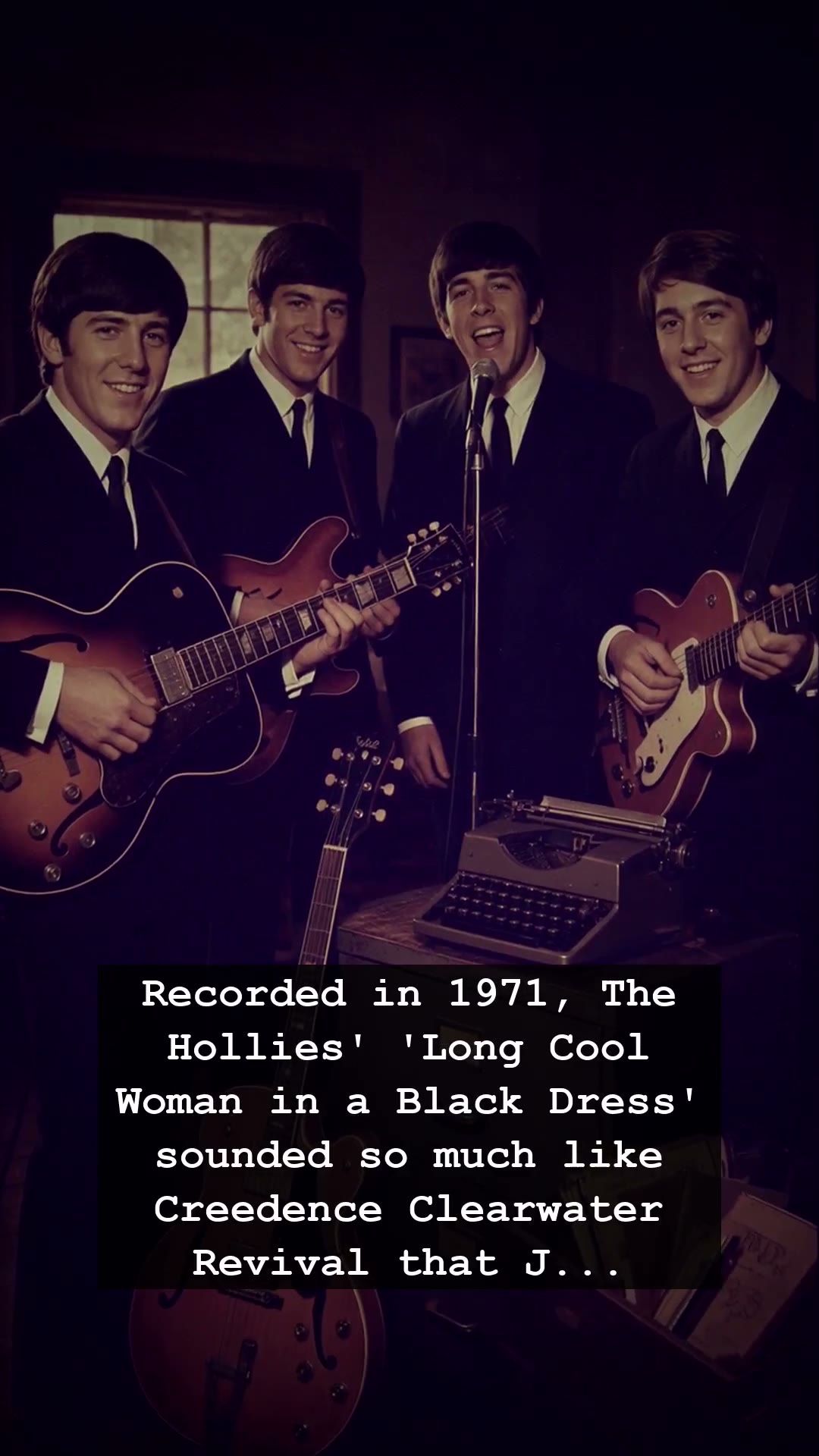
It was 1971, and the airwaves were dominated by the gritty, humid textures of swamp rock. When a new track hit the jukeboxes across America, listeners were instantly transported to the bayous of the South. The raspy vocals, the driving guitar riff, and that unmistakable, menacing groove led everyone to believe only one band could be behind it: Creedence Clearwater Revival. But as the record spun on thousands of turntables, the truth was hidden in the credits. It was not John Fogerty’s iconic band, but a group from Manchester, England, that had pulled off the ultimate musical masquerade. The Hollies, known for their polished vocal harmonies, had unexpectedly stepped into the shadows to create Long Cool Woman in a Black Dress.
For a band defined by the clean-cut sensibilities of the British Invasion, the song was a radical departure. As Allan Clarke channeled a gravelly intensity that mirrored Fogerty’s signature style, The Hollies inadvertently ignited one of the most curious feuds of the decade. The track became a massive hit, climbing the charts and vibrating through the speakers of every teenager’s Walkman-to-be across the nation. Yet, the sonic resemblance was so uncanny that it crossed the line from homage to legal battle. John Fogerty, feeling his distinct brand of swamp rock had been pilfered, did not take the imitation lightly, leading to a bitter copyright lawsuit that cast a long shadow over the song’s unexpected success.
This incident remains a fascinating study in the blurred lines of artistic influence. During an era where the sound of the radio was the primary cultural anchor, bands were constantly absorbing and reflecting the vibes of their contemporaries. The Hollies had captured lightning in a bottle, but they had captured it in a bottle that the public had already labeled with Creedence Clearwater Revival’s name. It serves as a stark reminder of the fragile nature of musical identity during the golden age of rock, where a single studio session could define an artist or spark a courtroom drama that lasted for years.
Beyond the litigation, Long Cool Woman in a Black Dress remains a masterclass in tension and atmosphere. It captures that specific, sultry malaise of the early seventies, a time when rock music was becoming darker, more rebellious, and deeply obsessed with its own cool. The success of the track proved that The Hollies were capable of far more than just gentle ballads; they could inhabit a character, embrace the grit, and deliver a performance so convincing that even the master of the genre felt compelled to challenge them. It is a moment of rock and roll history that sits at the intersection of admiration and accusation.
Even today, when that opening guitar riff kicks in, the debate often flickers back to life among vinyl enthusiasts and classic rock fans. Did The Hollies mean to deceive, or were they simply caught in the gravitational pull of a sound that defined the zeitgeist? Regardless of the legal outcome, the song stands as a testament to the power of a perfect hook and the complex, often messy relationships that defined the artists of the era. Whether you are a fan of the English harmonic tradition or the swampy depths of American rock, this story reminds us that behind every classic hit lies a human drama that refuses to fade away.