
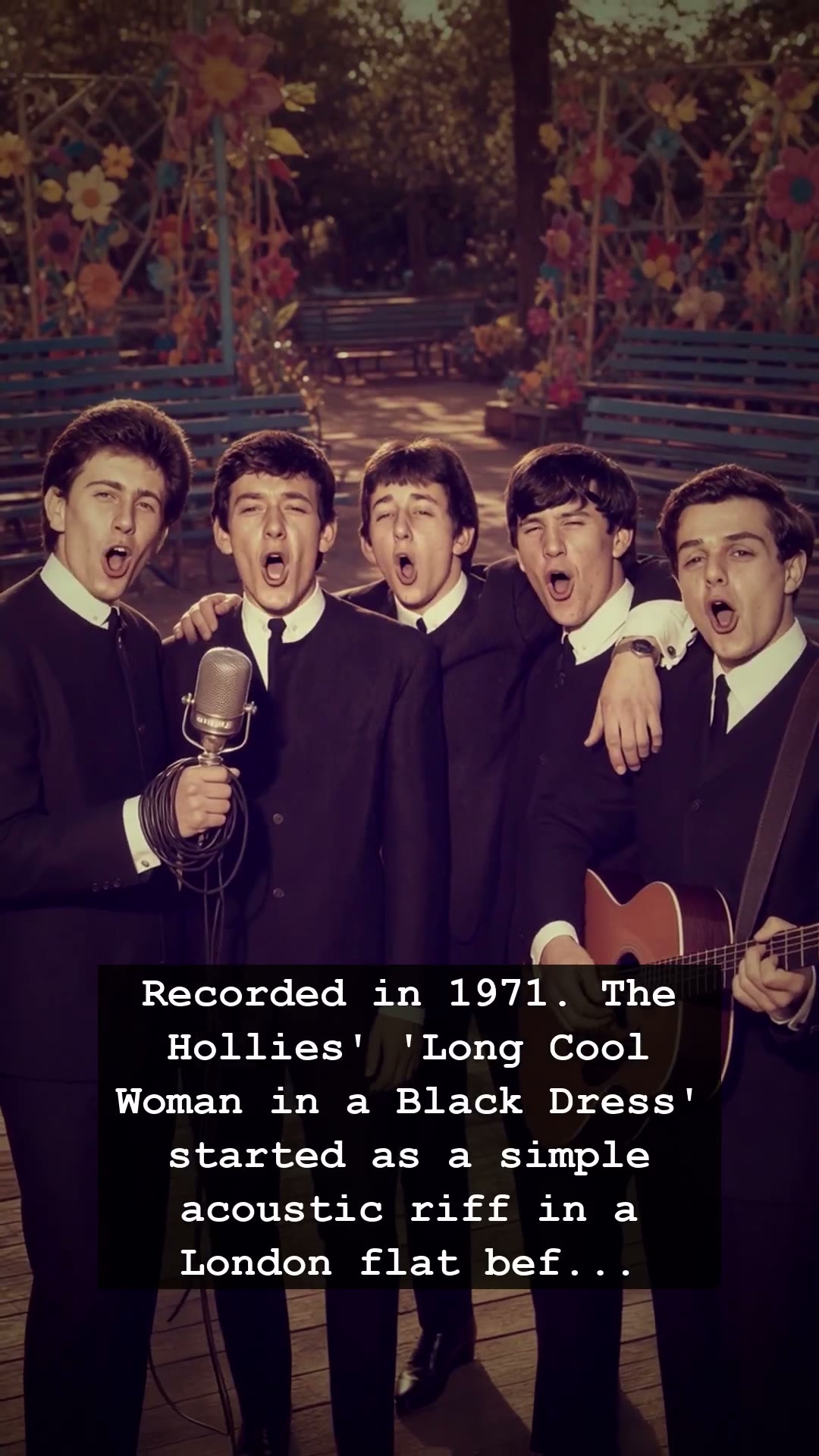
In the smoke-filled air of a 1971 London flat, a simple acoustic riff was born, unaware that it was destined to haunt the airwaves and spark one of the greatest musical misunderstandings in history. The Hollies, a band known for their polished harmonies and melodic pop sensibilities, suddenly pivoted toward a dark, swampy, and grit-filled sound that felt miles away from their British Invasion roots. The result was Long Cool Woman in a Black Dress, a track so deceptive that even the most seasoned radio DJs were convinced they were listening to the swamp-rock kings of the American South, Creedence Clearwater Revival. It was an accidental masterpiece that proved sometimes the most memorable art emerges from the most unexpected deviations from a band’s blueprint.
The tension within the band was palpable during this era. Lead singer Allan Clarke took the creative reins, channeling a raw, visceral energy that the group had previously kept under tight control. The recording process was a frantic, experimental affair, far removed from the pristine studio sessions that defined their earlier hits. As the guitars distorted and the rhythm section locked into a menacing, relentless groove, the track began to take on a life of its own. It was a departure from the sunshine-pop charm that had made The Hollies a household name, turning instead toward a mysterious, noir-drenched narrative of dangerous women and back-alley secrets. The irony, of course, was that while the world looked for John Fogerty’s trademark grit, they were actually hearing the metamorphosis of a British pop institution.
When the song hit the airwaves, the public reaction was instantaneous and electric. The sound was perfectly timed for the dawn of the seventies, a period defined by the transition from the psychedelic idealism of the late sixties to the sharper, more cynical edges of the new decade. Walkmans were still years away, but on every Jukebox in America, the song became a staple. Listeners were obsessed with the mysterious identity of the vocalist, with many refusing to believe it was Clarke behind the mic. The confusion only fueled the song’s success, transforming a spur-of-the-moment creative experiment into a global powerhouse that hit the upper echelons of the Billboard charts.
Looking back, the success of this track serves as a testament to the power of artistic reinvention. The Hollies risked their established reputation to pursue a sound that felt honest and exciting, regardless of whether it fit their previous public image. This was the era of the high-stakes music industry, where bands were often pushed into boxes by their labels, yet here was a moment of pure, unfiltered musical magic that defied categorization. The song remains a masterclass in tension and release, capturing that specific, sultry atmosphere of a dark, rain-slicked city night.
Decades later, Long Cool Woman in a Black Dress remains a staple of classic rock radio, resonating with listeners who still crave that punchy, no-nonsense rock and roll. It stands as a reminder of a time when music didn’t need to be over-produced to make an impact—just a great riff, a haunting melody, and the audacity to be something completely different. Whether you are a long-time fan of the British Invasion or someone just discovering the depth of their catalog, this track remains the ultimate proof that sometimes, the best path forward is the one you never saw coming.