
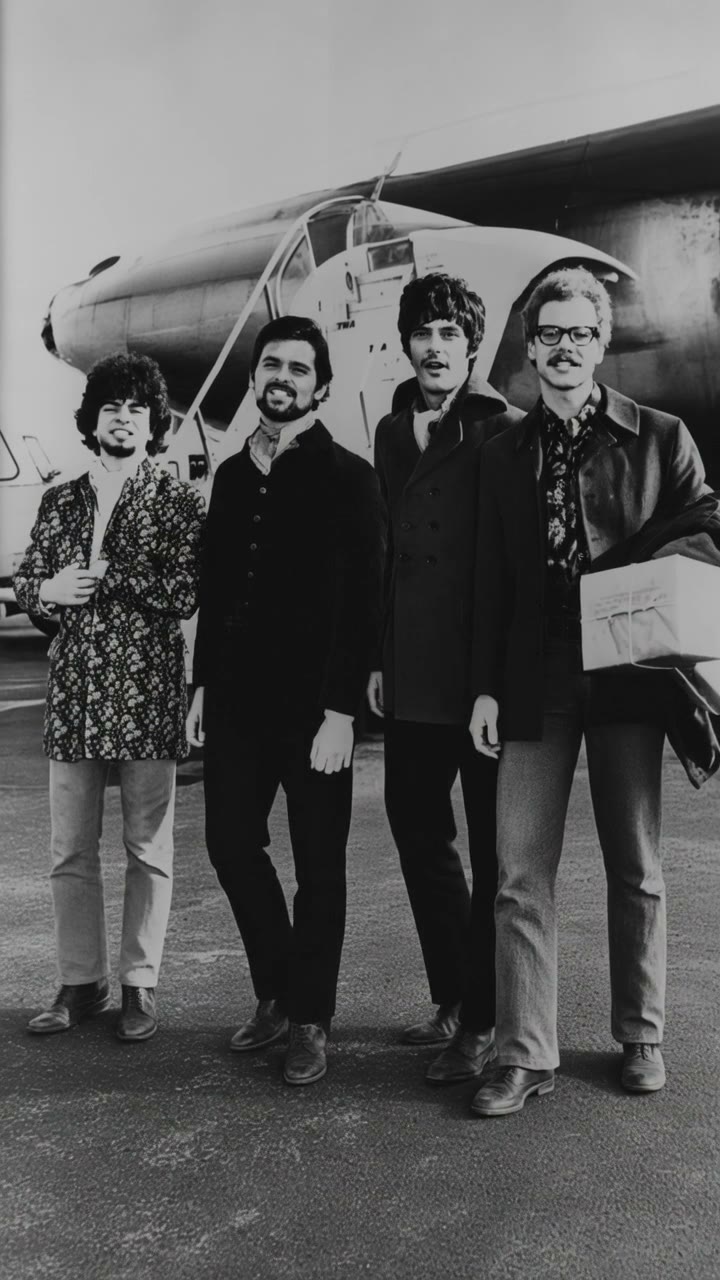
In 1967, the airwaves were humming with the tight, rhythmic perfection of Motown. It was a time when pop songs were meant to be fast, snappy, and radio-friendly. But somewhere in the dimly lit corners of a New York studio, a band named Vanilla Fudge was busy brewing a storm that would defy every rule in the industry handbook. They took a quintessential pop anthem, The Supremes’ You Keep Me Hangin’ On, and performed a sonic autopsy on it. They didn’t just cover the song; they dragged it into a psychedelic purgatory, slowing the tempo to a sludge-like crawl and drenching it in heavy, melancholic organ chords that felt like a descent into madness.
When Vanilla Fudge unleashed their version, it was more than just a musical choice—it was an act of artistic rebellion. The original writers, the legendary team of Holland-Dozier-Holland, were reportedly stunned. They had crafted a high-energy heartbreak anthem, and suddenly, this heavy rock quartet had transformed it into a dark, sprawling masterpiece that felt like it belonged in a haunted ballroom rather than a dance hall. For the band, the transformation was intuitive. They saw the underlying desperation in the lyrics and decided to give that emotion space to breathe, expand, and eventually loom over the listener like a shadow.
This was the height of the psychedelic rock era, a time when bands were experimenting with the very fabric of sound, often aided by the flickering lights of the Fillmore East and the haze of incense-filled basements. Vanilla Fudge stood out because they didn’t rely on the speed of punk or the optimism of the British Invasion. Instead, they embraced a proto-prog heaviness that paved the way for the harder sounds that would dominate the late sixties and early seventies. They turned the act of reinterpretation into a high art form, proving that a song’s soul could be completely rewritten simply by changing its weight.
Listening to the record today, you can still feel the palpable tension in every drawn-out note. It is a haunting, cinematic experience that captured the restless spirit of 1967. While the world was caught up in the Summer of Love, Vanilla Fudge provided the dark, reflective counter-narrative. It was the music of the underground—the kind of track you would find spinning on a jukebox in a forgotten dive bar, playing just as the neon lights began to buzz and flicker. It reminds us that behind every polished pop hit of the mid-century, there was a potential for a deeper, darker expression waiting to be unearthed by someone bold enough to slow the tape down.
The legacy of Vanilla Fudge remains a testament to the power of artistic subversion. They took a song the world already loved and forced the audience to look at it through a fractured, psychedelic lens. Decades later, the song still vibrates with that same unsettling, beautiful energy, serving as a reminder that the greatest music isn’t always the fastest or the brightest—sometimes, it is the music that forces you to stop, stare, and listen to the ghosts hidden between the beats.