
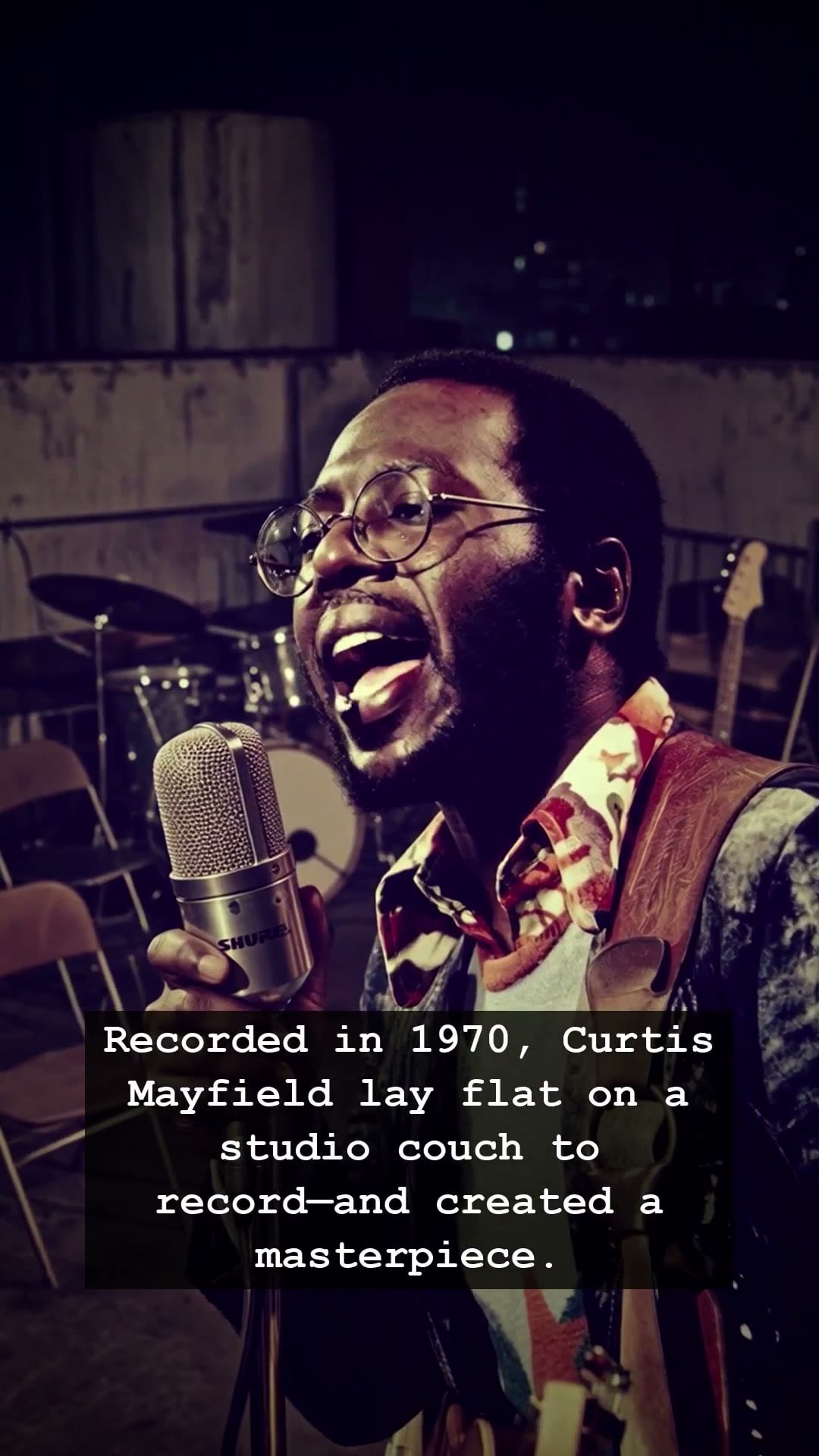
The year was 1970, and the air in the studio was thick with the scent of cigarettes and the heavy weight of a shifting cultural landscape. Outside the soundproof glass, the world was changing. The optimism of the Woodstock era had collided with the grim realities of urban unrest and political tension. Inside, Curtis Mayfield was not standing behind a microphone in the traditional sense. Instead, he was stretched out flat on a studio couch, his body weary, his mind navigating the complex vibrations of a new decade. It was a posture of exhaustion, yet from this horizontal stillness, he captured the essence of a soul in transition.
This was not just another session; it was the birth of a revolutionary sound. While the rest of the world was distracted by the neon excesses that would soon define the disco era at Studio 54, Curtis Mayfield was crafting something far more introspective and gritty. He was exhausted, yes, but that vulnerability seeped into the recording, giving his voice a haunting, breathy quality that no amount of studio engineering could replicate. It was the sound of a man confronting the American experience head-on, blending the smoothness of vintage Motown with a newfound, sharper social awareness that would define the seventies.
Why does this moment still resonate so deeply with us today? Perhaps it is because we find beauty in the fragility of our icons. We are used to seeing the polished, larger-than-life images projected by MTV or the stadium-filling pyrotechnics of glam metal, but the image of Curtis Mayfield lying on that couch represents the raw, unfiltered truth of artistic creation. It reminds us that behind every masterpiece, there is a human being grappling with the pressures of fame, the weight of expectations, and the simple, physical toll of working under the spotlight. His music became the soundtrack for those who walked the city streets, offering a message of hope and defiance that refused to be silenced.
Curtis Mayfield did more than just record an album; he etched his perspective into the marrow of American music. As he lay there, channeling the bluesy undercurrents of his Chicago roots, he was unknowingly setting a blueprint for generations of soul, R&B, and hip-hop artists to come. He taught us that you do not need to shout to be heard, and you do not need to be standing to make a firm statement. The gravity of his performance during those sessions proved that the most powerful music often emerges when the artist is at their most vulnerable, stripped of the glamour and pretense that usually surrounds the business of sound.
Looking back, it is easy to romanticize that golden era, but the reality was often as complicated as the chords Mayfield plucked. Today, when we pull out a vinyl record or put on our headphones to hear his work, we aren’t just listening to a song. We are revisiting a profound, private moment of historical transformation. As the needle drops and the familiar, warm tones fill the room, let yourself be transported back to that studio, and feel the weightless, timeless genius of Curtis Mayfield echoing through the decades.