
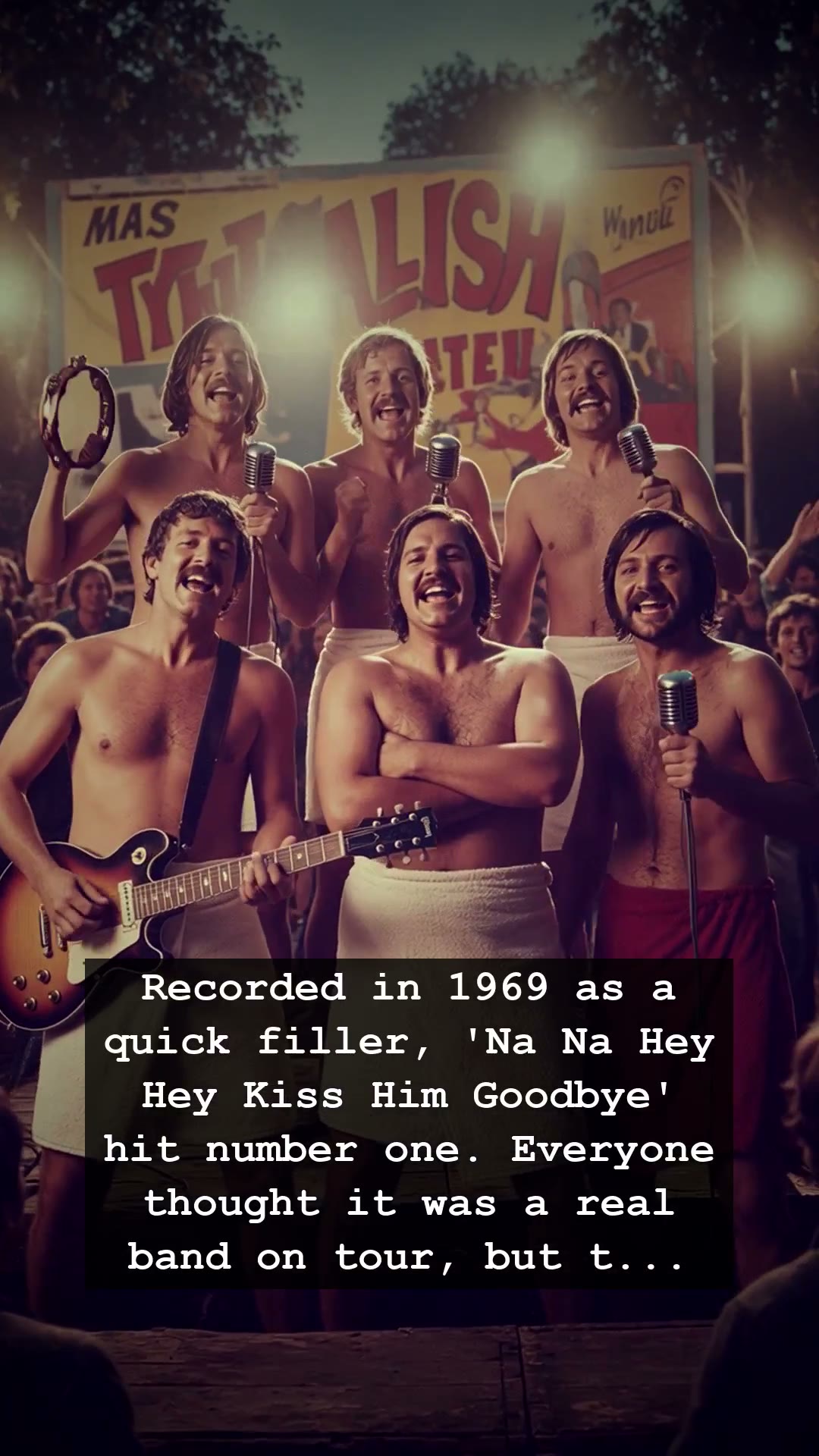
In the golden era of 1969, before the digital age stripped music of its mysteries, a mysterious anthem echoed from jukeboxes across America. The song was Na Na Hey Hey Kiss Him Goodbye, a catchy, sing-along tune that seemed to be the work of a seasoned rock outfit. It climbed the Billboard charts with a relentless momentum that shocked the music industry. Everyone assumed there was a band behind the sound—a group of guys touring the country in a beat-up van, ready to hit the stage at every major venue. But the reality was a deception so slick it makes modern industry scandals look amateur.
The truth was that Steam was never a real band in the traditional sense. The song started as a mere throwaway B-side, recorded in a rush just to fill space on a single. When the song unexpectedly started selling millions of records, the opportunistic producers were faced with a dilemma: how do you tour a hit record when the artist doesn’t officially exist? Instead of finding the original singer and giving him his due, the label manufactured an entirely fake version of Steam. They hired actors and musicians to masquerade as the band, shipping them out on tours to satisfy a public hungry for live performances of a song that had been recorded in the sterile quiet of a studio by studio musicians.
It is a classic tale of the dark side of the 1960s music machine, a period where the obsession with profit often trampled over artistic integrity. While the fake band performed in front of screaming crowds, the actual voice behind the massive hit, Gary DeCarlo, was left in the shadows. He watched from the sidelines as his song became a cultural phenomenon, a stadium staple that would eventually be chanted at every major sporting event in the country. The disconnect between the genuine passion of the recording and the cold, calculated manipulation of the producers highlights the harsh reality of fame during that transformative decade.
Even today, the legacy of Na Na Hey Hey Kiss Him Goodbye remains undeniable. It captures a specific, unfiltered energy of 1969—a time when radio was king and a simple, repetitive melody could unify a generation. The story of Steam reminds us that the music we hold dear often carries a hidden history, layered with drama and betrayal. It serves as a haunting reminder of the era when the music industry was a wild west, where identity could be bought, sold, and completely fabricated for the sake of the next chart-topping hit.
Looking back, the tale of Steam is more than just a footnote in rock history; it is a vivid cinematic memory of the price of success. As you listen to those iconic opening notes today, think of the faces that never got to be on the album cover. Sometimes, the most legendary songs come from the most hollow beginnings, leaving us to wonder how many other legends are merely beautiful illusions.