
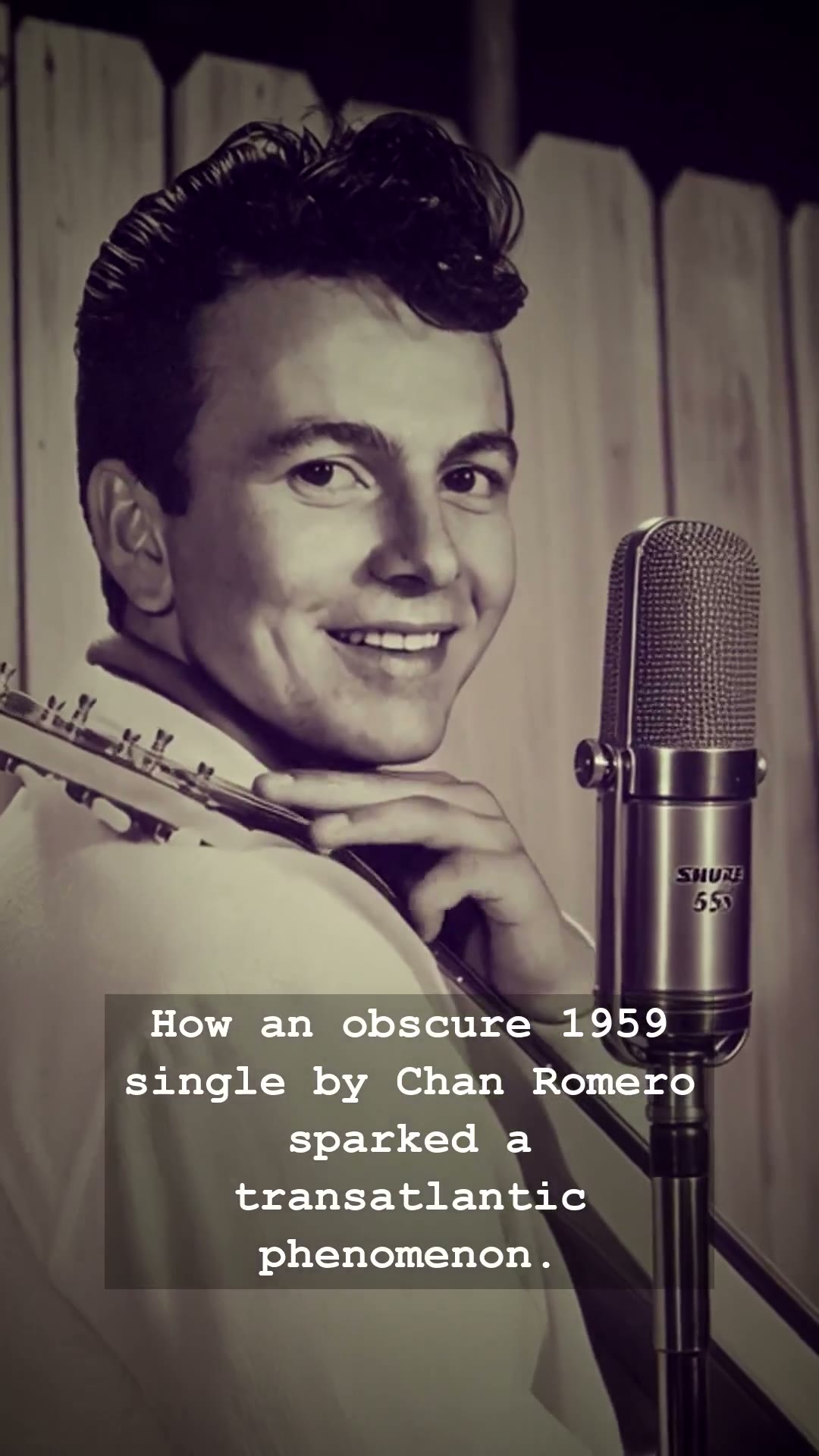
In the sweltering heat of 1959, a young man named Chan Romero stepped into a studio and unleashed a sound that would eventually bridge the gap between the jukeboxes of America and the screaming crowds of Britain. Most listeners today recognize the frantic, pulsing beat of Hippy Hippy Shake as a staple of the British Invasion, but the true origin of this explosive track lies in the raw, unfiltered spirit of a garage rock pioneer who never quite got the massive spotlight he deserved. At the time, the airwaves were still shaking off the post-war blues, and Chan Romero was just a kid with a guitar and a rhythm that felt dangerous.
Chan Romero recorded the track with a ferocity that defied the polished, squeaky-clean pop standards of the late fifties. He wasn’t aiming for the charts; he was aiming for the soul. The song was a high-energy injection of pure adrenaline, characterized by a jagged guitar riff and a vocal performance that sounded like a man chasing his own heartbeat. While it gained local traction, it was the transatlantic journey of this master tape that changed everything. The song didn’t just cross the ocean; it planted a seed in the minds of young musicians in Liverpool who were starving for an edge.
It is truly haunting to consider how a single recording from a studio in Los Angeles could fundamentally rewrite the DNA of rock music across the pond. When the Beatles and other British bands heard the raw power of Chan Romero, they didn’t just cover the song; they weaponized it. The track became a rite of passage for every garage band from London to Hamburg, acting as a secret handshake for a generation that wanted to trade their stiff suits for the rebellious, unkempt energy of the rock and roll underground. The influence of Chan Romero became the blueprint for the garage-rock explosion that would dominate the next decade.
Behind the scenes of this musical phenomenon, the industry was often cold and indifferent, but the legacy of Chan Romero survived on the strength of the music itself. He lived through the transition from the era of vinyl singles and soda shop jukeboxes to the rise of the massive stadium spectacles that defined later decades. While larger, more manufactured stars soaked up the fame, the vibration of his guitar remained a constant, flickering light for those who preferred their music dirty, loud, and honest. He was the unsung architect of a sound that refused to die.
Today, when we spin that original record, we aren’t just listening to a song; we are listening to a tectonic shift in cultural history. Chan Romero captured a fleeting, electric moment of youth that still resonates with anyone who understands that rock and roll is less about the charts and more about the electricity in the room. As we look back at the era of the Walkman and the shift toward digital, it is essential to remember the ones who set the foundation. Next time you hear those iconic opening chords, take a moment to tip your hat to the man who started the shake.