
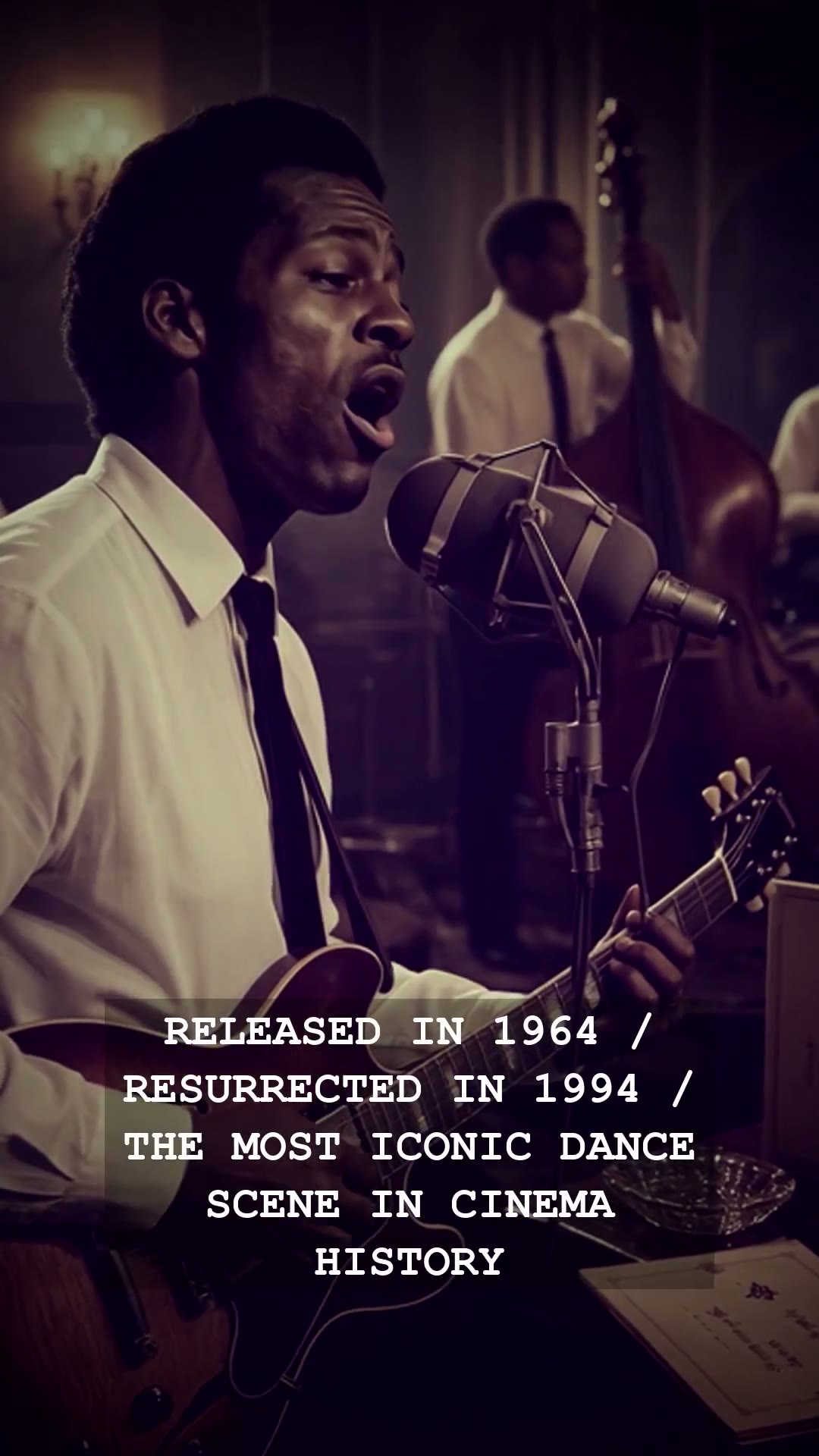
It was 1964, a year defined by the British Invasion and the electrifying rise of rock and roll. In the heart of the American music scene, the legendary Chuck Berry was still shaping the very fabric of our culture. He released a track that crackled with his signature, duck-walking energy—a song that felt like the heartbeat of a jukebox in a neon-lit diner. Yet, as the turbulent sixties bled into the seventies, the song seemed to slip into the shadows, a lost artifact of a bygone era. It rested in the silence of record bins for three decades, waiting for the right moment to reclaim its throne in the pantheon of rock music.
Then came 1994, a year when the cinematic landscape was undergoing a violent, stylish metamorphosis. Quentin Tarantino, a director with an encyclopedic knowledge of American cool, reached into the past and plucked that very same Chuck Berry track from obscurity. When John Travolta and Uma Thurman stepped onto that dimly lit dance floor in Pulp Fiction, the world held its breath. As the song played, it did not just provide a soundtrack; it resurrected a spirit. It was a bridge between the analog soul of the sixties and the gritty, ironic aesthetic of the nineties, proving that true artistry never really dies; it just waits to be rediscovered.
To understand the magic, one must look at the man himself. Chuck Berry was not merely a musician; he was the architect of the teenage anthem. His guitar riffs were the blueprints for every garage band that would follow in his footsteps. However, his career was never a smooth road. It was a rollercoaster of incredible highs, hit records, and the dark, looming shadows of personal legal battles and societal pressures. Despite the controversies that followed him like a persistent rumor, his genius remained undeniable. When he struck those chords, he wasn’t just playing music; he was narrating the American dream and its underlying, restless frustrations.
Why did this specific revival strike such a chord? Perhaps because by 1994, we were collectively mourning the loss of the raw, unfiltered energy of the mid-century. We were living in an era of synthesized pop and grunge angst, and hearing that classic Chuck Berry rhythm felt like coming home to a house we had long forgotten. The dance scene in that iconic film didn’t just sell tickets; it reminded a new generation that there was a foundation beneath their feet—a foundation built on rhythm, blues, and pure rock and roll defiance.
Today, when you hear those opening notes, it is impossible not to think of that cinematic collision between the past and the present. It stands as a testament to the fact that greatness is cyclical. Chuck Berry left us with a legacy that refuses to be buried, a sound that serves as a time machine for anyone willing to listen. Whether you were there in 1964 or discovered him through the lens of nineties cinema, the feeling remains the same: a sudden, irresistible urge to move, to remember, and to celebrate the man who taught the world how to rock.