
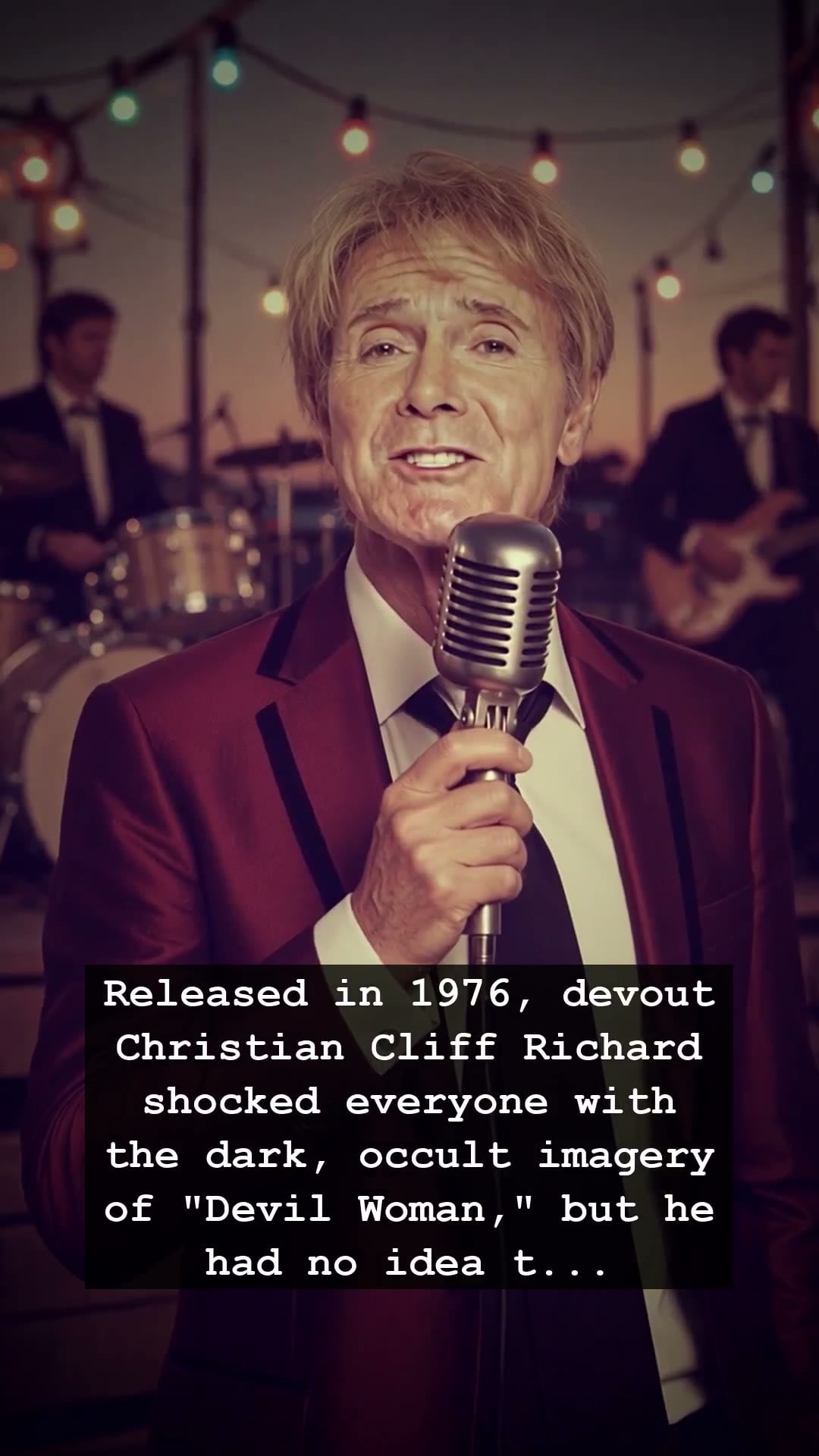
In the mid-1970s, the airwaves were saturated with the glitter of disco balls and the smooth synthesizers that defined the post-Vietnam musical landscape. Amidst this era of flashy experimentation, Cliff Richard, long known as the clean-cut poster boy of British pop and a man of unwavering Christian faith, made a move that stunned his loyal fan base. In 1976, he dropped the track Devil Woman, a song drenched in dark, occult-tinged lyrics that felt worlds away from his wholesome persona. It was a stylistic gamble that pushed the boundaries of his image, leaving the public to wonder if their favorite crooner had truly tapped into the shadows.
The song, with its haunting melody and lyrics warning against a bewitching figure, arrived at a time when the world was becoming increasingly obsessed with the sensational and the macabre. For Cliff Richard, this was not just another pop song; it was an artistic pivot that leaned heavily into the rock traditions of the decade. The production was sharp, rhythmic, and undeniably catchy, yet the subject matter felt like a deliberate rebellion against the constraints of his previous success. When listeners tuned in on their Walkmans or caught the music video on the burgeoning influence of early television rotations, they were met with a vision of Cliff Richard they hardly recognized.
Surprisingly, this darker detour became the definitive catalyst for his breakthrough in the United States. While Cliff Richard had conquered the British charts for years, America remained a notoriously difficult market to penetrate. The irony was palpable: by embracing a track centered on dark temptation and mythological peril, the artist finally captured the American imagination. It served as a stark reminder that even in the golden age of pop, the public was drawn to the mystery of the occult and the narrative tension of songs that skirted the edge of controversy. The track became an instant classic, proving that a little bit of darkness can sometimes lead to the brightest spotlight.
Behind the scenes, the recording process was steeped in the tension of the era. As disco dominated the discotheques and the cultural landscape shifted toward a more cynical outlook, Cliff Richard held his ground, delivering a vocal performance that was both vulnerable and commanding. The success of Devil Woman allowed him to transition away from being perceived as merely a soft-pop icon, establishing him as a versatile performer capable of channeling complex themes. It remains a fascinating study of how an artist can reinvent their narrative simply by leaning into the unexpected, even when that pivot risks alienating a conservative audience.
Today, Devil Woman remains a staple for those of us who grew up with the static of the radio and the magic of 1970s vinyl. It stands as a testament to the fact that legends are built on risky choices and the willingness to break from expectations. Cliff Richard eventually returned to his roots, but that specific moment in 1976 remains frozen in time—a brief, dark encounter that permanently etched his name into the annals of global rock history. Next time you hear those iconic opening chords, remember the man who dared to dance with the devil to find his American dream.