
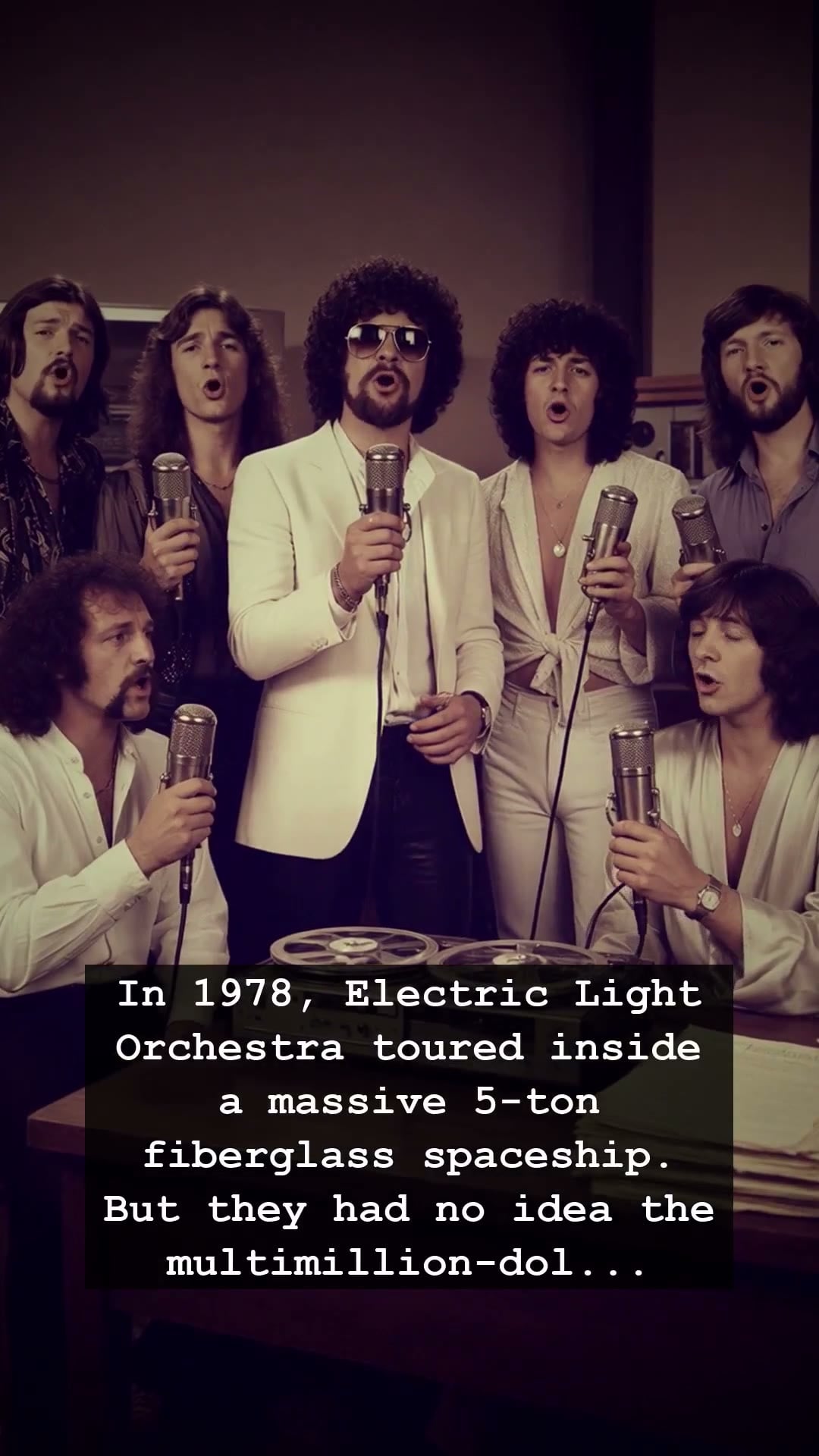
The year was 1978. In the golden era of arena rock, where bands competed to see who could manufacture the most spectacle, Jeff Lynne and the Electric Light Orchestra decided to outdo everyone. They didn’t just want to play music; they wanted to transport their audience to a different dimension. The centerpiece of their Out of the Blue tour was a staggering, five-ton, fiberglass spaceship that descended from the arena rafters, glowing with lasers and pulsating with the futuristic promise of the late seventies. It was the peak of rock theater, a structural marvel that appeared to be the future of live performance. Yet, beneath the neon lights and the synthesized strings, the band was trapped in a mechanical nightmare that nearly ended their career.
Behind the curtain, the reality of the Electric Light Orchestra spaceship was far less glamorous than the science-fiction dream sold to the fans. The massive structure was a logistical catastrophe. It was notoriously unreliable, prone to mechanical seizures that left the band members stranded in mid-air or stuck behind faulty hydraulics. Imagine the pressure of playing for thousands of fans in the peak of the disco and prog-rock era while the very stage you stood upon threatened to collapse or refuse to open at all. The claustrophobia was real. What was intended to be an iconic symbol of the Electric Light Orchestra genius quickly became a five-ton anchor that fueled constant internal friction, mounting debt, and a high-profile legal battle as the technical malfunctions grew from mere annoyances into dangerous hazards.
This was the dark side of the extravagant stadium tours that defined the late seventies. While fans were mesmerized by the glowing vessel, the crew scrambled in the shadows to prevent a full-scale disaster. The technical failures led to a cascade of lawsuits, as the sheer ambition of the set design outpaced the technology of the time. For the Electric Light Orchestra, the tour was a lesson in the dangers of prioritizing spectacle over reliability. The stress of the constant technical glitches during those shows placed an immense strain on the group, highlighting the hidden costs of fame during an age before digital automation could save such complex stage productions.
Looking back, the Electric Light Orchestra spaceship remains one of the most polarizing symbols of the era. It captured the boundless optimism of the space-age aesthetic, yet it also represents the vanity and excess that eventually triggered the industry shift toward the grit of the coming decade. Despite the drama and the near-misses, those shows became legendary. They represent a time when bands were willing to risk everything to provide a cinematic experience for their audience, even if that meant literally going down with the ship.
Today, the story of the Electric Light Orchestra and their malfunctioning UFO is a reminder of the fragility of rock and roll grandeur. It stands as a testament to the band’s relentless pursuit of the extraordinary. As we look back at the glow of those old laser beams, we see not just a technical failure, but the raw, unfiltered spirit of an era that never played it safe. Does the memory of your first concert still feel like a brush with the impossible?