
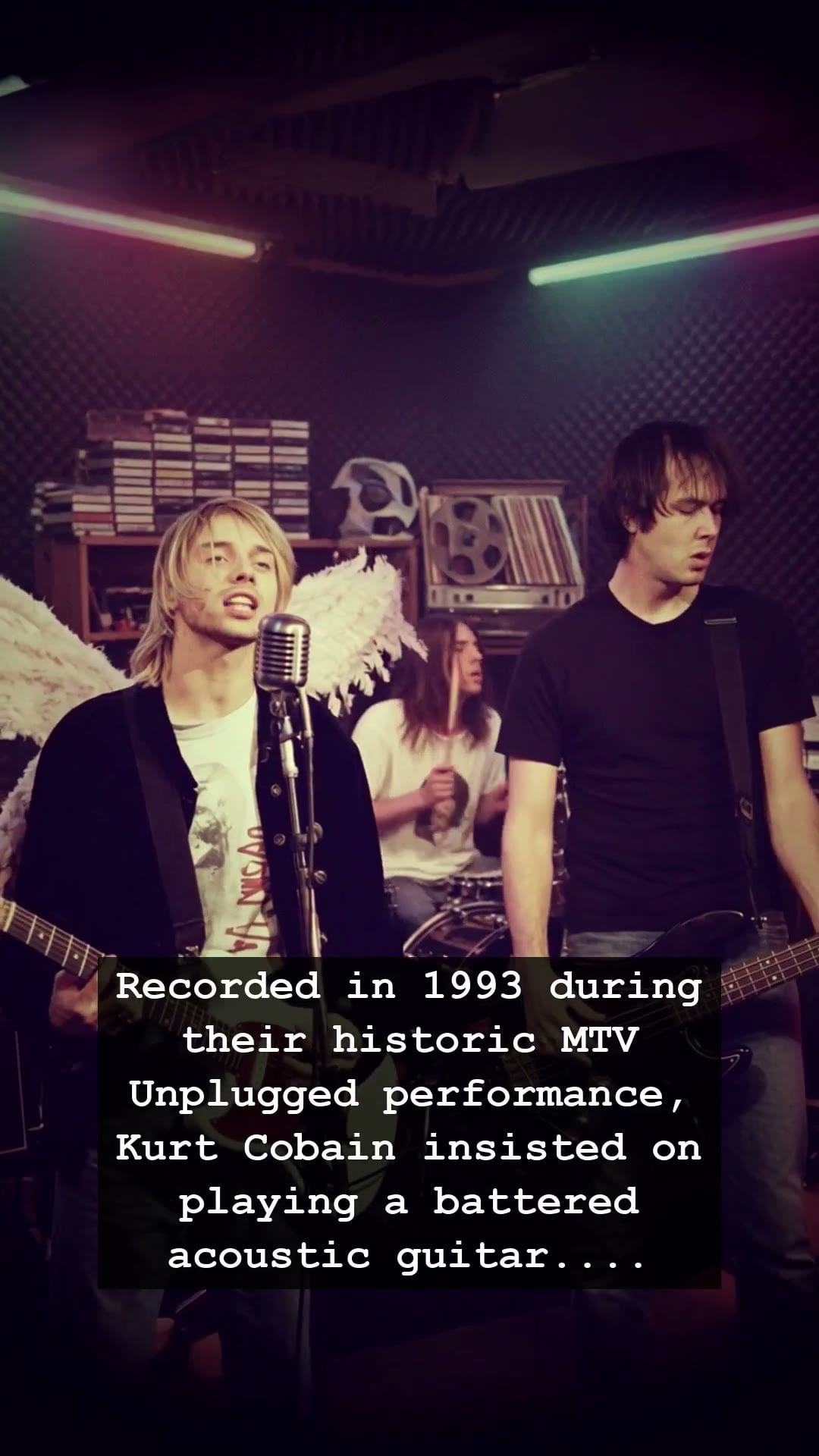
The year was 1993, and the air inside the Sony Music Studios in New York felt heavy with an unspoken, haunting tension. It was the peak of the Grunge movement, a time when Nirvana stood as the reluctant prophets of a generation, having dragged the underground sound into the blinding glare of the mainstream. As cameras rolled for their historic MTV Unplugged performance, the audience expected the feedback-drenched aggression that defined the era. Instead, they were met with a fragile, acoustic vulnerability that would change music history forever. Yet, beneath the calm surface of those haunting melodies, a quiet disaster was brewing backstage that could have derailed the entire performance.
Kurt Cobain stood there, clutching a battered, vintage 1959 Martin D-18E acoustic guitar. To the millions watching at home through the flickering glass of their television sets, it looked like a classic aesthetic choice. But for Ernie Bailey, Kurt’s long-time guitar technician, the scene was a nightmare unfolding in real-time. The instrument was notoriously difficult to tune and prone to electronic failures. Backstage, while the crew scrambled, Bailey was in a state of sheer panic, convinced that the vintage guitar would collapse into sonic failure the moment Kurt plucked the first string. It was a gamble of epic proportions, a moment where the thin line between artistic genius and technical catastrophe was held together by nothing more than grit and nerves.
This wasn’t just a concert; it was a reckoning. Nirvana had spent years defining the sound of flannel-clad rebellion, but here, in the intimate glow of lilies and black candles, Kurt Cobain was stripping his soul bare. The performance was a departure from the distorted walls of sound that usually filled stadiums, opting instead for a raw, folk-inflected darkness that felt deeply personal. As he navigated through covers of The Meat Puppets and David Bowie, the fragility of his voice mirrored the instability of the instruments he held. It was an iconic moment of the 1990s, capturing a man who was simultaneously at the height of his fame and struggling under the suffocating weight of it.
Even decades later, the lore of this night continues to resonate with those who remember the pre-internet age of authentic musical discovery. The MTV Unplugged set remains the definitive portrait of a band that was never meant to be polished or corporate. It serves as a reminder of a time when imperfection was seen as a virtue, and the crack in a voice or the buzz of a dying amp added to the legend rather than detracting from it. For fans of the Grunge era, this performance remains the crown jewel of the nineties, a hauntingly beautiful bridge between rock’s raw energy and its inevitable, quiet decline.
Looking back, it is impossible to separate the music from the tragedy that would soon follow. The 1993 set remains a powerful piece of cultural history, frozen in time like a polaroid of a fading star. Every time we hear those opening chords, we are transported back to that New York stage, witnessing a genius who insisted on doing things his way, even when the world—and his own equipment—seemed ready to fail him. Perhaps the beauty of Nirvana lies in that very defiance, a legacy that refuses to be silenced by time or history. It was more than a performance; it was the raw, beating heart of a generation that we still miss today.