
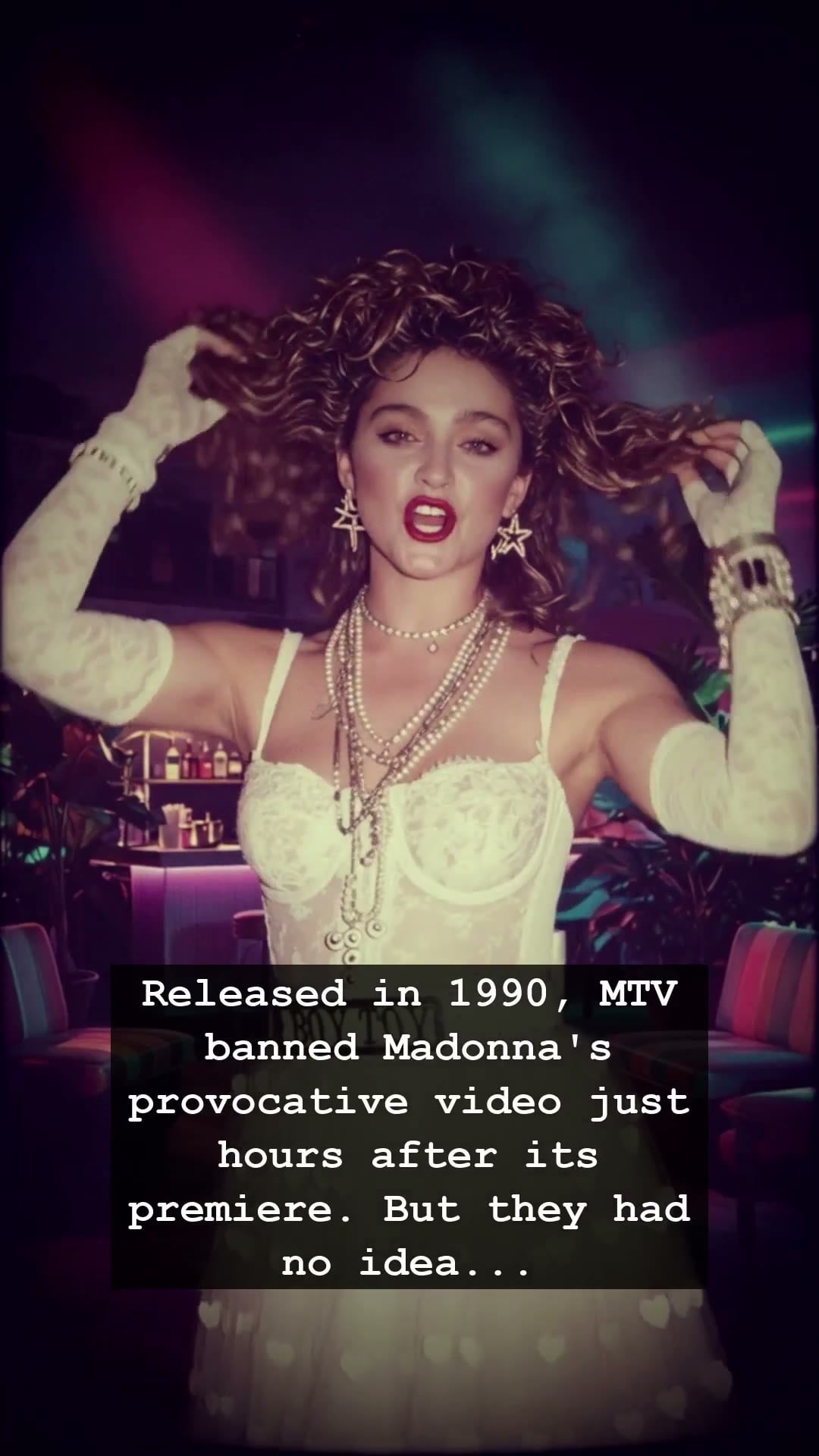
It was 1990, the year when the Walkman was still the king of personal audio and MTV reigned as the ultimate gatekeeper of pop culture. Madonna, already a lightning rod for controversy, premiered the music video for Justify My Love. Within hours, the network slammed the door shut, banning the clip for its overtly provocative scenes of intimacy and subversion. They believed they were protecting the public from moral decay, but they had no idea that this desperate act of censorship would ignite a global revolution regarding sexual expression and artistic autonomy.
The video, shot in grainy, cinematic black-and-white, felt like a clandestine peek into an underground fetish club in the heart of New York City. It was raw, unpolished, and dripping with a dark, rebellious energy that felt lightyears away from the squeaky-clean pop machine of the previous decade. Madonna, ever the master of cultural disruption, wasn’t just making a music video; she was challenging the status quo. By forcing the hand of the establishment, she turned a simple promotional clip into a battleground for free speech, effectively forcing every household in America to confront the evolving landscape of 90s desire.
While the censors scrambled, the public reaction was instantaneous and electric. Instead of disappearing, the video became the first-ever video single to be sold exclusively on VHS. It flew off the shelves of record stores, becoming a coveted artifact for fans who wanted to see exactly what MTV didn’t want them to witness. This move wasn’t just a win for sales; it was a defiant middle finger to the industry giants who thought they could dictate what was appropriate for the eyes of the youth. Madonna understood something that the executives did not: controversy is the ultimate currency of fame.
This incident perfectly encapsulates the spirit of the late 20th century, a time when the friction between traditional values and the emerging, bold voices of artists created the most iconic moments in music history. The legacy of that ban remains a defining chapter in the Madonna narrative. She didn’t just survive the fallout; she emerged as an icon who knew that to be truly heard, one must be willing to offend the right people. It proved that once the genie of provocative artistry is out of the bottle, no amount of institutional red tape can ever put it back in.
Looking back, the ban feels like the final gasp of an old guard struggling to keep pace with an unstoppable cultural force. The music world of the 90s was changing rapidly, shifting from the glossy perfection of the 80s toward something grittier and more authentic. Madonna paved that road with her fearlessness. Today, we look back at that grainy footage not just as a music video, but as a bold statement of intent. It reminds us of a time when pop stars were not just entertainers, but genuine agents of social change, constantly pushing us to redefine the boundaries of our own comfort.