
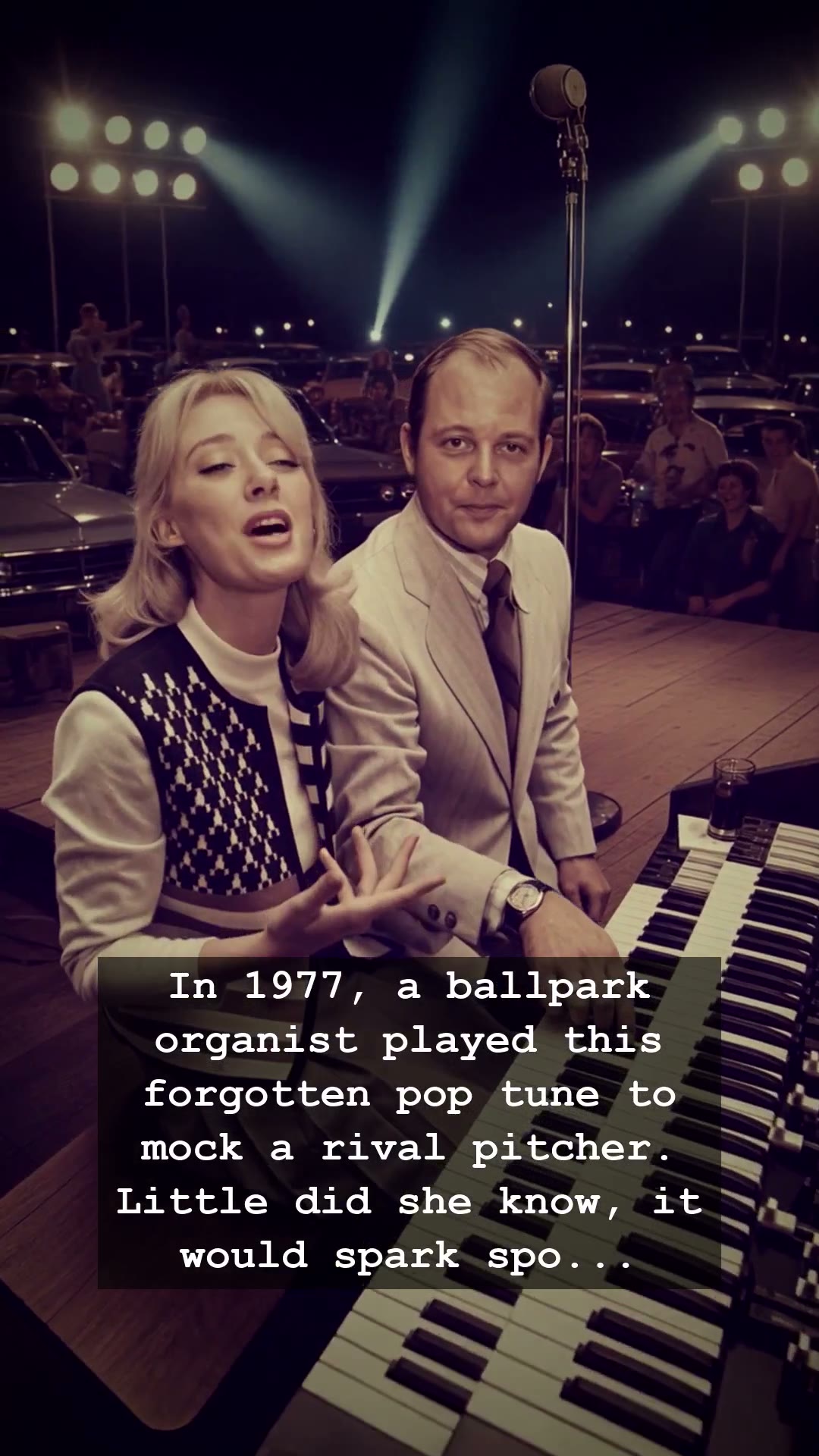
It was 1977 at Comiskey Park, a time when the scent of hot dogs mingled with the hazy Chicago summer heat and the crack of the wooden bat was the only soundtrack that mattered. High above the diamond, tucked away in the booth, sat the legendary Nancy Faust. She was the organist for the Chicago White Sox, a woman who treated her Hammond organ not just as a musical instrument, but as a weapon of psychological warfare. While the rest of the world was dancing under the strobe lights of Studio 54 or tethered to their Walkmans, Nancy Faust was busy changing the fabric of American sports culture with a few simple, well-timed notes.
On that fateful afternoon, a rival pitcher stepped onto the mound, his composure seemingly impenetrable. Nancy Faust decided to shatter that silence. She began to play a forgotten pop tune, a cheeky, repetitive melody that immediately caught the attention of the players and the crowd alike. It was a subtle jab, a playful musical critique aimed directly at the opposition. She did not know it then, but she had just sparked sports history’s ultimate taunt. This spontaneous act of musical rebellion transformed the stadium experience from a mere game into a psychological showdown, cementing her status as the queen of the ballpark soundtrack.
Nancy Faust was never just a background performer; she was the silent commentator of the diamond. Her ability to read the energy of the crowd and the frustration of the players turned the stadium organ into a powerful tool of fan engagement. Before the era of over-produced Jumbotron graphics and curated stadium playlists, Nancy Faust relied on her intuition and a massive collection of records to dictate the emotional tenor of the game. Her work at the organ captured the raw, unfiltered spirit of 1970s baseball, a time when the game felt more human, more volatile, and infinitely more intimate.
This specific incident in 1977 remains a highlight of her long career, a testament to how one individual could disrupt the rhythm of a professional game with nothing more than a melody. It is a fascinating look at the intersection of music and sports, a precursor to the modern era of professional stadium hype. While the disco era raged on the radio and arena rock bands filled stadiums, Nancy Faust proved that the most memorable performance in the house could happen on a wooden bench behind a set of keys. She turned a routine inning into a legendary anecdote that fans still discuss with wide eyes today.
Today, as we look back at the grit and charm of the 1970s, the legacy of Nancy Faust serves as a reminder of the beauty found in those unscripted, golden moments. Her quick wit and musical rebellion defined an era where the fans, the players, and the organist were all part of a shared, living theater. The next time you find yourself at a game, listen closely to the music between the innings; you might just hear the echo of a history that started with a clever girl and her organ keys.