
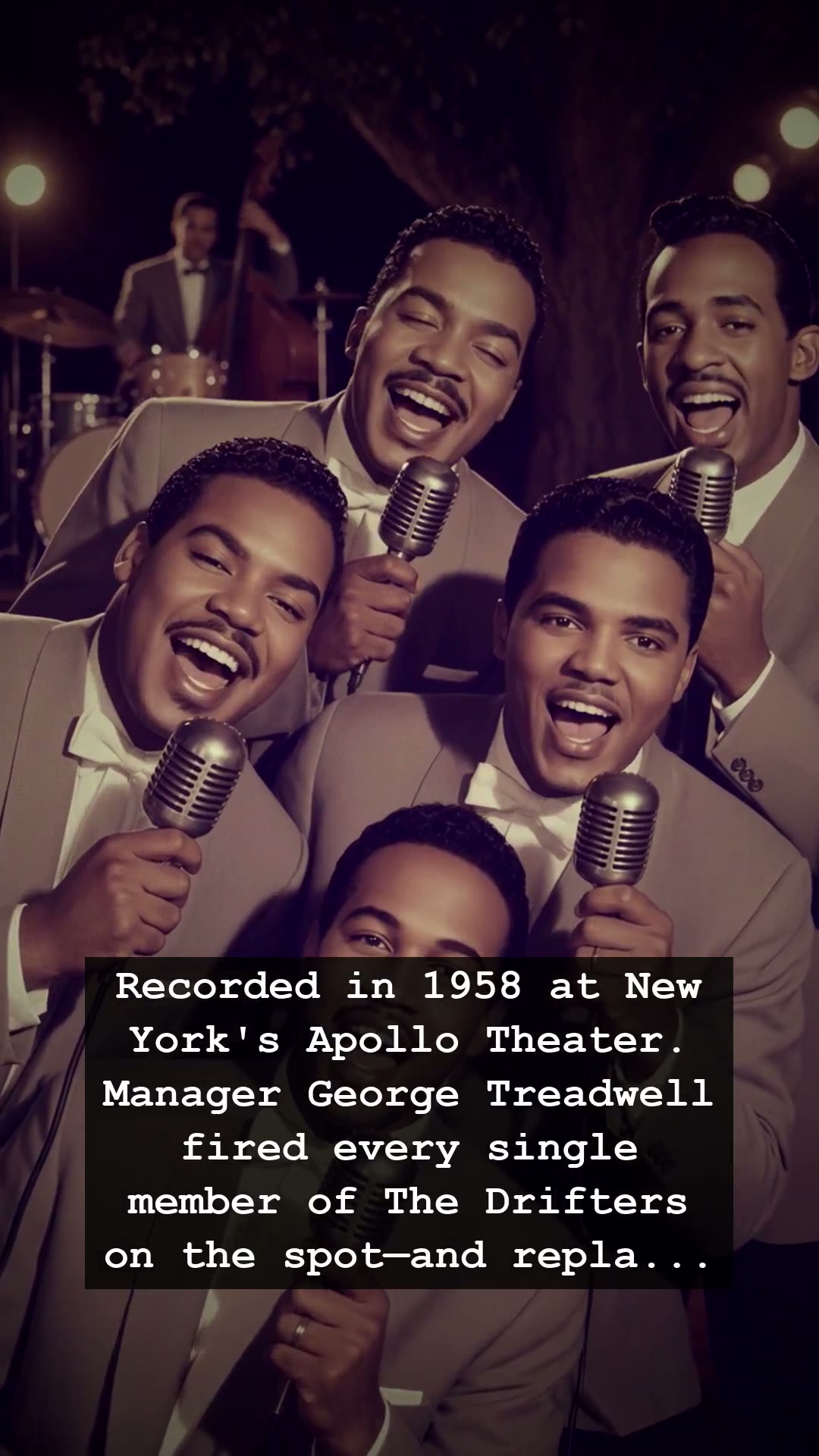
Imagine the atmosphere of 1958 at New York’s legendary Apollo Theater. The air was thick with the scent of floor wax and anticipation, the hum of the jukebox era vibrating through the floorboards. For The Drifters, one of R&B’s most iconic vocal groups, the night was supposed to be a triumph. They were at the top of their game, their harmonies polished to a mirror finish. Yet, before the house lights could dim for the final bow, a ruthless corporate maneuver turned a night of celebration into a scene of cold-blooded betrayal. Their manager, George Treadwell, walked onto that stage and did the unthinkable: he fired every single member of the group on the spot, replacing them with a totally different lineup of singers before the audience even realized the transition had begun.
This wasn’t just a simple personnel change; it was the ultimate act of exploitation in the cutthroat music industry of the fifties. The Drifters were a brand, not just a brotherhood, and Treadwell knew that as long as he owned the name, the individual souls behind the microphones were replaceable assets. To the fans listening on their radios or catching the group on the circuit, the music might have sounded similar, but the chemistry that defined the original Drifters was extinguished in a heartbeat. It was a dark, jarring moment that peeled back the glamorous curtain of mid-century stardom to reveal the grit and greed hiding in the shadows.
This incident remains one of the most shocking anecdotes from the golden age of American rhythm and blues. While listeners today often romanticize the era of the Walkman or the polished perfection of Motown, stories like this remind us of the immense pressure placed on artists. Being in a band like The Drifters meant navigating a maze of contracts and ego-driven management that cared far more about profit margins than artistic integrity. The transition was so seamless that history almost glossed over the tragedy, treating these talented men like interchangeable cogs in a hit-making machine rather than the architects of a sound that defined a generation.
Despite the brutal nature of the switch, the legacy of The Drifters endured, evolving into a sound that would eventually influence the soul and pop movements of the decades to follow. They survived the chaos of the late fifties, navigating the shifts in cultural taste that would eventually lead to the psychedelic rock and disco eras. Yet, the memory of that night at the Apollo serves as a chilling reminder of the ephemeral nature of fame. It highlights how quickly an artist could be discarded when they no longer served the vision of the industry power brokers pulling the strings.
Today, when we spin those classic records, we are listening to ghosts of a bygone time. We hear the echoes of a struggle for autonomy in an industry that frequently demanded total submission. The Drifters taught us that while the music may last forever, the people behind the microphone often pay a price that the history books fail to record. Their story remains a poignant, necessary chapter for anyone who truly loves the raw, complicated history of American music.