
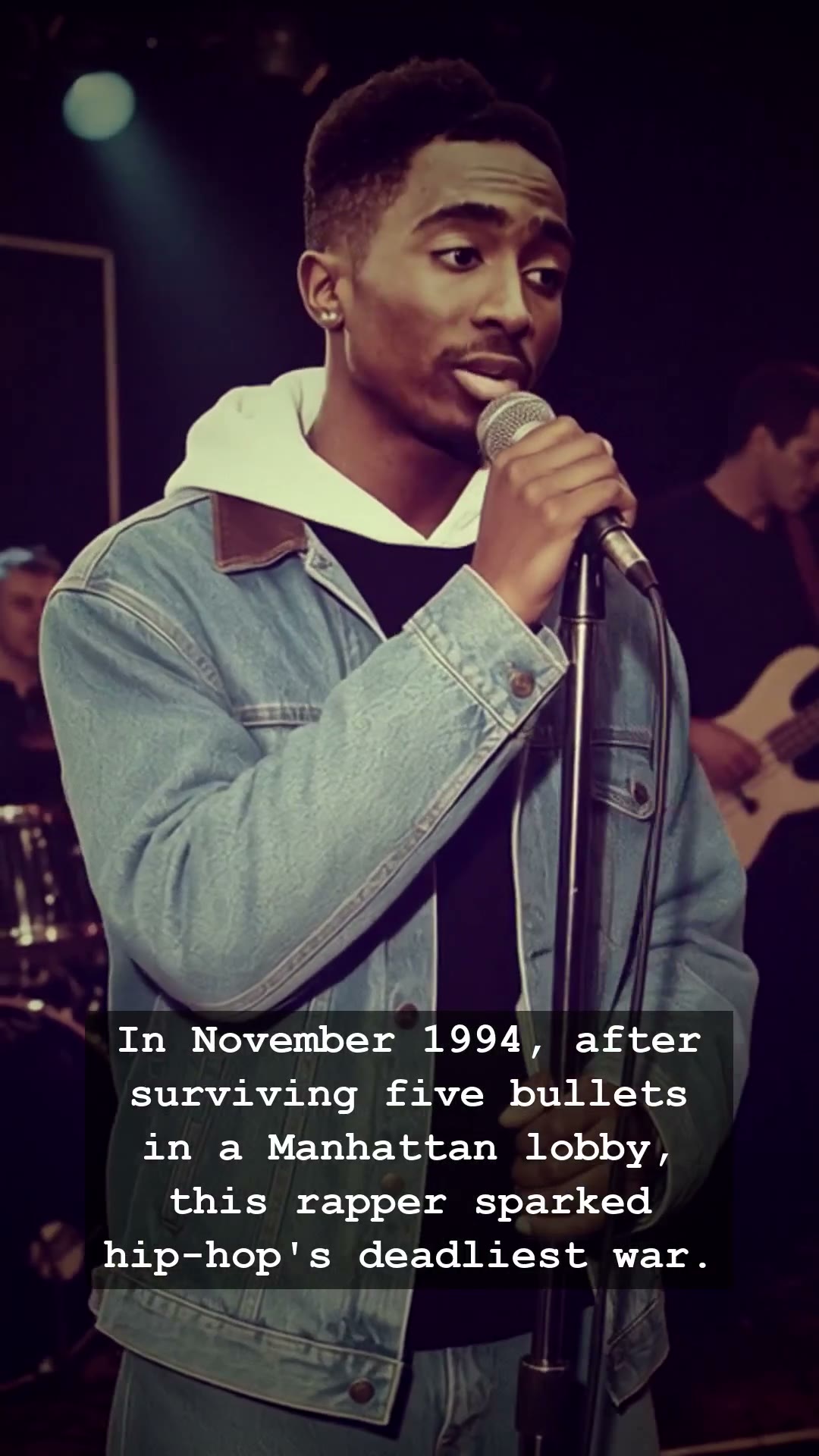
It was November 1994, and the air in Manhattan felt heavy with a cold, impending dread. Tupac Shakur walked into Quad Recording Studios, unsuspecting of the ambush that would forever alter the trajectory of hip-hop history. As he stepped into the lobby, the muffled silence was shattered by the sharp report of gunfire. Five bullets tore into his body, leaving a trail of blood and shattered glass on the lobby floor. He survived, but that night, the music industry’s most vicious civil war was born from the smoke of those guns. The target was Tupac Shakur, and his recovery was not met with peace, but with a burning paranoia that fueled the fire of an escalating conflict.
Following the shooting, Tupac Shakur pointed his finger squarely at Bad Boy Records and his former friend, The Notorious B.I.G. He claimed they knew about the ambush, an accusation that transformed a rivalry between record labels into a full-scale bicoastal war. This was not the era of polished, safe pop music; this was a time when the lines between art, street life, and raw reality were blurred beyond recognition. As the tension grew, the hip-hop community felt the fracture deep in its bones. Every lyric released during this period felt like a dispatch from the front lines of a conflict that no one knew how to end.
To understand the gravity of this moment, one must look back at the era of the Walkman and the burgeoning influence of MTV, where music videos were the pulse of youth culture. Tupac Shakur was the most magnetic voice of his generation, a poet who could weave tales of intense struggle with the same fervor he used to challenge the establishment. However, the darker side of fame began to consume him. The industry, then dominated by executives who treated street talent like commodities, failed to bridge the growing divide. The atmosphere in the mid-90s was electric with resentment, making the East Coast versus West Coast rivalry feel like an inevitable explosion of bottled-up frustration.
Looking back, the tragedy of Tupac Shakur is not just in his untimely death, but in the environment that allowed such a brilliant star to be extinguished by the very industry he sought to revolutionize. The trauma from that lobby ambush never truly left him. It manifested in his lyrics, his temperament, and the reckless speed at which he lived his remaining days. He was a man running from ghosts that had followed him since the moment those five shots rang out in Manhattan. The drama was real, the stakes were life and death, and the music reflected that urgency in every beat.
Today, we listen to his catalog with the somber realization that we are hearing the soundtrack of a man under siege. Tupac Shakur remains a permanent icon because he never backed down, even when the world seemed determined to see him fall. As we reflect on these turbulent years, it serves as a powerful reminder of how quickly the music industry can shift from creative expression to a battlefield of ego and paranoia. The echoes of his legacy are still ringing in the air, asking us to remember not just the fame, but the human being caught in the crossfire.