
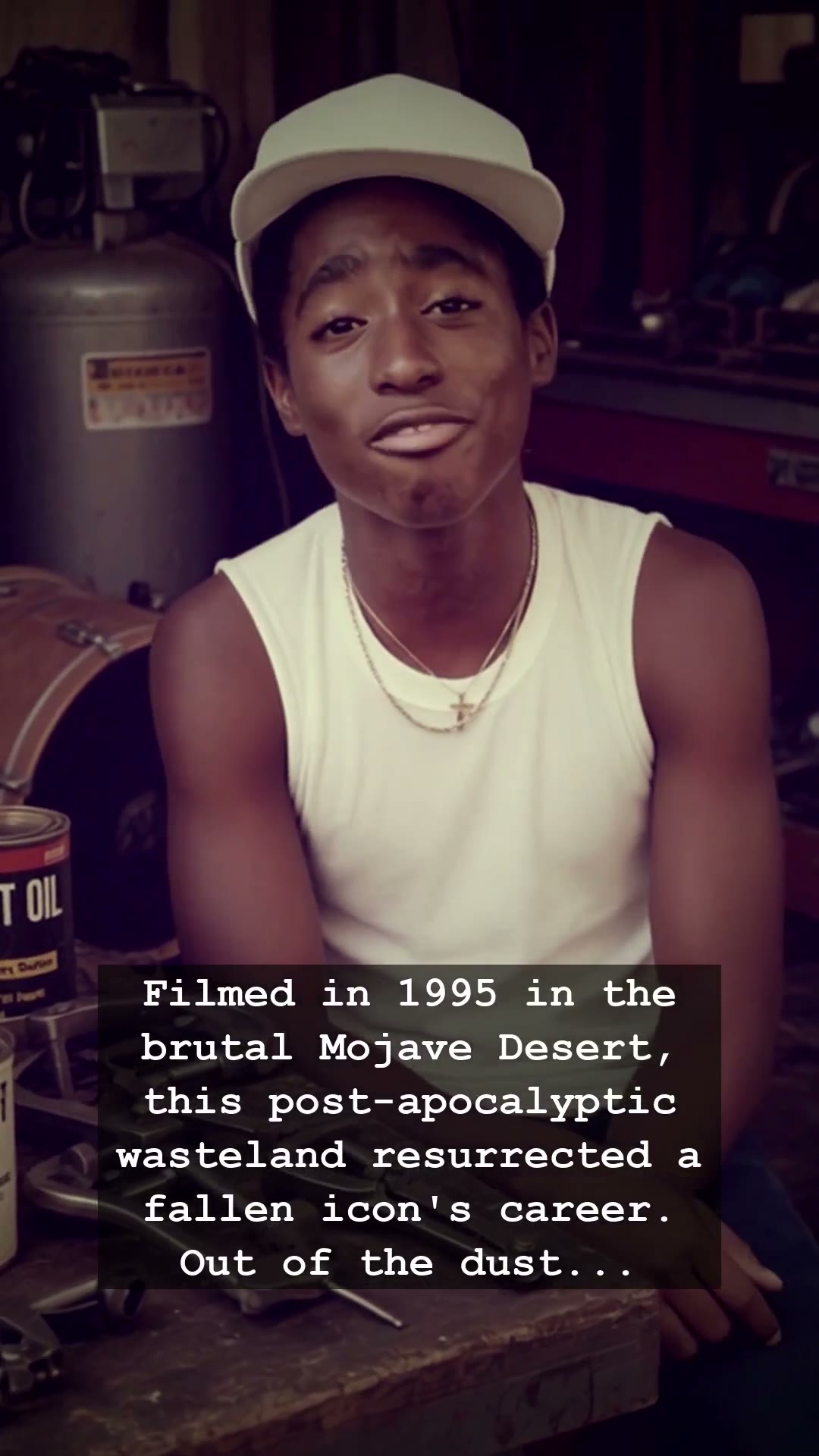
It was 1995, and the West Coast hip-hop scene felt like a powder keg waiting for a single spark to ignite the horizon. Amidst the sweltering heat of the Mojave Desert, a surreal scene unfolded that looked more like a Mad Max fever dream than a music video shoot. The world was watching as Tupac Shakur and Dr. Dre descended into this post-apocalyptic wasteland to film California Love. This wasn’t just another production; it was a desperate, cinematic reclamation of a throne that had been rattled by legal turmoil, prison walls, and the shifting tectonic plates of the music industry. As the dust clouds billowed, it became clear that this was the moment a fallen icon would be reborn, catapulting the West Coast into a golden era of global dominance.
Tupac Shakur was fresh out of a period of immense personal strife, and his alliance with Dr. Dre was the lifeline that saved his career from fading into obscurity. The desert shoot was a masterstroke of vision, blending the grit of the streets with the high-octane spectacle of a blockbuster film. Watching the two giants interact against the barren, sun-scorched backdrop, you could feel the raw tension and the palpable creative energy that defined the mid-nineties. It was a time when the Jukebox was being replaced by the car stereo system, and the influence of West Coast G-funk was bleeding into every corner of suburban America. The visuals were shocking, the beat was thunderous, and for the first time in months, the narrative surrounding the legendary Tupac Shakur shifted from tragedy to triumph.
The genius of Dr. Dre in this era was his ability to curate the sound of the entire coastline, turning his production into the heartbeat of a generation. By pairing the relentless drive of Tupac Shakur with that unmistakable, synthesized bass-heavy production, the duo created a cultural phenomenon that defined the MTV generation. The Mojave setting served as a metaphor for their resilience—a desolate place where, against all odds, something powerful and lasting managed to bloom. It captured the quintessential spirit of the era: bold, unapologetic, and larger than life.
Looking back at that desert footage, it is impossible not to feel a twinge of nostalgia for a time when music felt like a cinematic event. It wasn’t just about the hit record; it was about the myth-making, the spectacle, and the sheer audacity of these artists to project their reality onto a grander scale. The legacy of Tupac Shakur and Dr. Dre during this transition remains a pillar of American music history, reminding us how a single, daring creative decision can solidify an artist’s place in the pantheon of legends forever.
Even decades later, that haunting image of the desert wasteland speaks to the enduring power of their collaboration. It stands as a testament to the fact that even in our darkest hours, there is a path back to the light. The next time you hear that iconic piano intro, close your eyes and picture the sand, the fury, and the brotherhood that changed the face of hip-hop forever.