
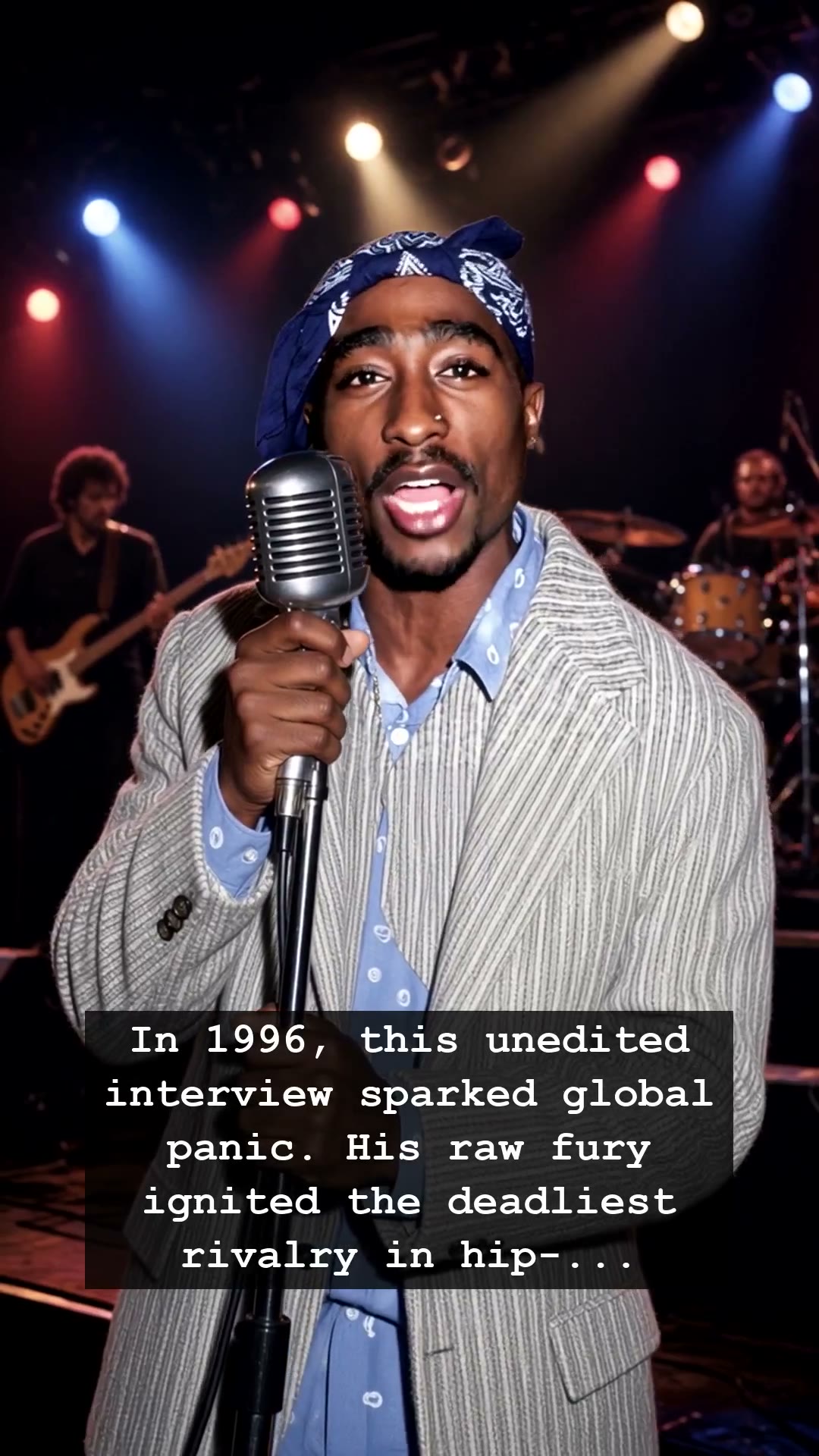
The year was 1996, a time when the crackle of a cassette tape or the static on a radio broadcast was our only window into the unfiltered pulse of the streets. Into this cultural landscape stepped Tupac Shakur, a man whose voice carried the weight of a thousand grievances. The world stood still when an explosive, unedited interview of Tupac Shakur surfaced, sending shockwaves through the music industry that few could ignore. This was not merely a celebrity interview; it was a manifesto of raw fury and a chilling prelude to one of the darkest chapters in American music history, forever altering the trajectory of the East Coast versus West Coast rivalry.
At the time, the air was thick with tension, fueled by the rapid expansion of labels like Death Row and Bad Boy. For those of us who lived through the era, the sight of Tupac Shakur on screen was polarizing. He was a poet, a provocateur, and a man teetering on the edge of a personal precipice. The interview captured him at his most volatile, unleashing a verbal firestorm that targeted his rivals with such intensity that it felt like a declaration of war. It was a masterclass in aggressive honesty that left the public, the media, and the record executives scrambling to decipher whether they were witnessing a calculated promotion or the unraveling of a legend.
The impact of Tupac Shakur in the mid-nineties cannot be overstated. He existed in a space between the gritty reality of the street and the blinding glare of global stardom. As he spoke in that 1996 interview, the shadows in the room seemed to deepen, reflecting the paranoia and the genuine danger that had become his daily reality. His words were not just lyrics; they were a roadmap to the volatility that was bubbling beneath the surface of the hip-hop community. The tragedy, of course, is that the panic the interview sparked was only a small reflection of the violence that was soon to follow in the real world.
Looking back, the legacy of Tupac Shakur remains deeply entrenched in our collective memory of the late 20th century. We remember him not just for the chart-topping hits, but for the visceral, cinematic drama that defined his life and his abrupt end. The media labeled him a villain, while his fans saw a prophet, but in that interview, we simply saw a human being pushed to the breaking point by a culture that consumed its own legends. It was a moment of television history that served as a grim reminder of how fame, when mixed with pride and territorial conflict, can spiral into a tragedy that haunts us decades later.
Even today, whenever the heavy beat of a mid-nineties track plays on the radio, the shadow of Tupac Shakur looms large. The intensity of his presence serves as a bridge to a time when artists wore their hearts and their hatreds openly, without the filter of modern social media. The 1996 interview stands as a relic of that era, a testament to the power of a voice that refused to be silenced, even when the world wanted it to be. As we reflect on those volatile years, we are reminded that history is written by those who are bold enough to speak, regardless of the cost.