
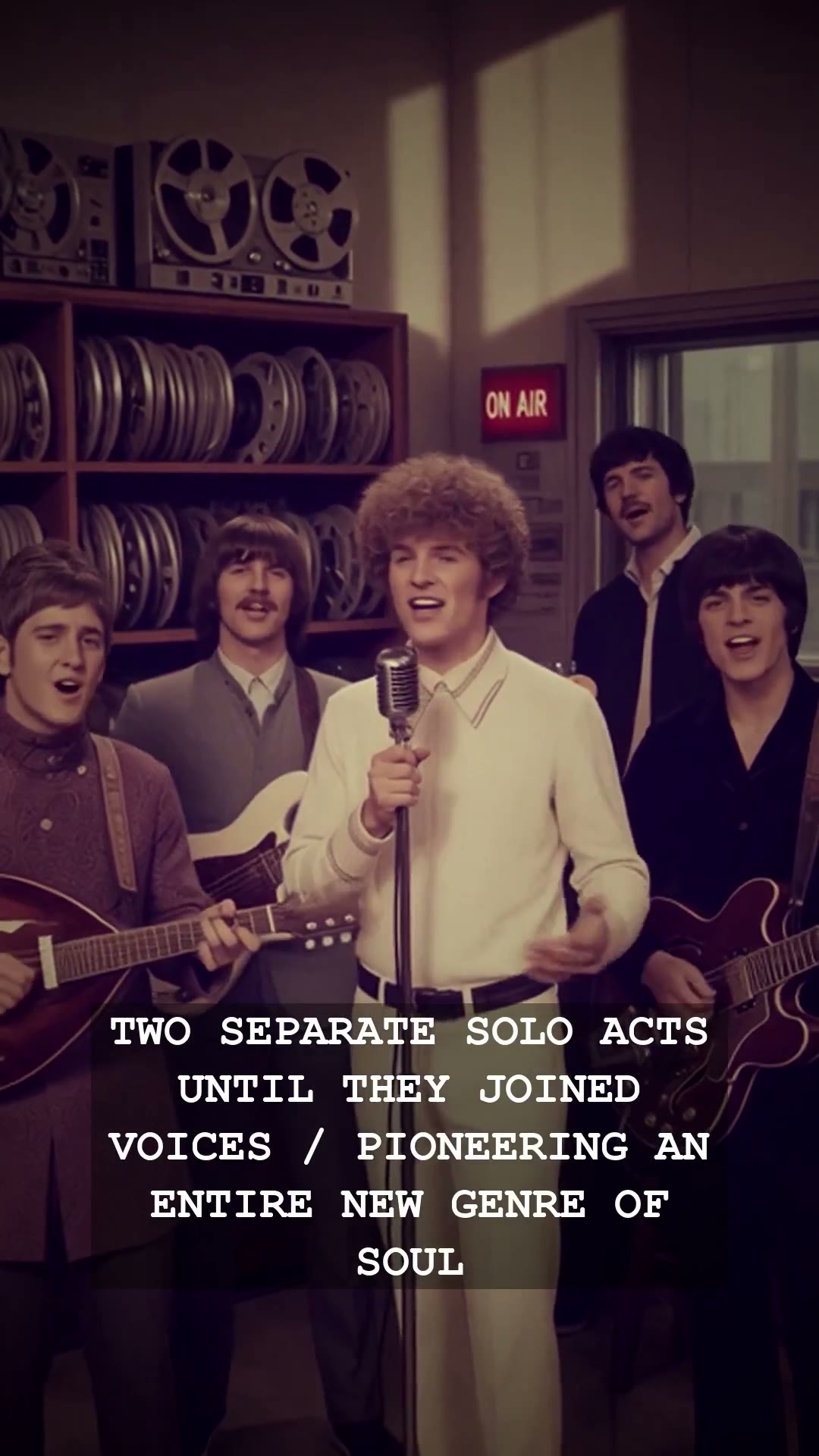
It was 1962 in the neon-soaked clubs of Southern California, a time when the Jukebox served as the heartbeat of every local hangout. You might imagine that The Righteous Brothers, those architects of haunting, soul-stirring melodies, were lifelong friends who grew up singing together on a front porch. The truth, however, is far more explosive and far less harmonious. Bill Medley and Bobby Hatfield were not soulmates; they were two fiercely independent, competitive solo acts with clashing egos who accidentally stumbled into one of the most successful musical partnerships in American history. They didn’t start with a handshake; they started with a stare-down, unknowingly setting the stage for what would become the golden standard of Blue-Eyed Soul.
Before the world knew them as the legends behind the timeless hit Unchained Melody, they were just two young men hustling through the grit of the early sixties. Their vocal dynamic was a physical anomaly: Bill Medley possessed a cavernous, earth-shaking baritone that felt like it was pulled from the depths of a dark jazz club, while Bobby Hatfield offered a soaring, angelic tenor that could pierce through the thickest wall of sound. When these two distinct forces finally collided on stage, the friction didn’t destroy them—it created something entirely new. They transformed the pain of heartbreak into a cinematic experience, capturing the raw, vulnerable emotional landscape of a generation living under the shadow of the Cold War and the shifting cultural tides of the decade.
The real magic, and perhaps the greatest tragedy of their professional lives, was that their contrasting styles mirrored the volatile nature of the era. They navigated the cutthroat industry of the mid-sixties with a sense of urgency that defined the Billboard charts. Every time you hear those iconic piano chords begin, you are transported back to a time when music was pressed into thick, black vinyl and played on radios that crackled with authenticity. The Righteous Brothers didn’t just sing songs; they performed exorcisms of lost love, turning the heartbreak of their fans into a collective catharsis that defined the pop culture of the 1960s.
Yet, the drama behind the microphone was often just as heavy as their ballads. They were the original architects of the wall-of-sound production style, often finding themselves at odds with producers and industry giants who wanted to polish their rugged edges. They survived the transition from the golden age of radio to the era of the high-definition television spectacular, always remaining true to that initial, accidental spark. It is a testament to their talent that their influence remains deeply embedded in the DNA of modern soul music, proving that sometimes the greatest art comes from the most unlikely unions.
Looking back, the legacy of The Righteous Brothers serves as a powerful reminder of how human friction can produce divine art. They were the voice of the lonely, the hopeful, and the heartbroken, leaving behind a discography that still feels as fresh and stinging today as it did when it first graced the airwaves. Their story proves that while relationships may falter and eras may fade, a truly soulful melody is the one thing that never loses its power to haunt the human heart. Take a moment today to drop the needle on one of their classics and let the voices of the past remind you why the golden age of music never really left us.