
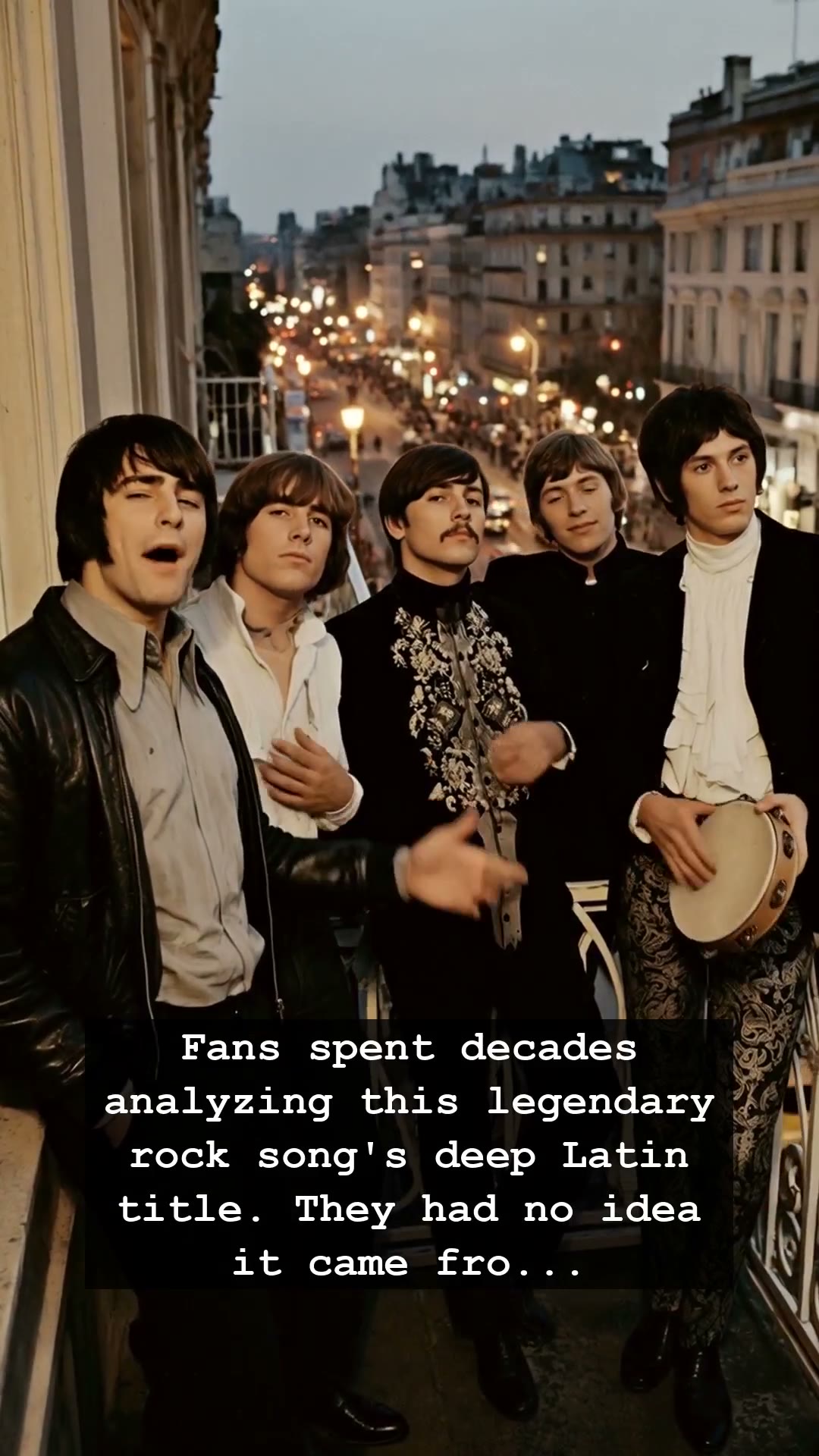
In the psychedelic haze of 1967, a song emerged that seemed to carry the weight of centuries. A Whiter Shade of Pale by Procol Harum became an instant anthem, a haunting blend of Bach-inspired organ melodies and surreal, cryptic lyrics that seemed to pull at the very fabric of reality. For decades, listeners sat in their living rooms, staring at their vinyl sleeves, trying to crack the code. Was it a profound meditation on life and death? A cryptic nod to ancient Latin literature? Fans and critics alike spent countless hours dissecting the enigmatic title, convinced that the band was hiding a deep, intellectual secret behind those haunting ivory keys.
The truth, however, proved to be far less academic and infinitely more charming. The mysterious title was not plucked from a dusty tome of poetry, nor was it the result of deep philosophical contemplation. It was, quite simply, a classic case of misheard conversation and a domestic misunderstanding. Keith Reid, the band’s lyricist, had overheard someone at a party describing a woman as having a whiter shade of pale—a comment that stuck in his mind. But the deeper legend behind the track remains tied to the surreal, off-the-cuff nature of the sixties, where even a misspelled Burmese cat, according to the lore that grew around the group, played a strange part in the chaotic creative process of that era.
Procol Harum stood apart from the neon-soaked excess of the Summer of Love. While others were chasing the bright, jangly sounds of the West Coast, Procol Harum leaned into the melancholic, the baroque, and the mysterious. The song itself felt like a ghost haunting the airwaves, a stark contrast to the emerging pop hits that dominated the radio. It was the perfect soundtrack for a generation retreating to their rooms to analyze lyrics by the glow of a lava lamp, seeking meaning in the increasingly complex world of the late sixties.
This era was defined by the transition from the innocence of early rock and roll to the dark, introspective journeys of the seventies. When Procol Harum released this track, the cultural shift was palpable. It became a staple of the underground scene, a song that commanded silence in a crowded room. Even today, hearing that opening organ swell is like stepping into a time machine. It evokes the smell of incense, the scratchy texture of a denim jacket, and the feeling that something profound was happening just out of reach.
The genius of Procol Harum lies in their ability to make the nonsensical feel deeply significant. They proved that sometimes, the most enduring art doesn’t need to be solved or explained. Whether the inspiration was a conversation snippet or a stray feline, the legacy of this song belongs to the listeners who made it their own. It serves as a reminder that the most beautiful moments in music history are often born from accidental magic. Next time you drop the needle on that record, don’t worry about finding the meaning; just let the melody take you back to a time when every song felt like a revelation.