
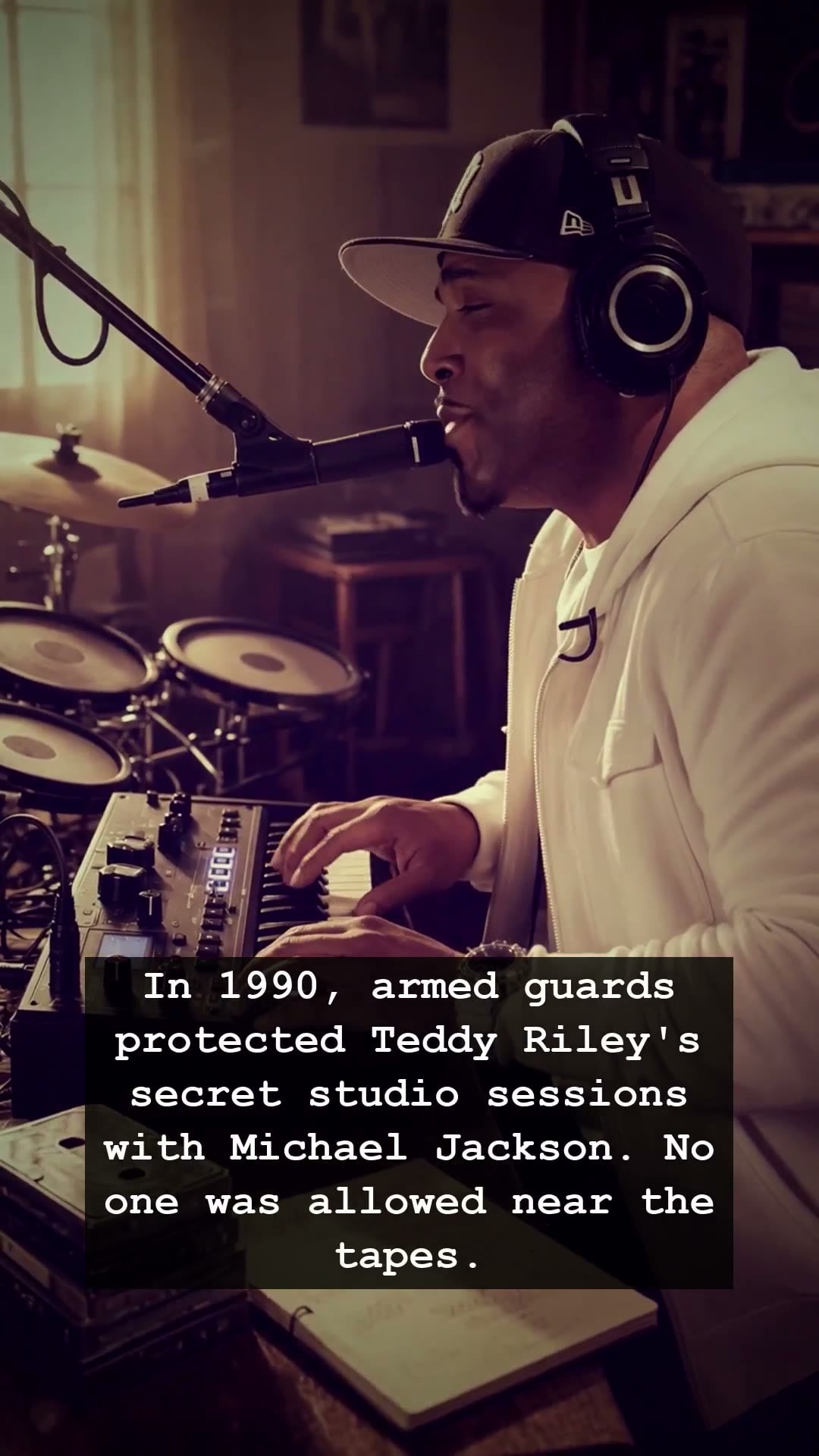
It was 1990, and the world of pop music felt like it was holding its breath. Outside, the neon glow of the late eighties was fading, and the grit of grunge was starting to stir in Seattle, but inside a fortified, guarded studio, the King of Pop was preparing for his next transformation. Michael Jackson had summoned a young, visionary producer named Teddy Riley to craft a sound that would define the next decade. Legend has it that armed guards patrolled the perimeter of these secret sessions, their eyes scanning for industry spies and gossip columnists. No one, not even the most trusted label executives, was allowed near the tapes. The air was thick with the scent of high-stakes pressure and the electric hum of state-of-the-art synthesizers.
Teddy Riley, the architect of New Jack Swing, was tasked with bridging the gap between smooth R&B and the raw, aggressive edge of urban street culture. This was a monumental collision of worlds. Riley brought his signature hard-hitting drum machine rhythms and jagged, soulful samples, while Jackson brought his unparalleled vocal precision. They were essentially inventing a new musical vocabulary behind those closed doors. The security wasn’t just for show; it was a testament to the paranoia and intense competitive nature of the music industry in the golden age of MTV. A leak could have cost millions, but more importantly, it could have spoiled the reveal of a new, harder-hitting Michael Jackson.
Working with Teddy Riley forced Jackson to move away from the polished sheen of his Quincy Jones era and embrace a more dangerous, contemporary sound. During these clandestine hours, the sessions for the album Dangerous began to take shape. Riley remembers the long nights, the exhaustion, and the absolute focus required to merge Jackson’s melodic instincts with the syncopated, stuttering beats that Teddy Riley had pioneered in the clubs of New York. Every snare hit was scrutinized, and every layer of sound was treated like a state secret, protected from the outside world by the silence of those heavy studio doors.
Reflecting on that time today, it feels like a relic of a bygone era. We live in a world where every step of a creative process is documented on social media, but back then, Teddy Riley and Michael Jackson operated in a vacuum of mystery. That isolation allowed them to take risks that felt genuinely revolutionary when they finally hit the airwaves. The result was not just a collection of songs; it was a cultural shift that pushed popular music into a bolder, more rhythmically complex territory that still influences chart-toppers today.
When we listen to those tracks now, we are hearing the sound of history being locked away and refined. Teddy Riley didn’t just produce a record; he helped construct a myth. The armed guards might have left their posts decades ago, but the music they protected remains as vital as the day the tapes were finally unspooled. It remains a fascinating reminder of how true art often requires a little bit of mystery and a whole lot of protection to truly change the world.