
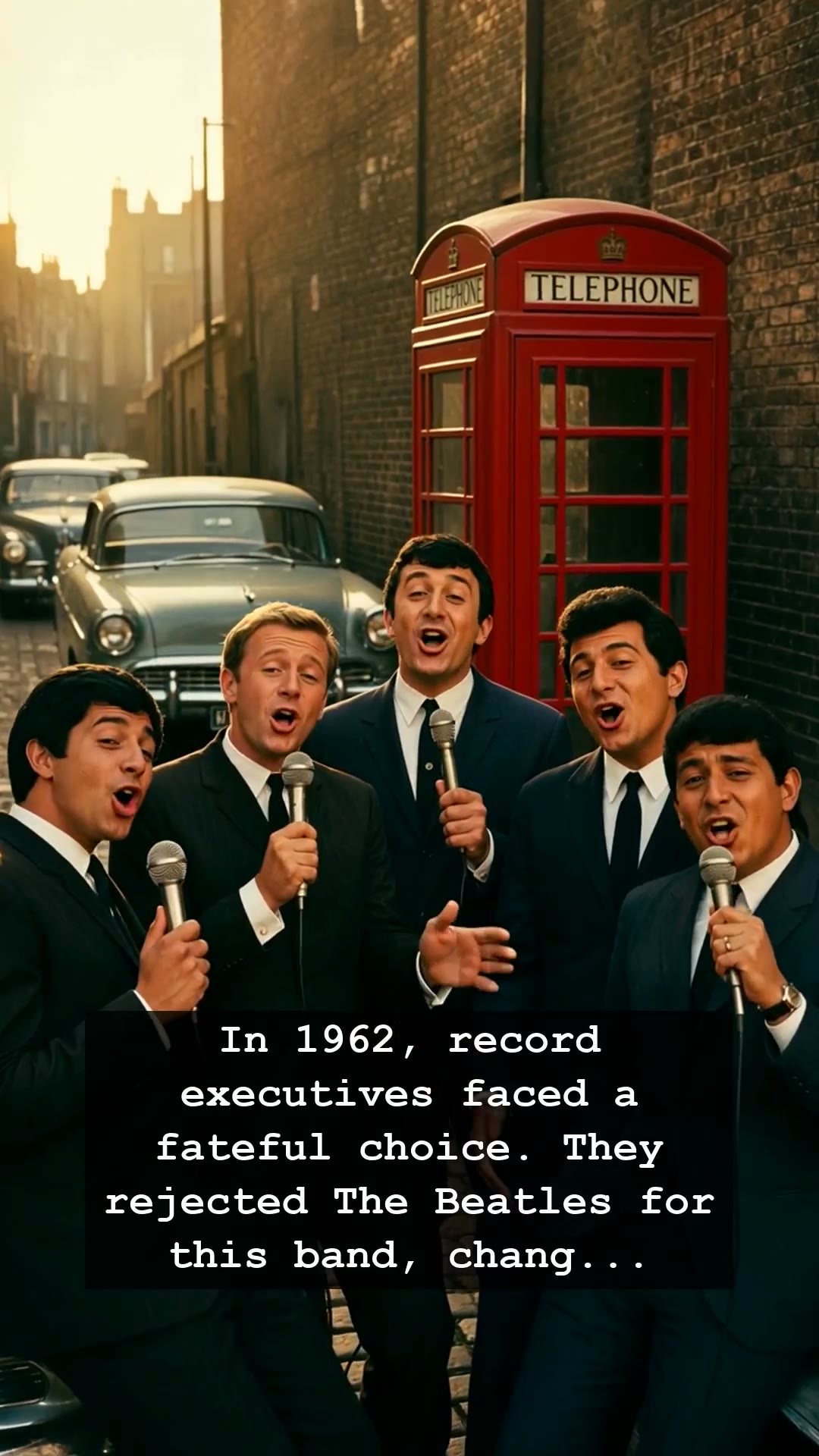
It was the first day of 1962, a crisp, cold morning in London, when the history of modern music hung in the balance. Within the hallowed, wood-paneled walls of Decca Records, an executive named Mike Smith sat in judgment of two hungry, young bands. The choice he made that day would not only define the trajectory of the swinging sixties but would go down as the most staggering blunder in the history of the recording industry. The Beatles, raw and unpolished, were sent packing with a dismissive comment about guitar groups being on their way out. Instead, Decca signed The Tremeloes, a band that, while talented, lacked the cosmic, world-shaking energy of the four lads from Liverpool.
Brian Poole and The Tremeloes were far from untalented. In fact, they were arguably the tighter, more professional act at the time. They were the polished darlings of the jukebox circuit, known for their tight harmonies and energetic pop sensibilities. In the early sixties, before the British Invasion truly set the world on fire, Brian Poole and The Tremeloes were the safe, reliable choice. They were the sound of the ballroom, the music that young couples danced to while the world outside was still waking up to the cultural seismic shift that was just around the corner. While The Beatles were busy reinventing the architecture of a pop song, Brian Poole and his bandmates were perfecting a craft that belonged firmly to the tradition of the late fifties.
It is easy to look back through the lens of history and cast judgment, but to understand the choice, one must understand the era. In 1962, music executives were still operating in the shadow of the fifties, clinging to the familiar comfort of the beat group model. The Tremeloes represented everything the industry knew how to sell—charm, melody, and a clean-cut aesthetic that wouldn’t frighten the parents. When Brian Poole stepped up to the microphone, he delivered songs that fit perfectly into the radio rotation of the time. But music is a fickle beast, and the tide was turning faster than any suit in a high-rise office could comprehend.
The tragedy, if one can call it that, is that Brian Poole and The Tremeloes never truly escaped the shadow of that fateful rejection decision. They would go on to have their own successes, scoring hits like Silence Is Golden, but they would forever be the ‘other’ band. It is a haunting thought—how the trajectory of four lives in Liverpool changed in an instant, while a talented group of musicians found themselves locked in a permanent, ironic role as the footnote to the greatest story ever told. Their story is a reminder of the fragility of success, the cruelty of timing, and the thin line between being a legend and being remembered as the answer to a trivia question.
Today, when we look back at the vinyl crackle of the early sixties, we see a world on the brink. The Tremeloes remain an important piece of the British pop puzzle, a band that provided the soundtrack to a generation that didn’t yet know it was about to change the world. It serves as a poignant reminder that in the music business, as in life, you can do everything right, you can play every note perfectly, and yet, fate can still decide to whisper the name of someone else. Perhaps the next time you drop the needle on a vintage record, think of the day the history of rock and roll took a left turn, and remember the bands that stood in the spotlight for just a moment, before the shadows of icons grew too long to overcome.