
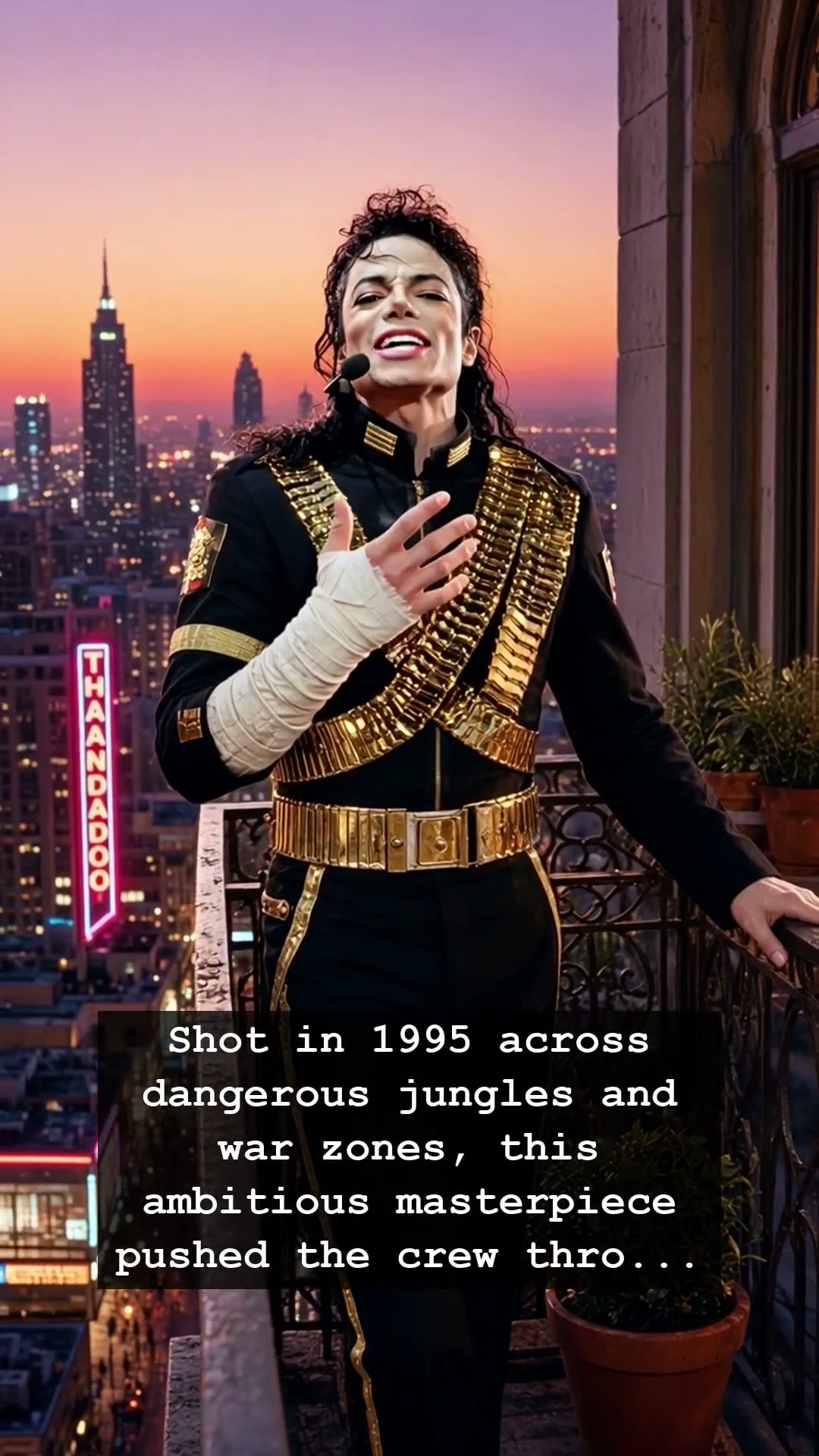
It was 1995, and the world was watching the transformation of pop music into something far more cinematic and demanding. In an era when MTV dictated the cultural zeitgeist and the Walkman was still the primary companion for music lovers, Michael Jackson decided to do the impossible. He didn’t just want to release a hit; he wanted to capture the agony of a dying planet. The resulting music video for Earth Song became an ambitious masterpiece that pushed his production crew through terrifying logistical nightmares, war-torn landscapes, and the raw, unforgiving beauty of the Amazon rainforest. While fans marveled at the final cut, few realized that the artist was orchestrating a high-stakes mission that bordered on madness.
The production was a logistical gauntlet that would have broken a lesser star. From navigating dangerous zones riddled with civil unrest to enduring the relentless humidity and unpredictable wildlife of remote jungles, the team faced life-threatening obstacles. Michael Jackson was relentless, driven by a visceral need to translate his environmental anxieties into a visual language that felt urgent and deeply personal. It was a time when grand studio productions were the gold standard, but Michael Jackson sought to break that mold by filming on location, forcing his team to face the harsh realities of the environments they were trying to save. It was not just a video shoot; it was an expedition into the heart of human suffering and ecological decay.
Looking back, the intensity of this project encapsulates the paradox of the King of Pop. He was a man who lived in a gilded cage of immense fame and perpetual scrutiny, yet he felt a profound, almost desperate connection to the plight of the Earth. The haunting melody and his raw, pleading vocals reflect a moment in 1990s history where the threat of climate catastrophe was beginning to pierce through the shimmering neon haze of the disco aftermath and the emerging digital age. While the public often focused on his personal scandals and the media circus that followed his every move, this song remains a testament to his artistic sincerity and his ability to command global attention for a cause he held dear.
We must remember that this was an era before the instant gratification of viral internet content. When Michael Jackson released a project of this magnitude, the world stopped. People gathered around their television sets, waiting for the premiere, feeling the weight of the message as the screen flickered with images of destruction and rebirth. It was a bridge between the analog soul of the 80s and the increasingly globalized, tech-driven 90s. The logistical risks taken during those shoots were a testament to his belief that music could serve as a powerful catalyst for change, even if the man behind the microphone felt increasingly isolated from the world he was trying to protect.
Today, the legacy of Earth Song serves as a haunting reminder of the high price of creative perfection. It reminds us of a time when pop stars were not just brands, but complex figures capable of immense empathy and artistic ambition. Michael Jackson left behind a catalog that spans the evolution of modern sound, but it is in these moments of vulnerability that his humanity truly shines. As we look back at the cinematic grandeur of the mid-nineties, let us remember not just the icon, but the artist who dared to take his crew into the jungle to demand that we finally listen to the silence of the earth.