
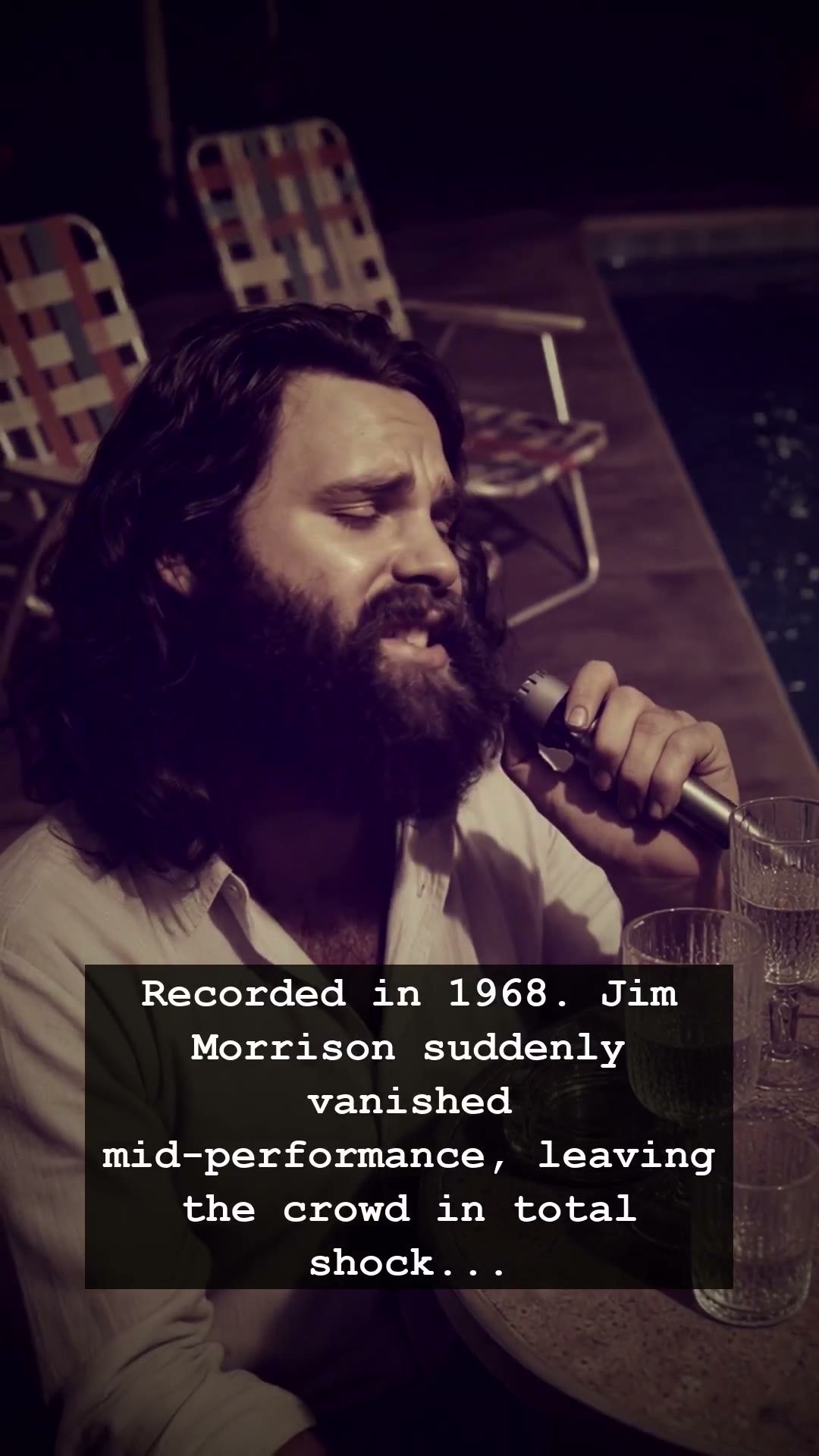
The year was 1968, a time when the cultural tide of America was shifting rapidly, and the air was thick with the scent of rebellion and cheap incense. Inside the sweaty, dimly lit venues that defined the late sixties, The Doors were the reigning kings of psychedelic chaos. Jim Morrison, the self-proclaimed Lizard King, held audiences in the palm of his hand with a magnetism that felt almost dangerous. But beneath the velvet trousers and the poetic intensity, the pressure of constant touring and the relentless glare of fame were beginning to crack the foundation of the man who lived life on the razor’s edge.
It happened during a routine performance, or at least that is what the crowd expected. As the organ swirled and the drums thundered in that signature, hypnotic cadence, the music suddenly faltered. Jim Morrison, midway through a signature vocal improvisation, abruptly stopped, turned his back to the audience, and simply walked off the stage. The band continued to play for a few frantic minutes, looking toward the wings, expecting their frontman to return with a burst of drunken energy. But the stage remained empty. The silence that followed was heavy, a suffocating realization for thousands of fans that the music had hit a brick wall.
This was not merely a rock star tantrum; it was the manifestation of a soul struggling to reconcile his artistic vision with the demands of an industry that viewed him as a product rather than a poet. Jim Morrison had long been vocal about his disdain for the spectacle of rock stardom, often finding himself trapped within the very persona he helped create. Behind the scenes, the exhaustion was absolute. The excess of the era—the drugs, the late-night songwriting sessions, and the constant legal battles—had drained the man until there was nothing left to give the microphone.
Looking back from the vantage point of the modern day, this disappearance feels like a haunting metaphor for the entire decade. We remember the sixties through a lens of golden-hued nostalgia, but the reality was often far more visceral and unhinged. The Doors thrived in this friction, creating a dark, brooding soundtrack for a country in the midst of an identity crisis. When Jim Morrison stepped away, he wasn’t just leaving a stage; he was withdrawing from a world that demanded too much and understood too little.
Decades later, the legend of that night remains a staple of rock lore, whispered in forums and discussed by those who still keep their vinyl records on display. Jim Morrison eventually found his way back, but the cracks in his armor never truly healed. His story reminds us that even the most vibrant stars are burning through their own supply of light. As we look back at the icons who defined our youth, we must remember that behind every legendary performance was a human being grappling with the crushing weight of their own mythology. Do you remember where you were when the music of that era first changed your life?