
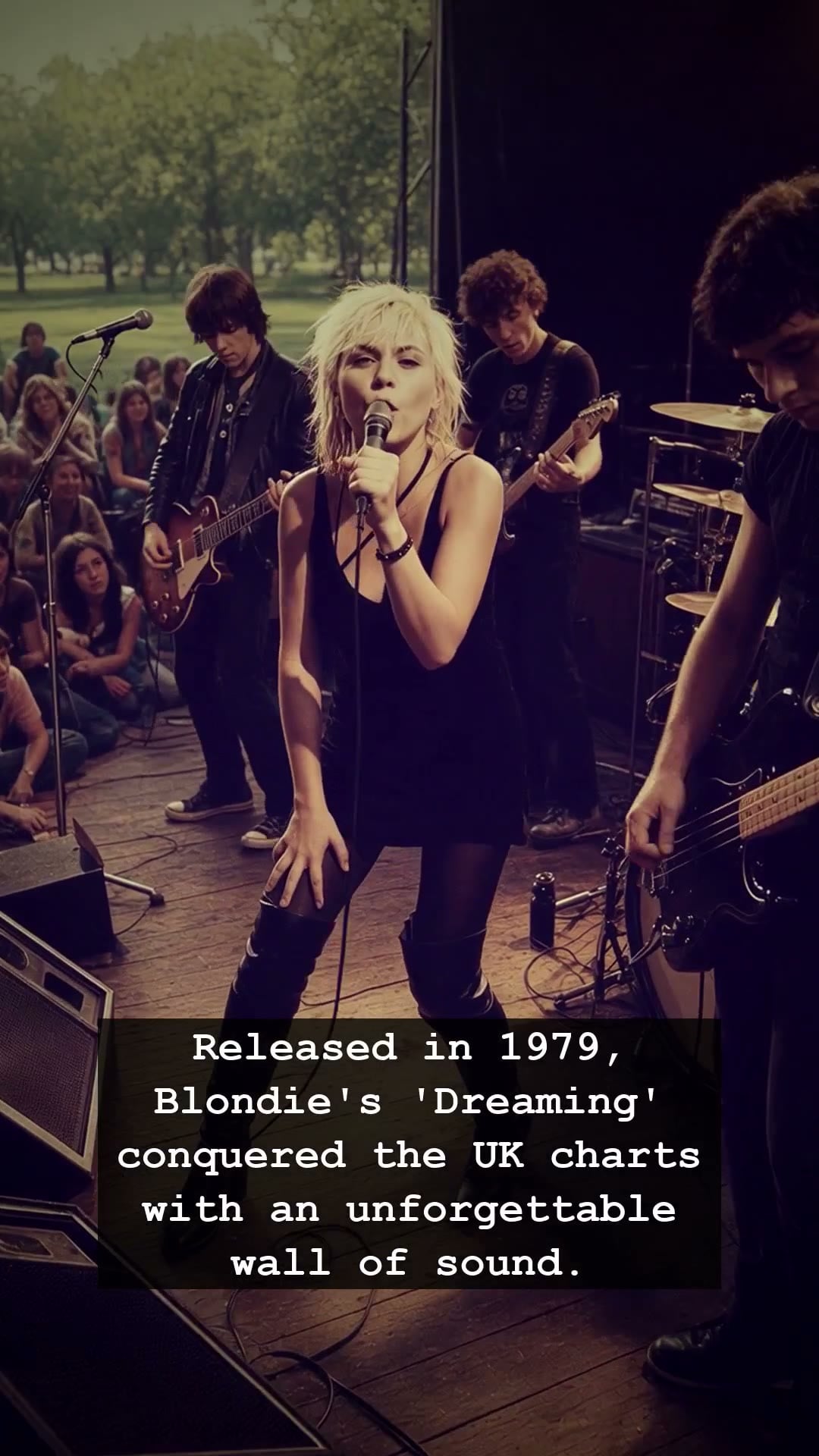
It was 1979, and the airwaves were dominated by the polished gloss of late-seventies pop. Suddenly, a relentless wall of rapid-fire drums cut through the silence, announcing the arrival of Dreaming by Blondie. As the track climbed the UK charts with infectious energy, audiences were seduced by the shimmering production. Yet, behind the catchy melody and Debbie Harry’s cool, detached vocals lay a rebellious spirit that had been forged in the grimy, dangerous trenches of the New York City punk scene. While the world saw a pop sensation, those who knew the history saw the defiance of a band that refused to be categorized by the music industry.
To understand the true weight of Dreaming, one must travel back to the neon-lit desperation of CBGB, the legendary venue where Blondie cut their teeth. This was an era when the underground was defined by sweat, broken glass, and an absolute rejection of mainstream conventions. Debbie Harry and Chris Stein were not merely musicians; they were architects of an aesthetic that blended the raw, jagged edges of punk with the sophisticated sensibility of art-pop. The song Dreaming was more than just a hit; it was a masterful subversion of pop music, using the very tools of the mainstream to smuggle in the grit of the Bowery.
Behind the scenes, the pressure was suffocating. The transition from underground darlings to global superstars brought with it the crushing weight of expectation and the dark allure of fame. As Blondie rose, the band faced internal friction and the constant, draining battle to maintain their artistic autonomy. The studio sessions for the album were often fueled by an exhausting combination of adrenaline and the harsh realities of a life lived on the edge. The rapid-fire drumming that became the song’s signature was a direct reflection of that high-octane anxiety, capturing the restless, heartbeat-racing tension of a group standing on the precipice of massive success.
By the time Dreaming solidified Blondie as international icons, the band had already rewritten the rules of the genre. They proved that punk was not just about three chords and a scream; it could be layered, melodic, and undeniably cool. This was the era of the Walkman and the start of the MTV revolution, and Blondie became the face of a new cultural shift where style and substance were inextricably linked. They brought the ghosts of the underground into the living rooms of millions, bridging the gap between the dark corners of the city and the shimmering peak of the pop charts.
Even today, the legacy of Blondie resonates because it feels authentic, a rare artifact from a time when music felt like a matter of life and death. Dreaming remains a reminder of a moment when the walls between genres were being torn down, leaving space for something entirely new. When we look back at the late seventies, we don’t just see the fashion; we feel the defiant pulse of a band that dared to dream in a world that wanted them to play by the rules. Their story is a timeless testament to the power of artistic rebellion.