
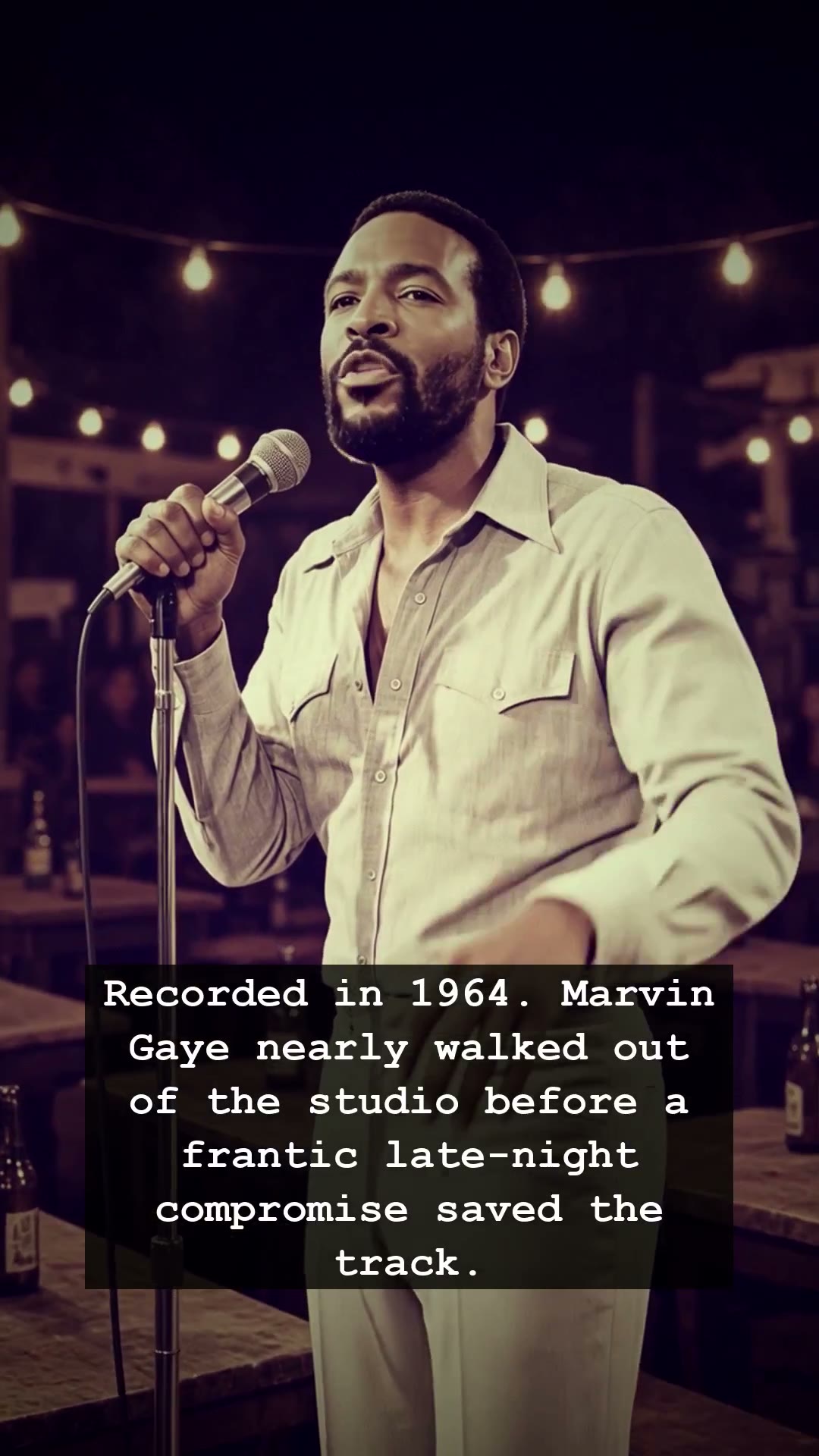
It was 1964 at the legendary Hitsville U.S.A. studio in Detroit. The air inside the cramped recording space was thick with the scent of stale coffee and the palpable tension of a brewing storm. Marvin Gaye stood before the microphone, his brow furrowed, his voice echoing off the walls with a mixture of exhaustion and artistic rebellion. He was on the verge of walking out, ready to abandon a track that would eventually define the Motown sound forever. The collaboration was grinding to a halt, the clock was ticking past midnight, and the pressure to capture lightning in a bottle was reaching a breaking point. For a moment, it seemed like the world might never hear the soulful lament that would soon grace jukeboxes across America.
Marvin Gaye was never one to conform to the assembly-line pressure of the record label industry. While Motown was known for its polished, rhythmic perfection, Marvin possessed a restless soul that hungered for something deeper, something raw and unscripted. On this fateful night, the creative friction between his vision and the expectations of the producers turned into a volatile confrontation. He felt the music wasn’t capturing the emotional weight he carried, leading to a frantic late-night compromise that pushed everyone to the brink. It was a classic clash of egos and talent, the kind of backstage drama that often defined the Golden Age of rhythm and blues, away from the glittering lights of the television cameras and the adoring crowds.
As the night dragged on, the studio atmosphere became electric. The compromise finally reached was a delicate gamble, a leap of faith that transformed a shaky session into a timeless piece of art. Marvin Gaye channeled his internal turmoil into the recording, his vocal delivery shifting from a hesitant whisper to a soaring declaration of passion. That singular, strained moment in the studio serves as a testament to why we are still obsessed with his legacy today. It wasn’t just about the melody; it was about the blood, sweat, and absolute vulnerability he poured into the microphone, a stark contrast to the synthesized pop that would dominate the airwaves decades later.
We often look back at the nineteen-sixties through a sepia-toned lens, forgetting the genuine human chaos that existed behind those iconic hits. Marvin Gaye existed in a world of high stakes, where a single bad take could stall a career or fracture a professional relationship forever. This 1964 session is a window into the darker, more human side of Motown. It reminds us that behind every polished record spinning on a turntable in a dimly lit den, there was a real person struggling to keep their identity intact against the crushing weight of fame and corporate expectation.
Today, listening to his voice remains a transcendent experience. We hear the echoes of that midnight struggle in every note, a reminder that the most beautiful things in music are often born from the most uncomfortable tensions. Marvin Gaye wasn’t just performing; he was fighting for his artistic soul, and in doing so, he left us with a legacy that refuses to fade. Next time you drop the needle on a record, remember the midnight silence he nearly walked into, and be grateful he stayed to sing his truth for us all.