
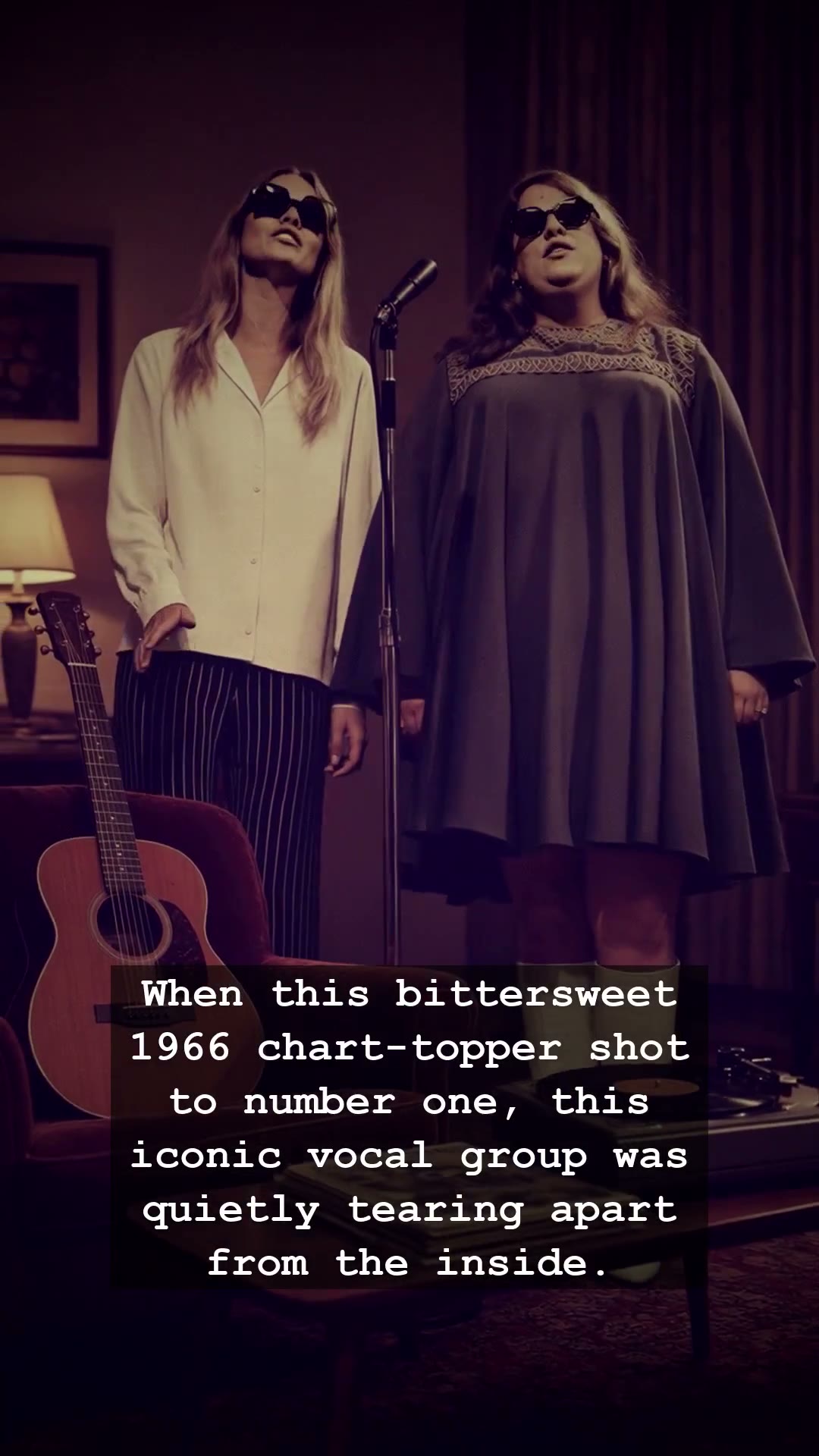
In the golden glow of 1966, the airwaves were dominated by a sound that defined a generation. California Dreamin became the anthem of the decade, a hauntingly beautiful folk-rock masterpiece that transported listeners to a sunny, idealized West Coast. But while the world was busy swaying to the harmonies of The Mamas and the Papas, the four individuals behind the microphones were trapped in a cycle of chaos that would ultimately consume them. Behind the velvet-smooth vocal blends lay a volatile love quadrangle so tangled that it turned their rise to stardom into a slow-motion explosion of jealousy, betrayal, and creative heartbreak.
At the center of this storm were John and Michelle Phillips, whose marriage was fraying under the relentless pressure of their meteoric ascent. Adding gasoline to the fire was Denny Doherty, who found himself hopelessly in love with Michelle, while Mama Cass Elliot harbored a secret, unrequited longing for Denny. It was a domestic nightmare masquerading as a harmonic dream. Every time they gathered in the studio to craft their intricate, layered vocal arrangements, they were not just singing notes; they were navigating a minefield of suppressed rage and longing. The listener would never know it by the purity of their tone, but the group was disintegrating long before their public collapse.
This era was defined by the transition from the innocent pop of the early sixties to the more introspective, chemically fueled landscape of the late sixties. The Mamas and the Papas were the architects of that change, yet they were ill-equipped to handle the toll of their newfound fame. Their professional success became a catalyst for their personal downfall. As they toured, the boundaries between the stage and their private lives blurred. The bright lights of the television era and the intimacy of the record sleeve hid the reality that their interpersonal relationships were becoming as fragmented as a broken mirror. By the time they reached their peak, the psychological cost was far too heavy for the group to maintain.
Today, we look back at The Mamas and the Papas not just for their hit records, but for the raw human drama that fueled their sound. There is a distinct, bittersweet irony in listening to their music decades later through a vintage Walkman or on a crackling vinyl record. You hear the joy of the sunshine pop aesthetic, but if you listen closely, you can almost detect the jagged edges of their reality. Their story serves as a cautionary tale of the music industry during a time when talent and madness often walked hand in hand. It is a reminder that the most beautiful harmonies often emerge from the deepest wells of human suffering.
Decades after the group dissolved, the legacy of The Mamas and the Papas remains frozen in time, preserved in the amber of 1960s pop culture history. They gave us the soundtrack to the counterculture, a legacy that survives the dissolution of their quartet. When you play their tracks today, you are listening to more than just music; you are hearing the echo of a brief, brilliant, and deeply troubled moment in time. The next time you hear those iconic opening chords, remember the ghosts in the machine and the fragile human hearts that beat behind every perfect melody.