
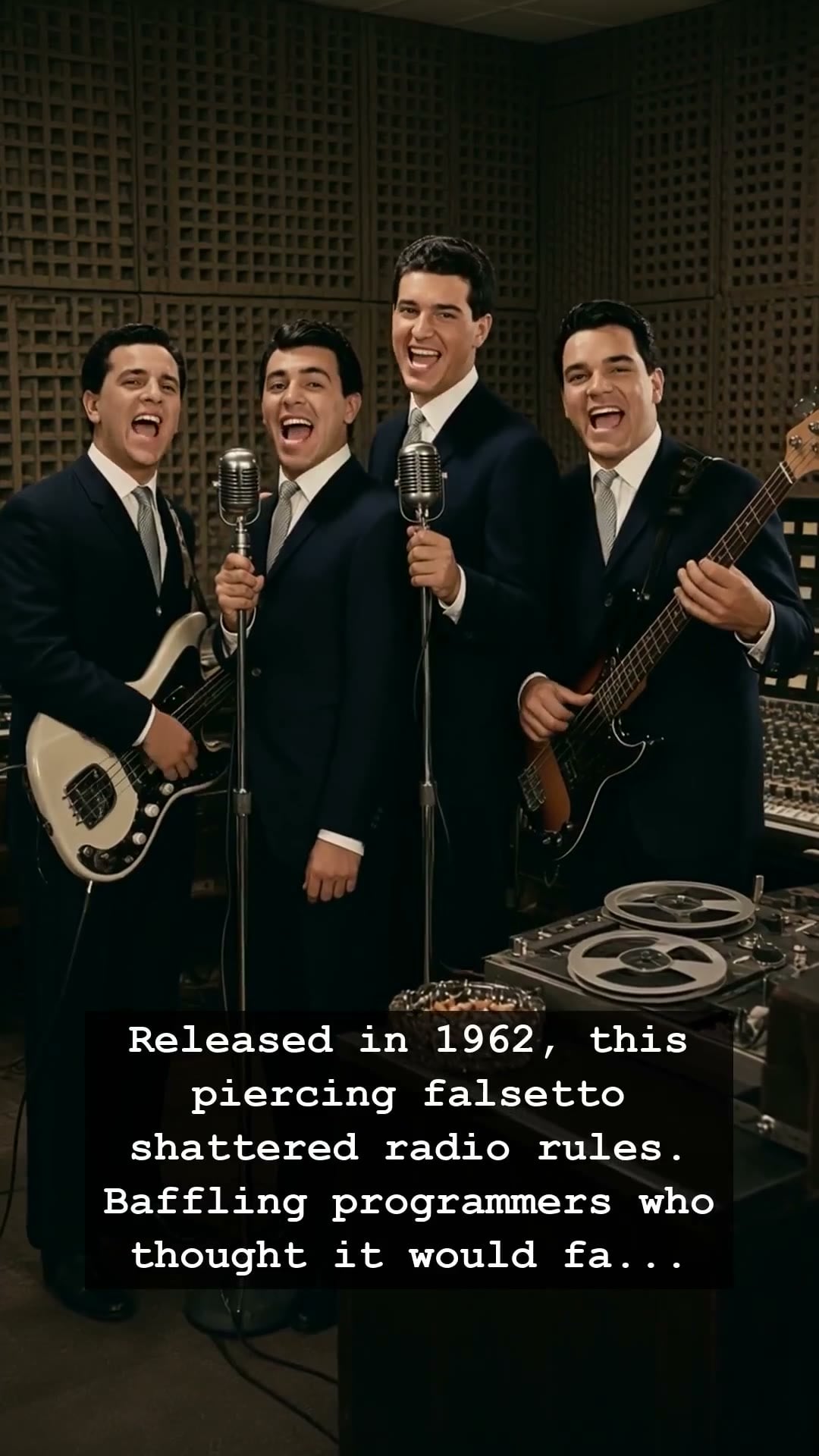
The year was 1962, and the airwaves were dominated by the polished, predictable sounds of doo-wop and early pop crooners. Then, like a shard of glass cutting through velvet, a voice pierced the silence. It was high, impossibly thin, and hauntingly persistent. When Frankie Valli hit that piercing falsetto on Sherry, the suits in the radio industry were not just skeptical; they were terrified. They were convinced that such an abrasive, unconventional vocal range would be a commercial catastrophe. To them, music was meant to soothe, not to challenge the ears of the postwar generation. But Frankie Valli had a different vision, and the world was about to be proven wrong.
As the needle dropped on the vinyl, the song didn’t just play; it exploded. Despite the frantic warnings from program directors who feared the piercing falsetto would drive listeners to change the station, Sherry rocketed straight to number one on the Billboard Hot 100. It was a cultural pivot point, a moment where the rigid rules of the music industry were shattered by sheer, raw audacity. Frankie Valli and The Four Seasons had managed to capture a kind of kinetic, urban energy that resonated from the jukeboxes of Jersey diners to the transistor radios of suburban bedrooms. It was the sound of a new era beginning to find its jagged, beautiful voice.
Behind the success, however, lay a grueling journey of grit and relentless ambition. Frankie Valli had spent years paying his dues in the smoky, dimly lit clubs of the New Jersey circuit, honing a sound that was far removed from the safe studio productions of the day. This wasn’t manufactured pop; it was the product of thousands of hours of vocal strain and the burning desire to be heard above the noise. The backstory is one of quiet sacrifice and the dark shadows of fame, where the personal life of Frankie Valli often played second fiddle to the immense pressure of maintaining that iconic, glass-shattering register while on relentless tour cycles.
Even today, listening to those early tracks transports us back to a time of diners, street corners, and the golden age of American music. It was an era where a single song could change a life overnight, provided you had the nerve to break the mold. The legacy of Frankie Valli stands as a testament to the fact that artistic risk is almost always rewarded if the emotion behind it is authentic. The falsetto that once frightened the radio programmers has now become an immortal staple of our cultural fabric.
As we look back at the landscape of the early sixties, it is easy to forget how fragile that success truly was. Yet, the voice of Frankie Valli persists, echoing through the decades with the same haunting intensity that first shook the foundations of the industry. It reminds us that sometimes, to make history, you simply have to be willing to hit the note that no one else dares to reach. Next time you hear those opening chords, take a moment to listen closely; you are hearing the sound of a rebel who changed the game forever.