
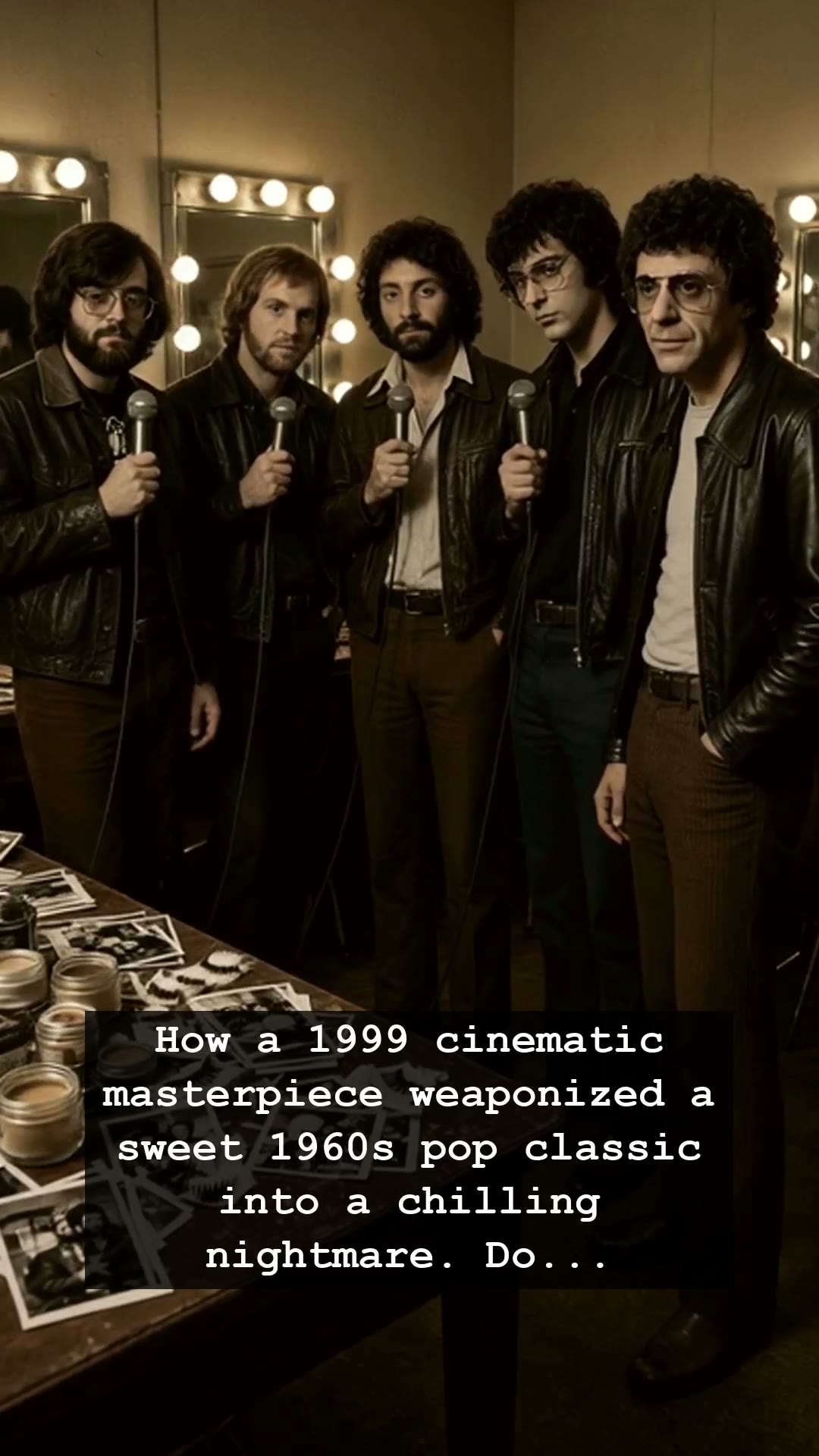
The year was 1967. The world was awash in the saccharine harmonies of the Four Seasons, a group led by the unmistakable, soaring falsetto of Frankie Valli. Their hit single, Can’t Take My Eyes Off You, was the quintessential romantic ballad—a song played at proms, danced to under dim lights, and etched into the memories of a generation defining love through a jukebox lens. It was pure, it was sweet, and it felt like an untouchable relic of the mid-sixties. Yet, no one could have predicted that three decades later, this very anthem would be weaponized by cinema to depict something far more sinister than romance.
In 1999, the film industry witnessed a moment of sonic subversion that haunted audiences long after the credits rolled. A director took the pristine, upbeat melody of the Frankie Valli classic and stripped away its innocence. Suddenly, the song was no longer about a lovestruck boy watching his sweetheart; it became the chilling soundtrack to a scene of absolute, cold-blooded violence. The juxtaposition was jarring, turning a song once associated with school dances into a psychological trigger for dread. It was a masterclass in atmospheric manipulation, proving that even the most beloved pop tracks are vulnerable to the dark interpretations of modern art.
The genius behind this transition lies in the vulnerability of Frankie Valli himself. His voice possessed an ethereal quality that could cut through the noisy transistor radios of the era, standing out against the burgeoning sound of the British Invasion. Whether it was the raw energy of the early rock ‘n’ roll years or the polished studio productions of the late sixties, the Frankie Valli sound remained a constant. By layering that familiar, golden-era vocal over a sequence of gruesome intensity, the film forced us to confront the duality of nostalgia: how the art of the past can be repurposed to mirror the shadows of our present reality.
Looking back, it is fascinating to see how the song survived this transformation. Despite being weaponized as a tool for cinematic terror, the essence of the original track remains untouched for those who lived through its prime. It serves as a reminder of an era when music was the primary currency of emotion, long before the digital age, MTV, or the constant hum of the internet defined our experience. The grit, the talent, and the genuine passion of Frankie Valli were never truly compromised; they were merely cast into a different, more unsettling light for a new audience to discover.
Perhaps that is the true power of music from 1955 to 1985. It is so deeply ingrained in our collective psyche that it can be bent, twisted, and darkened without ever losing its original soul. Frankie Valli continues to stand as a titan of that golden age, a performer whose legacy spans from the sweaty clubs of the early days to the silver screens of the late nineties. The next time you hear those opening notes, listen closely—can you still hear the romance, or has the memory of that cinematic nightmare crept in? Perhaps it is a bit of both, a reminder that the best music never really dies; it simply changes with us.