
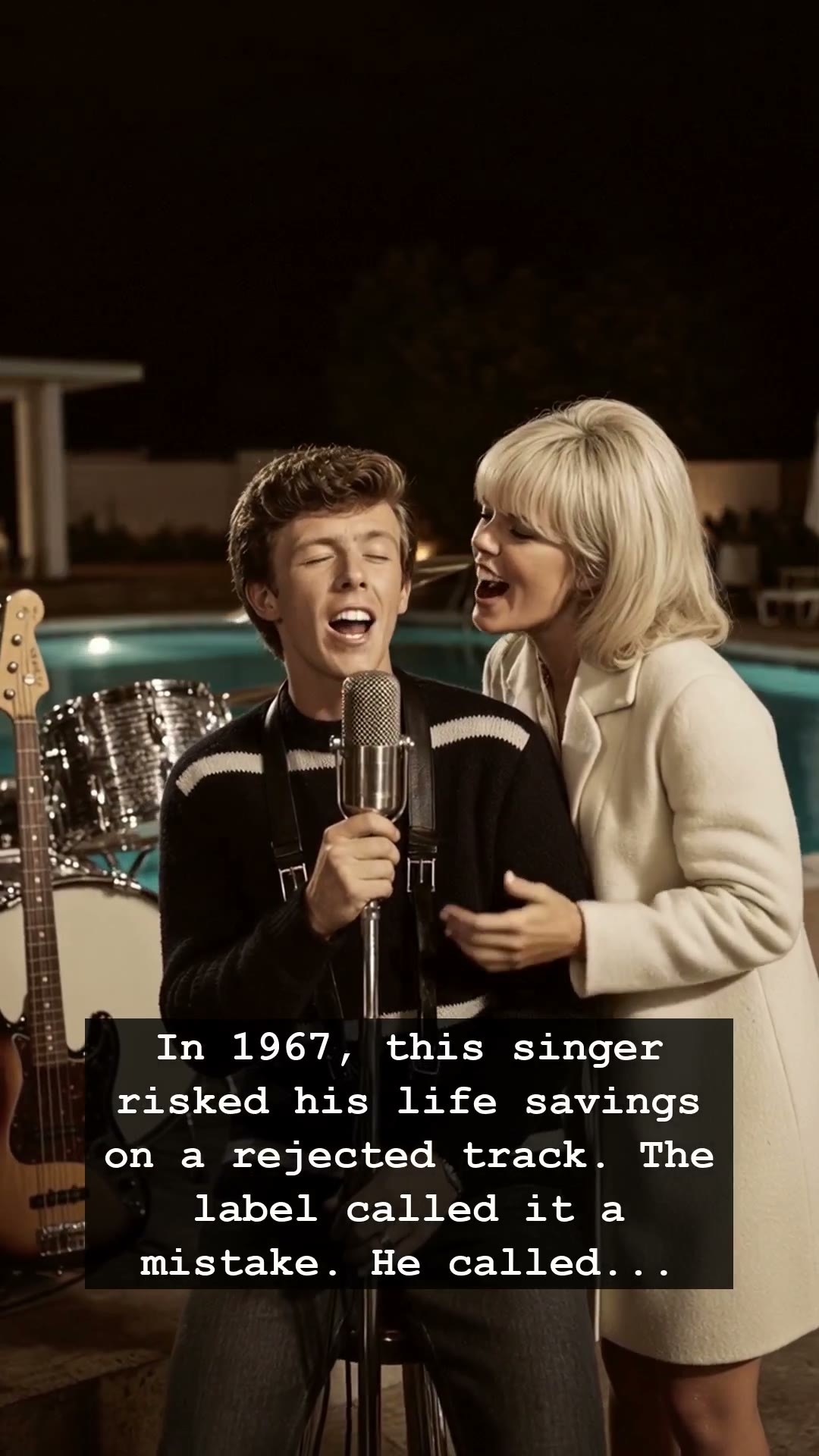
In 1967, the music industry was a cold, calculating machine. Executives sat in mahogany-paneled offices, deciding which melodies would grace the radio waves and which would be cast into the bargain bins of history. For Frankie Valli, the man with the golden, glass-shattering falsetto, the pressure was mounting. He was no longer just the face of The Four Seasons; he was an artist with a vision that his label, Philips Records, was flatly refusing to fund. They looked at his latest experimental track and saw a commercial failure. Frankie Valli saw something else entirely: a masterpiece waiting to be born.
Faced with a complete rejection from the suits in the boardroom, Frankie Valli did the unthinkable. He reached into his own bank account and drained his personal life savings to cover the recording costs. He paid the session musicians, the studio time, and the production fees out of his own pocket. It was a high-stakes gamble that could have left him destitute, a cautionary tale of a star who burnt out by chasing ghosts. But beneath the surface of the swinging sixties, where the smell of hairspray and vinyl permeated every studio, he knew he was capturing the sound of a changing generation.
When he walked into the studio, the air was thick with tension. He wasn’t just recording a song; he was betting his livelihood on a hunch. As he leaned into the microphone, his signature falsetto soared, cutting through the silence with a raw, desperate beauty. The music that came out of those speakers was unlike anything the label had dared to touch. It possessed a haunting resonance that would soon echo from every jukebox in every neon-lit diner across America, cementing his place in the pantheon of pop royalty.
The track, Can’t Take My Eyes Off You, emerged not as a mistake, but as an immortal anthem. It became the soundtrack for lovers dancing under the disco lights of later years and a nostalgic touchstone for those who remember the transition from the polished doo-wop era to the more complex, soulful arrangements of the late sixties. By the time it climbed the charts, the label’s skepticism had been replaced by the deafening sound of public adoration. Frankie Valli had proven that an artist’s intuition is often sharper than any spreadsheet or corporate mandate.
Looking back, this moment stands as a defining turning point in the history of pop music. It highlights the eternal struggle between creative integrity and the bottom line, a battle that still rages behind the scenes today. Frankie Valli risked everything to prove that sometimes, the greatest risks are the ones that define a legacy. It serves as a reminder of an era when music wasn’t just a product, but a deeply personal expression of the soul. Can you still hear those opening strings and that unforgettable, soaring chorus, echoing back to a time when songs were built to last forever?