
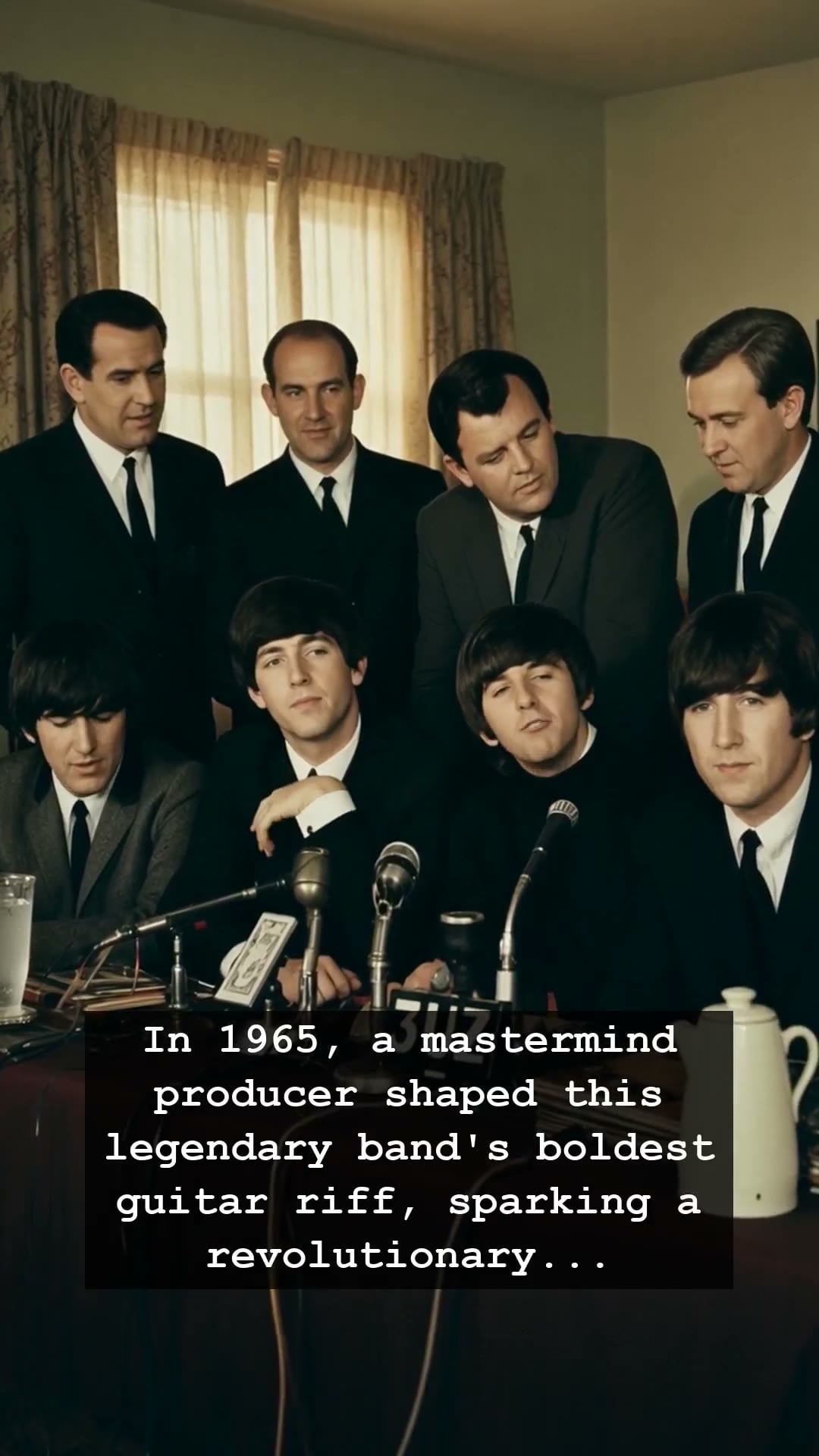
It was 1965, and the world was vibrating with the sound of a changing guard. Inside the hallowed, smoke-filled walls of Abbey Road Studios, the air felt electric, thick with the scent of amplifier tubes heating up and the nervous energy of four lads from Liverpool who were outgrowing their own legend. At the helm of this transformation stood a man in a crisp suit, a classical ear in a rock and roll world: George Martin. While the world remembers the faces of the Fab Four, it was George Martin who held the glass lens through which their chaotic genius was focused into a beam of pure, groundbreaking sound that would define an era.
That year marked a pivotal turn. The Beatles were tired of the standard three-chord hit machine, and George Martin was the secret architect who dared to push them into the abyss of experimentation. He was the one who encouraged them to stop simply recording songs and start painting with sound. When that iconic, stinging guitar riff for Day Tripper cut through the studio monitors, it wasn’t just another pop track; it was a manifesto. Martin knew exactly how to capture that raw, rebellious edge while grounding it in the sophisticated production techniques that would soon make their records sound lightyears ahead of anyone else on the radio dial.
The tension in the studio was palpable, a crucible where artistic egos clashed with creative brilliance. There was no room for complacency. Under George Martin’s watchful eye, the band engaged in rigorous sessions that stripped away the bubblegum sheen of their early days, replacing it with something harder, darker, and infinitely more profound. This was the birth of a new musical consciousness, one that would eventually lead them from the clean-cut suits of the early sixties to the psychedelic tapestries of the later decade. George Martin didn’t just produce these tracks; he provided the essential bridge between their wild instincts and the rigid requirements of studio recording.
Every time you hear that riff today, you are hearing the intersection of classic discipline and rock rebellion. It resonates because it was the moment they stopped playing for the screaming crowds and started playing for the history books. As you recall the crackle of a vintage jukebox or the feel of a Walkman pressed to your ears, realize that the magic of that era wasn’t accidental. It was calculated, captured, and carefully curated by a mastermind who understood that the future of music lay in breaking the rules he had spent his life learning.
We look back at 1965 not just for the songs, but for the audacity of the artists who dared to shift the paradigm. George Martin was the quiet shadow behind the spotlight, the man who shaped the boldest impulses of the most famous band in the world. As the echoes of that transformative year continue to ripple through the decades, his influence remains a testament to the fact that all it takes to change the world is a vision, a guitar, and the courage to turn the volume up.