
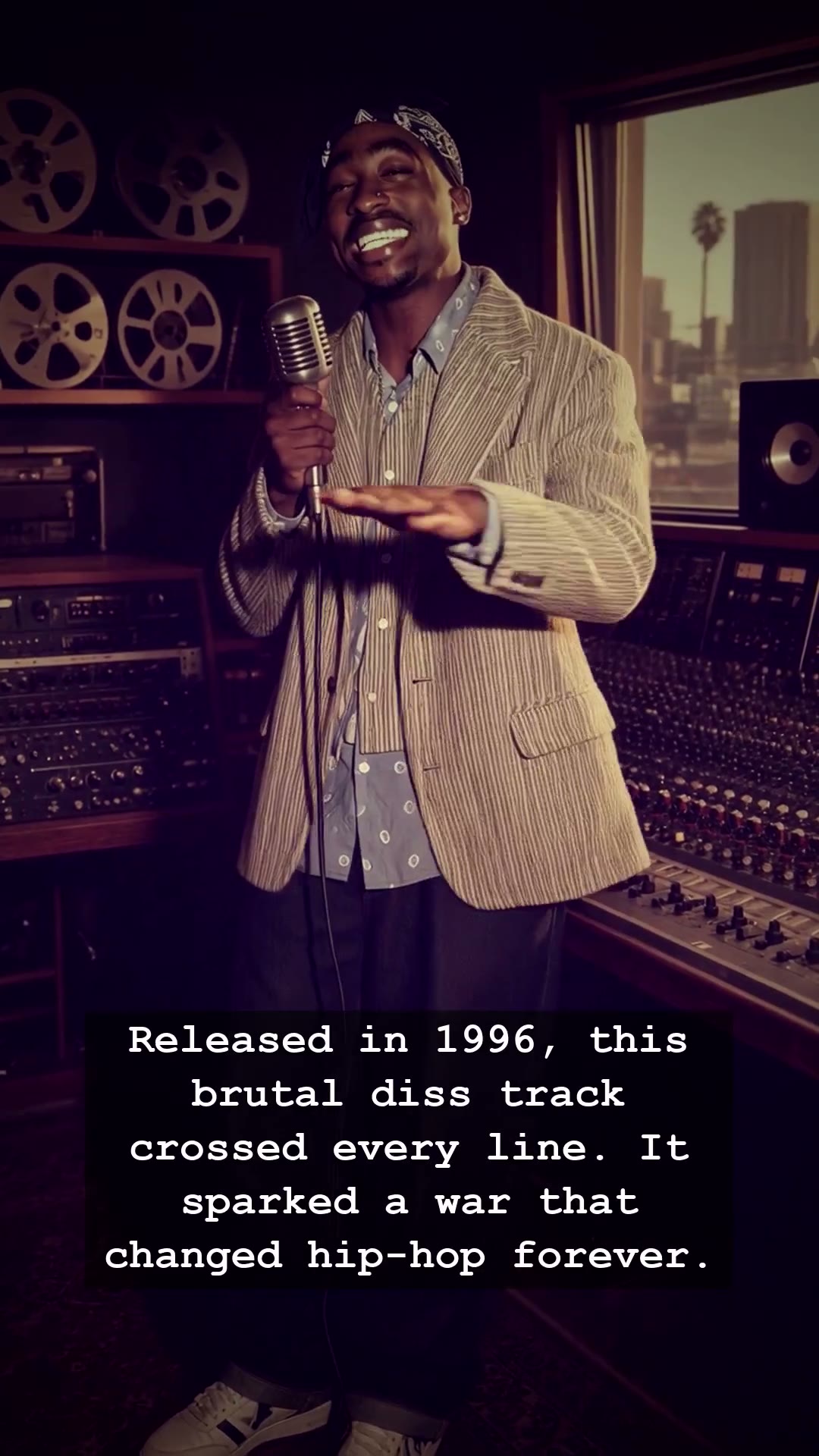
It was 1996, a year where the air in the music industry felt thick with tension and the smell of ozone before a storm. Hip-hop was at a crossroads, caught between the glitz of burgeoning mainstream success and the gritty, unfiltered reality of the streets. Into this volatile atmosphere, Tupac Shakur dropped a verbal incendiary device that would forever alter the landscape of American music. The track was Hit ‘Em Up, a brutal, unapologetic assault that crossed every line of decency and decorum, turning a simmering regional rivalry into an all-out declaration of war. It remains perhaps the most aggressive piece of music ever recorded, a dark monument to a time when words weren’t just lyrics, but catalysts for tragedy.
Tupac Shakur was a complex, polarizing figure—a poet, an activist, and a volatile force of nature all rolled into one. To understand the intensity of Hit ‘Em Up, one must revisit the fractured cultural geography of the era. The East Coast versus West Coast feud was reaching a fever pitch, fueled by media sensationalism and deep-seated personal vendettas. When Tupac Shakur stepped into the studio, he wasn’t looking for a lyrical sparring match; he was looking to end a conflict on his own terms. The song is raw, unfiltered, and deeply personal, targeting not just rival artists, but their families and associates. It was the antithesis of the polished, radio-friendly tracks that were beginning to dominate the charts.
Listening to the track today, the production still feels ominous, with a menacing bassline that underscores the absolute rage pouring from every syllable. Unlike the carefully curated personas of modern celebrity, there was an terrifying authenticity to Tupac Shakur in this moment. He discarded the boundaries of professional rivalry, inviting a level of chaos that arguably helped dismantle the innocence of 90s hip-hop. The impact was immediate and chilling; it was as if a match had been struck in a room full of gasoline. The music industry, once seen as a glamorous playground, suddenly felt like a dangerous arena where your legacy—and your life—could be at stake.
Beyond the headlines and the shock value, the legacy of this moment highlights the burden of fame and the toxic nature of public feuds. Tupac Shakur was a man trapped by his own myth, constantly fighting to maintain a narrative of strength while navigating the internal pressures of a life lived under constant scrutiny. This era of music, defined by the rise of MTV and the relentless cycle of the 24-hour news, amplified these conflicts until they grew larger than the artists themselves. The tragedy that followed later that year left a permanent scar on the history of American music, turning Hit ‘Em Up into a haunting artifact of a lost legend.
Even decades later, this track stands as a testament to the power and the peril of artistic expression. It reminds us that behind the platinum records and the iconic images of the 90s, there were human beings dealing with profound conflict. Tupac Shakur remains an immortal figure in our collective memory, a symbol of a turbulent time we still struggle to fully understand. As we look back at the era of baggy jeans, the Walkman, and the shifting tides of culture, we are reminded that some songs were never meant to be hits; they were meant to be warnings. The echoes of his voice still demand that we listen, even if we are afraid of what we might hear.