
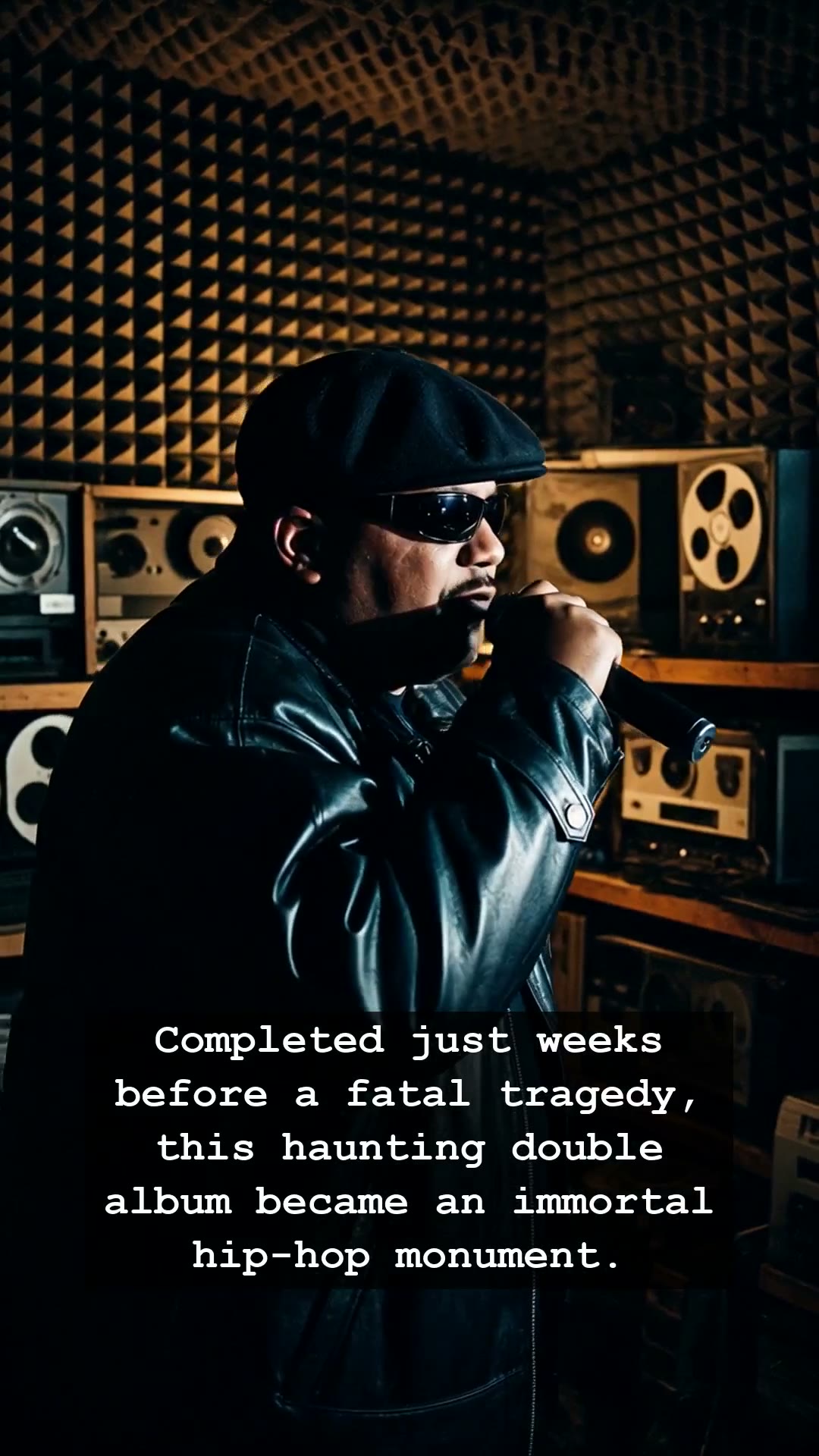
It was just weeks before the music world would be silenced by a hail of gunfire in Los Angeles, leaving a void that has never truly been filled. As The Notorious B.I.G. put the finishing touches on his ambitious double album, Life After Death, he was effectively painting his own portrait of an inevitable end. The air in the recording studio was thick with both the creative electricity of the late nineties and an unsettling, prophetic tension that seemed to seep into every rhythmic layer of the record. Today, decades later, we still find ourselves circling back to this masterpiece, listening for clues he might have buried between the lines of his complex, cinematic verses.
Christopher Wallace, known to the world as The Notorious B.I.G., was a titan of his era. By 1997, the hip-hop landscape was defined by the high-stakes, tragic rivalry between the East Coast and the West Coast—a conflict that felt like a pressure cooker ready to explode. Amidst this backdrop of fame, paranoia, and the relentless flash of the paparazzi, Biggie sought to solidify his legacy. Life After Death was designed to be his magnum opus, a sprawling testament to his storytelling prowess that went far beyond the typical radio hit. It was a project that spanned the spectrum of street grit and polished, soulful production, showcasing a lyrical genius who could paint a vivid narrative of urban life better than anyone else in the game.
What makes this album so haunting is the eerie way the music mirrors the circumstances of his departure. From the album title itself to lyrics that seem to forecast his own mortality, the work feels like a premonition. Fans who grew up during the golden age of the Walkman and the rise of MTV remember exactly where they were when they first heard the news. The streets of Brooklyn felt colder, and the industry lost its most charismatic storyteller just as he was hitting his absolute peak. It remains a strange, chilling paradox that an artist’s greatest work is so inextricably tied to the moment he was ripped away from his audience, forever freezing his legacy in time.
There is a specific, melancholy weight to the production on Life After Death that resonates even with those who weren’t there for the initial release. It is the sound of a man who was seemingly aware that his life was becoming larger than his physical form. While the music industry has changed drastically, moving from the physical tangibility of CDs to the digital ether, the emotional gravity of Biggie’s voice remains intact. He wasn’t just a rapper; he was a chronicler of a specific American experience, a poet of the concrete jungle who understood the fragility of success in a way few others did.
As you listen to the album today, notice the subtle details—the background chatter, the specific echoes of the studio, the weariness in his delivery—that capture a man at the threshold of history. The Notorious B.I.G. gave us a gift that survived his passing, a monumental record that continues to influence every generation that follows. It serves as a reminder that while the music might stop, the spirit of a true icon never really fades away. Do you remember the first time you heard Life After Death, or are you just now discovering the man who changed hip-hop forever?