
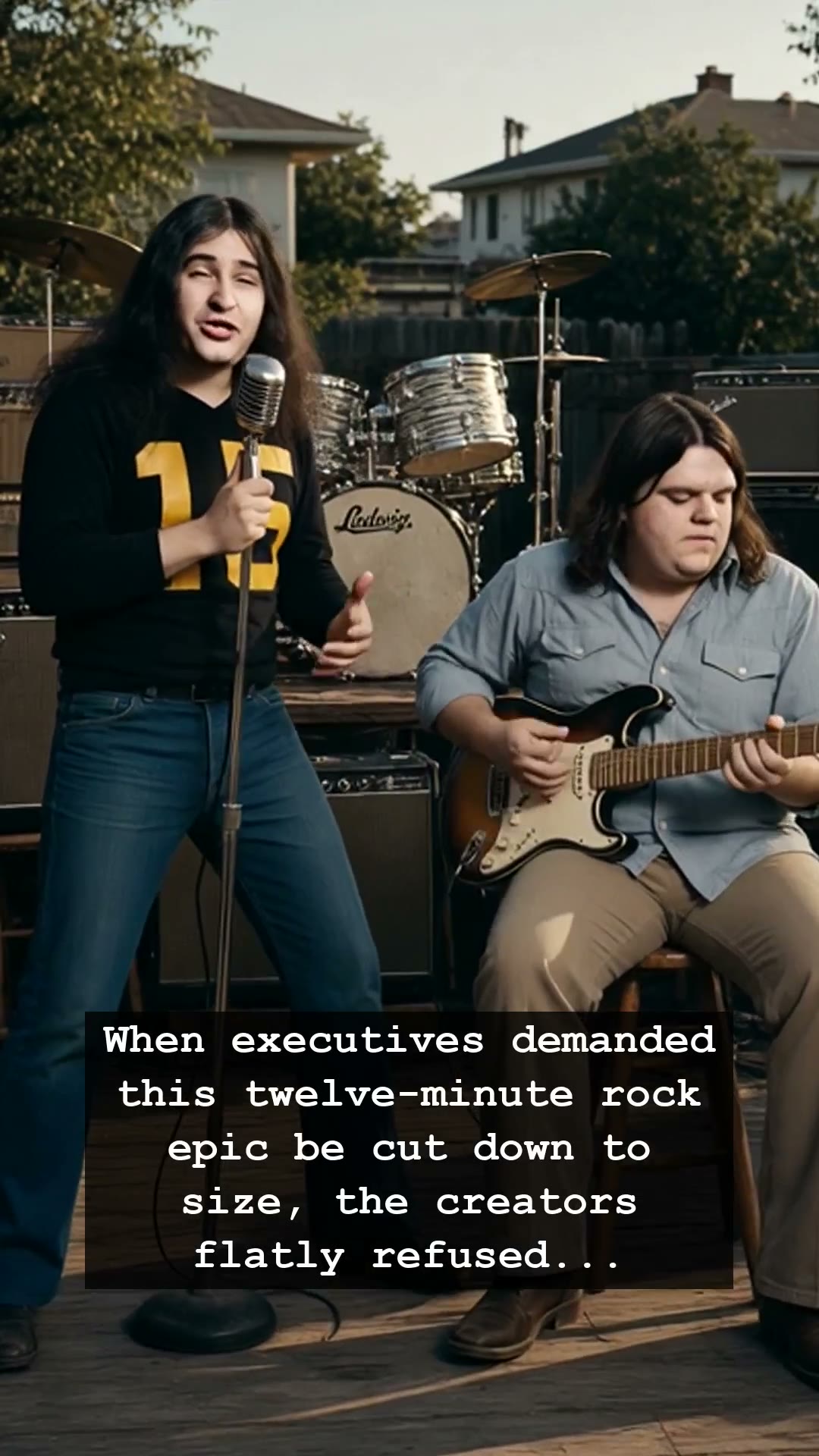
In the polished, fast-paced world of early nineties television, radio hits were designed to fit neatly into a three-minute box. Executives wanted songs they could play between commercials, packaged for quick consumption. But then came Meat Loaf, the larger-than-life powerhouse, alongside his long-time collaborator Jim Steinman. They had crafted a twelve-minute operatic epic titled I’d Do Anything for Love (But I Won’t Do That). When record label suits demanded they carve the track down to size, expecting a radio-friendly edit, the answer was a defiant, absolute no. It was a high-stakes gamble that flew in the face of conventional industry wisdom, yet it became one of the most legendary moments in rock history.
To understand the magnitude of this rebellion, one must remember the culture of 1993. MTV was the undisputed kingmaker of the era, dictating what the youth would listen to and wear. Programmers were obsessed with brevity and visual punch. A song lasting longer than five minutes was considered a death sentence for commercial success. Yet, Meat Loaf refused to compromise a single note of his grand vision. He understood that his music was not meant to be a snack; it was a feast. By betting everything on the song’s unedited, sweeping narrative, he challenged the very infrastructure of the music industry.
Meat Loaf was never one to play by the rules. Throughout his career, starting from the iconic Bat Out of Hell days, he channeled raw, theatrical emotion that made listeners feel as though they were living through a cinematic drama. This wasn’t just arena rock; it was soul-baring vulnerability wrapped in leather and gasoline. The resistance he faced in 1993 was a continuation of the same pressure he had battled for decades. He was an artist who existed in a different dimension, one where the intensity of the performance always outweighed the convenience of a radio schedule.
When the epic track finally hit the airwaves, it didn’t just survive; it conquered. The song soared to the top of the charts in twenty-eight countries, proving that audiences were starving for something substantial. The risk paid off in a way that left the suits stunned. It became a cultural touchstone of the pre-internet age, a reminder of a time when MTV actually played music and the listeners were sophisticated enough to appreciate a long-form story set to a killer guitar riff. It remains a testament to the fact that when an artist stands their ground, the world eventually catches up.
Today, we look back at this moment with a mix of awe and deep nostalgia. In an age of fifteen-second clips and algorithmic predictability, the story of Meat Loaf standing his ground feels like a dispatch from a more courageous era. His voice, filled with passion and grit, reminds us that the best music never bows to the clock. Sometimes, to create a legend, you have to be willing to walk away from everything they tell you is important. Even years later, the echoes of that defiance still resonate in every note of that glorious, twelve-minute masterpiece.