
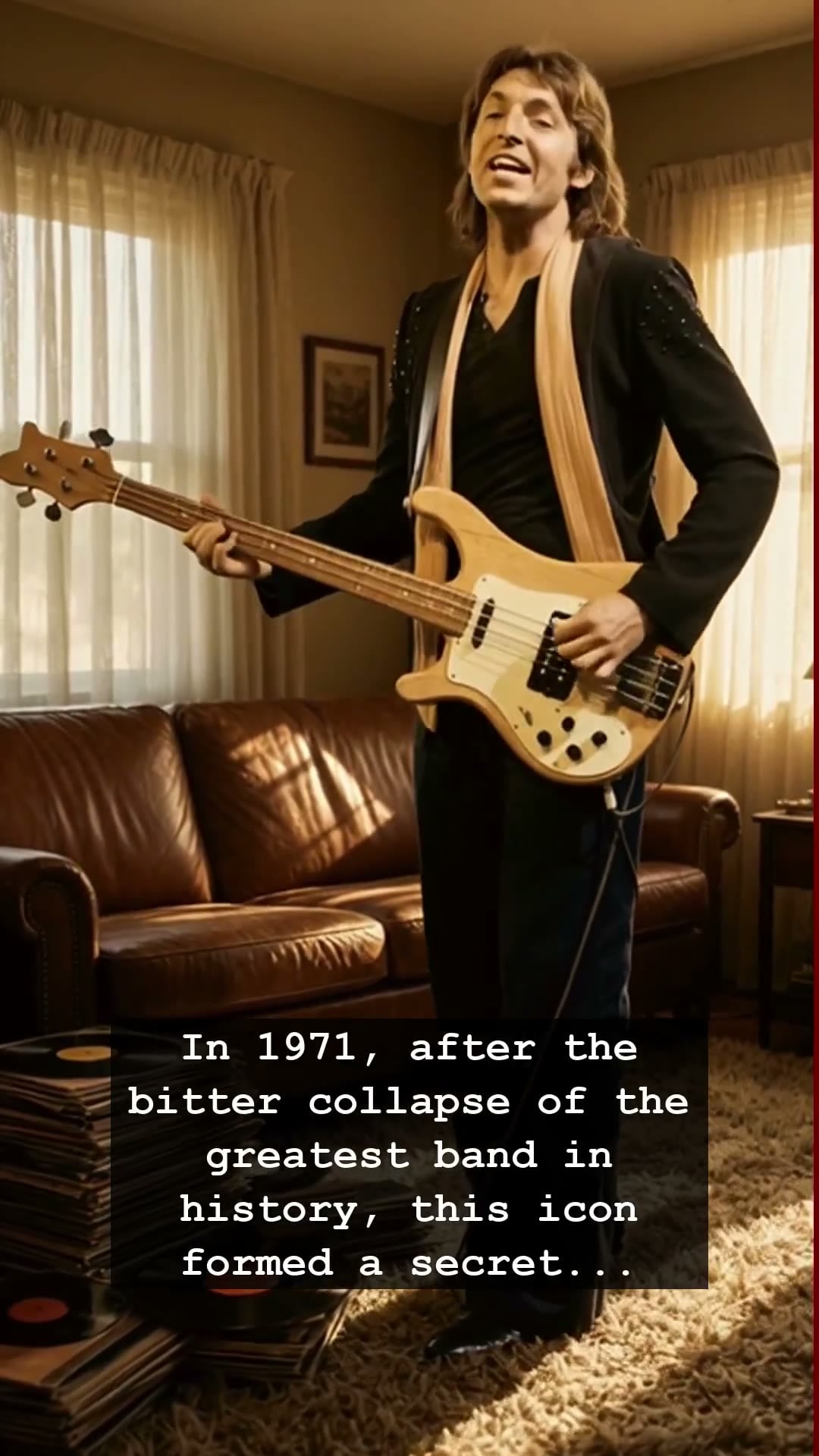
The year was 1971. The air still hung heavy with the acrid smoke of the cultural revolution, and the world was reeling from the most agonizing breakup in music history. The Beatles were dead, dissolved into bitter lawsuits and fractured friendships. While the press speculated on the end of an era, Paul McCartney found himself in a state of deep, creative isolation. He retreated to a remote farmhouse in Scotland, stripping away the polish of Abbey Road to rediscover the raw, thumping heart of rock and roll. It was here, far from the hysteria of Beatlemania, that Paul McCartney dared to rebuild his identity from the ground up by forming his new group, Wings.
Most fans and critics expected the man who had defined the sixties to continue with the grandeur of an orchestral titan. Instead, Paul McCartney chose the path of the underdog. The early days of Wings were defined by a stubborn refusal to lean on the past. In those dusty, informal rehearsal spaces, the legendary icon insisted on playing for small college audiences, traveling in a battered van rather than the luxury limousines that had become his standard. It was a humble, almost jarring transition for a man who had commanded stadiums. He was essentially starting over, trading the comfort of the world’s most celebrated band for the uncertainty of a fledgling ensemble.
Yet, the music press was merciless. Critics, still mourning the loss of the Fab Four, tore into Wings with a vitriol that would have destroyed a lesser spirit. They mocked the simplicity of the songwriting and the lack of the polished production fans had grown accustomed to. It was a brutal initiation into the harsh realities of post-Beatles life, where every move Paul McCartney made was scrutinized under a microscope. Despite the relentless attacks, there was a defiant, infectious spirit in those early recordings that captured a new, stripped-down authenticity that the era desperately needed.
As the seventies progressed, the sound of Wings evolved from that tentative start into something truly monumental, culminating in the bombastic, theatrical arenas of the mid-seventies. With the release of tracks like Band on the Run, the public finally caught up to the vision. The transition from the Jukebox anthems of the early sixties to the stadium-filling rock of the late seventies was completed. Paul McCartney had successfully pivoted, proving that his creative fire was not merely a byproduct of his former bandmates, but an enduring, singular force that could weather any storm.
Decades later, the legacy of Wings remains a testament to the resilience of an artist who refused to let his past dictate his future. The story of Paul McCartney during this period is not just a footnote in music history; it is a masterclass in artistic survival. When you listen to those records today, you can hear the echoes of a man shedding his skin, turning a bitter tragedy into a new sound that defined a generation. It reminds us all that even after the greatest of falls, the music, if true enough, will eventually find its way home.