
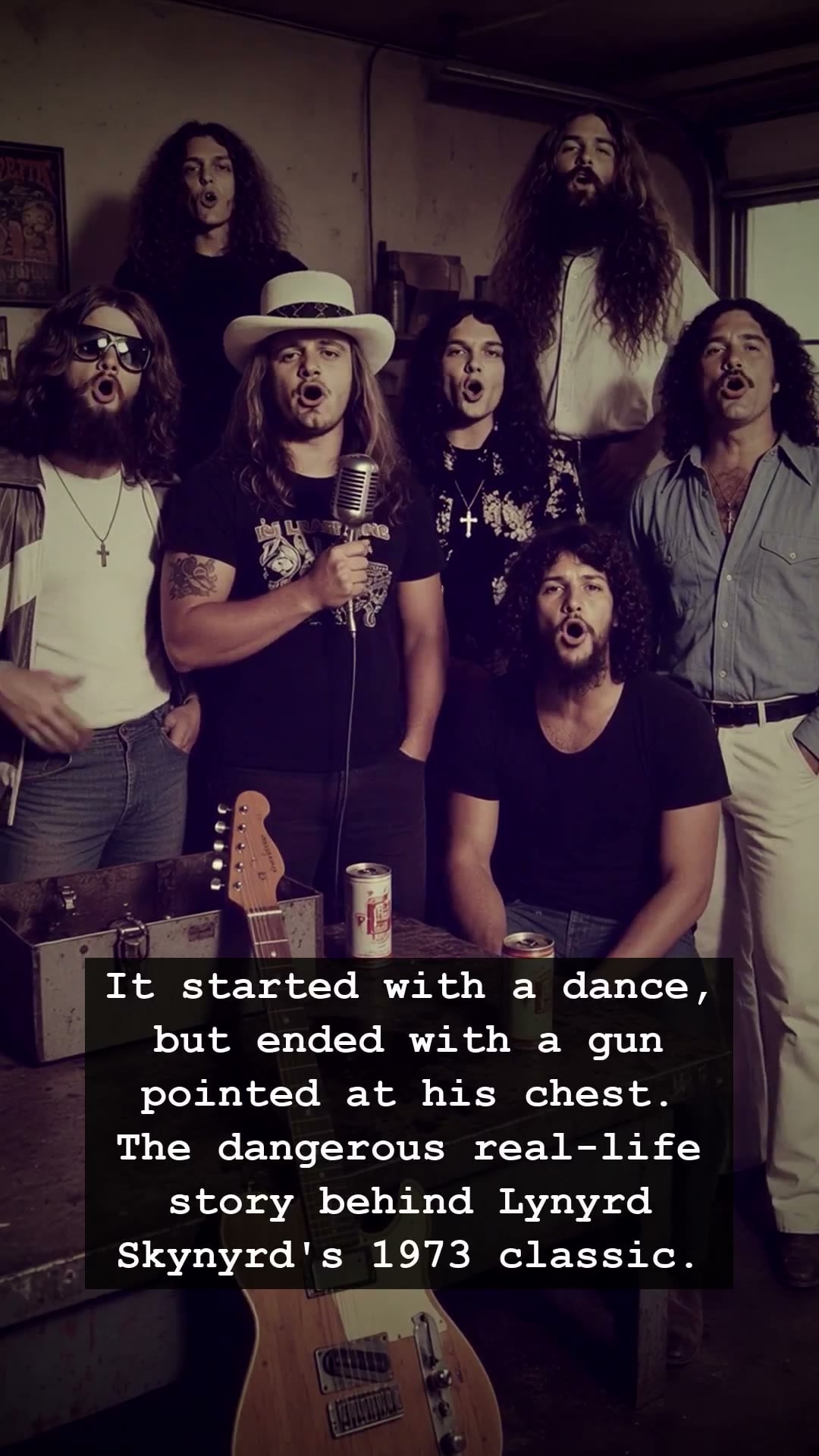
It started as an ordinary night at a local dance, a scene typical of the humid, restless atmosphere of the early seventies in the American South. But for Ronnie Van Zant, the night would take a sharp, life-threatening turn when a stranger approached him and leveled a loaded gun directly at his chest. In that chilling, heartbeat-skipping moment, the future frontman of Lynyrd Skynyrd stood face to face with his own mortality. Most men would have folded, but Ronnie Van Zant possessed a defiant, blue-collar grit that refused to be silenced by fear. That brush with death did not break him; instead, it forged the iron-willed soul of a man who would soon define the sound of Southern Rock for a generation.
In the era of the Jukebox and the rise of FM radio, Lynyrd Skynyrd emerged not as polished pop stars, but as the raw, unvarnished voice of the working class. Ronnie Van Zant was the heartbeat of this revolution. He was a storyteller whose lyrics captured the essence of life in small-town America, balancing the swagger of whiskey-soaked bars with the vulnerability of a man who knew exactly how fragile existence could be. The incident with the gun became a haunting piece of his internal mythology, a reminder that the world was a dangerous place and his time to leave a mark was limited. This urgency permeated every chord that Gary Rossington and Allen Collins played, turning their rehearsals into a pressurized vessel of musical brilliance.
By 1973, the band had burst onto the scene, bringing the spirit of the South to national stages. While the rest of the country was navigating the shifting tides of the disco craze or the polished sheen of seventies pop, Ronnie Van Zant and his bandmates were carving out a niche rooted in authenticity. They were the antithesis of the glitter-covered icons of the time. When you listen to their debut records, you are not just hearing music; you are hearing the tension of that standoff, the dust of the road, and the unwavering conviction of a frontman who lived life like every song could be his final performance.
There was a dark magnetism to the band that captivated the youth culture of the era. The internal dynamics were often as volatile as the music itself, fueled by a brotherhood that was intense, demanding, and occasionally self-destructive. Ronnie Van Zant held it all together with a ferocious demand for perfection. He was the anchor in a storm of alcohol, travel, and the crushing pressure of sudden superstardom. His lyrics were not merely words; they were directives, guiding a restless generation through the complex labyrinth of American life.
Today, we look back at the legacy of Ronnie Van Zant with a sense of profound reverence. The story of that night with the gun has become a cornerstone of rock folklore, illustrating exactly why his music remains timeless. He taught us that true legends are not born in the comfort of a studio, but in the crucible of real-world adversity. As the needle drops on a scratched vinyl record and the opening notes of Free Bird fill the room, we are transported back to that era, feeling the echoes of a man who dared to stare death in the eye and chose to sing about it instead. It is a haunting, beautiful reminder that while the music might be decades old, the fire that sparked it never truly fades away.