
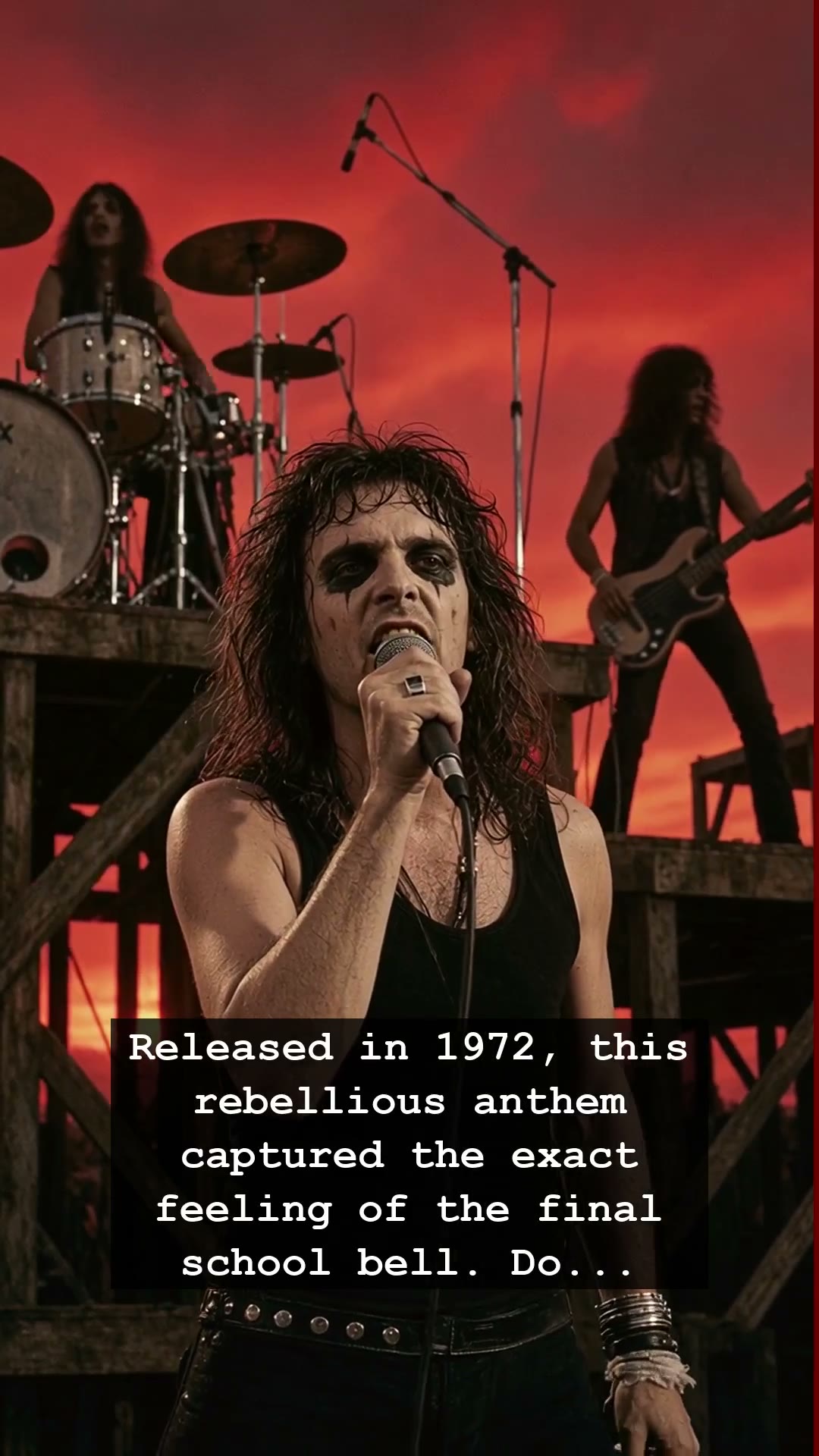
The final bell rings, the hallways erupt into a chaotic symphony of slamming lockers, and for one glorious moment, the iron grip of authority vanishes. It was June 1972, and the air was thick with the scent of cheap perfume and burning gasoline. As the asphalt shimmered under the blistering heat, a jagged, distorted guitar riff cut through the static of every AM radio station in America. This wasn’t just another pop song; it was School’s Out, the definitive, defiant anthem by Alice Cooper that turned teenage angst into a national revolution. It captured the exact, intoxicating euphoria of liberation that every student prayed for.
Alice Cooper was never just a musician; he was a master of the macabre, a man who saw the theater in the grit of rock and roll. While his peers were busy singing about sunshine and flowers, Alice Cooper was choreographing onstage executions and bathing his audience in the dark imagery of a twisted carnival. When he released the single in 1972, he tapped into a primal nerve. It was the sound of summer freedom, a rebellious scream that resonated in classrooms from New York to California. The song became a cultural juggernaut, cementing his status as the godfather of shock rock and a villain to parents across the country.
Behind the scenes, the creation of this anthem was as intense as the man himself. Alice Cooper and his band weren’t just playing music; they were living in a haze of professional ambition and volatile internal friction. The recording sessions were fueled by a mix of relentless perfectionism and the wild, unpredictable energy that defined the early seventies. The band was a brotherhood forged in the fires of constant touring, yet they were constantly pushing the limits of what a rock concert could be. They weren’t just entertainers; they were an assault on the senses, turning every performance into a dark, theatrical masterclass.
What made Alice Cooper so dangerous back then was his ability to hold up a mirror to the suburban American dream and show it a reflection that was cracked and stained. The school bell heard at the beginning of the track wasn’t just a sound effect; it was a signal that the status quo was officially under attack. For a generation caught between the fading idealism of the sixties and the looming cynicism of the late seventies, Alice Cooper provided a soundtrack that felt authentic, visceral, and unashamedly loud. He was the dark jester of the airwaves, and we were all invited to the show.
Decades later, the song remains a timeless piece of rock history, played at graduations and summer parties with the same rebellious spirit as the day it was pressed onto vinyl. Listening to those opening chords today, it is easy to be transported back to a time of Walkmans, jukeboxes, and the raw power of unpolished studio recordings. Alice Cooper managed to bottle the essence of youth and pour it into a three-minute explosion of sound. Whether or not you were there when it first hit the charts, the legacy of this anthem endures, reminding us all that sometimes, the only way to move forward is to tear the house down.