
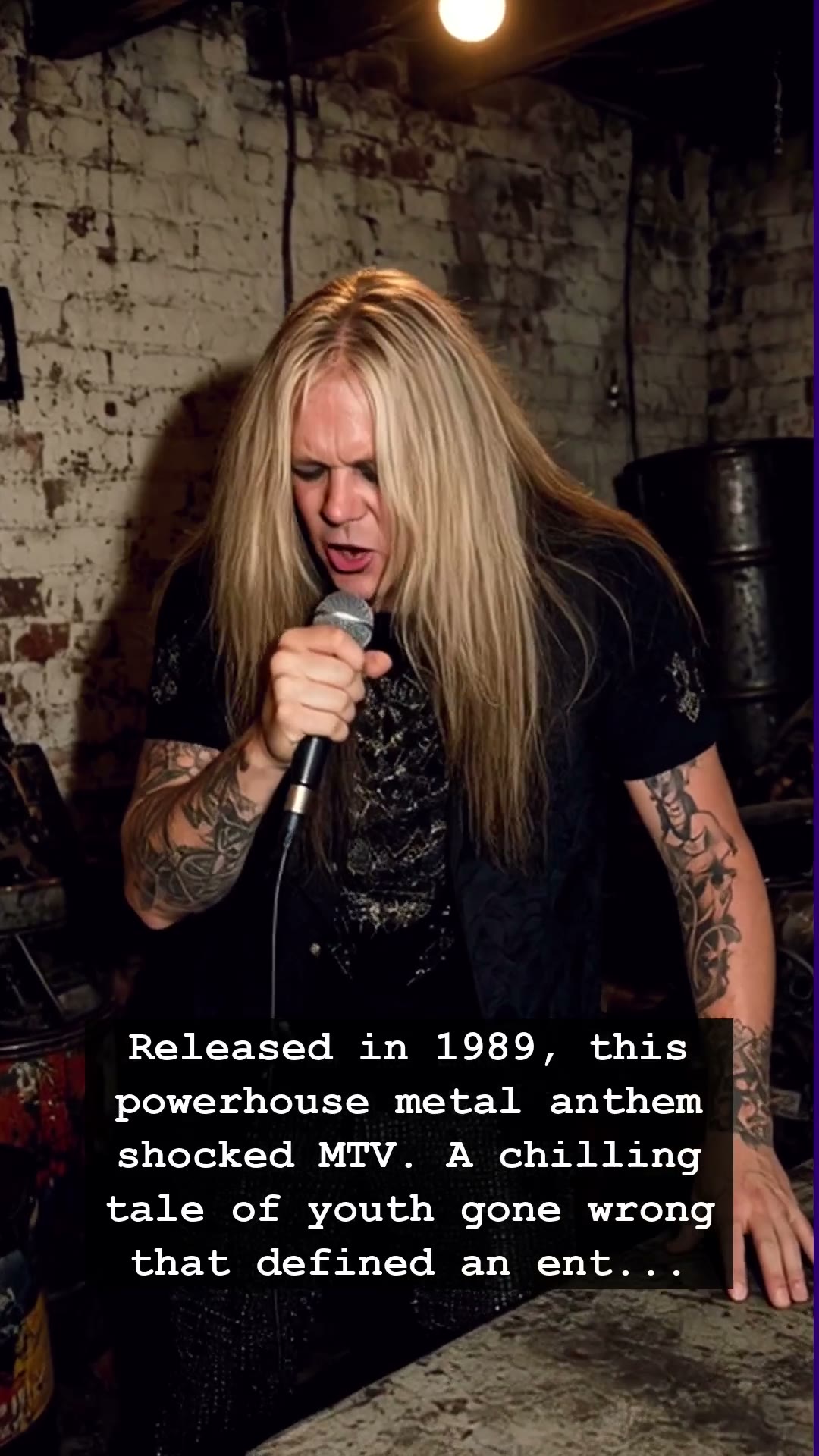
It was 1989, and the golden age of hair metal was hitting its absolute peak. On every television screen tuned into MTV, a young, golden-locked frontman was screaming into a microphone, his voice echoing a kind of raw, unfiltered anguish that resonated with every restless teenager in America. The song was 18 and Life, and the man behind the piercing, guttural wail was none other than Sebastian Bach. While the synth-pop sounds of the late eighties were beginning to dominate the charts, Skid Row crashed the party with a gritty, uncompromising power ballad that felt like a punch to the gut of suburban complacency.
Sebastian Bach arrived on the scene like a lightning bolt, possessing a vocal range that seemed almost superhuman and an onstage presence that dripped with dangerous charisma. Yet, it was the chilling storytelling within the lyrics of 18 and Life that truly set him apart. The song wasn’t just another party anthem; it was a dark, cautionary tale about a young man named Ricky whose life spiraled into tragedy because of a single, impulsive decision. In an era often characterized by excess and neon-soaked indulgence, this narrative of youth gone wrong struck a deep, somber chord that hit home for listeners everywhere.
Behind the scenes, the recording process for the album was fueled by the high-pressure environment of the late eighties music industry. Sebastian Bach was thrust into the spotlight almost overnight, becoming the face of a generation struggling with the transition from the glitzy excess of the mid-eighties toward the more cynical outlook that would define the upcoming grunge era. His performance on this track remains one of the most powerful vocal displays of the decade, capturing the desperate, rebellious pain of an entire youth culture that felt misunderstood and abandoned by the establishment.
I still remember sitting in my living room, the glow of the television flickering as the music video played. The cinematic, noir-inspired visuals felt miles away from the colorful dance floors of Studio 54 or the pop-infused radio hits of the time. Sebastian Bach had a way of making you feel the weight of every lyric, turning the studio recording into a theatrical experience. It was the kind of song that you played on your Walkman until the tape wore thin, a haunting soundtrack to the teenage angst of a generation living on the edge.
Decades later, the legacy of Sebastian Bach and that defining 1989 performance remains etched in rock history. While the hair metal scene eventually faded into the rearview mirror, the emotional intensity of his vocal delivery hasn’t lost an ounce of its edge. It serves as a stark reminder of a time when rock stars were larger than life and songs could still leave the world breathless. Do you still remember where you were when you first heard that iconic scream?