
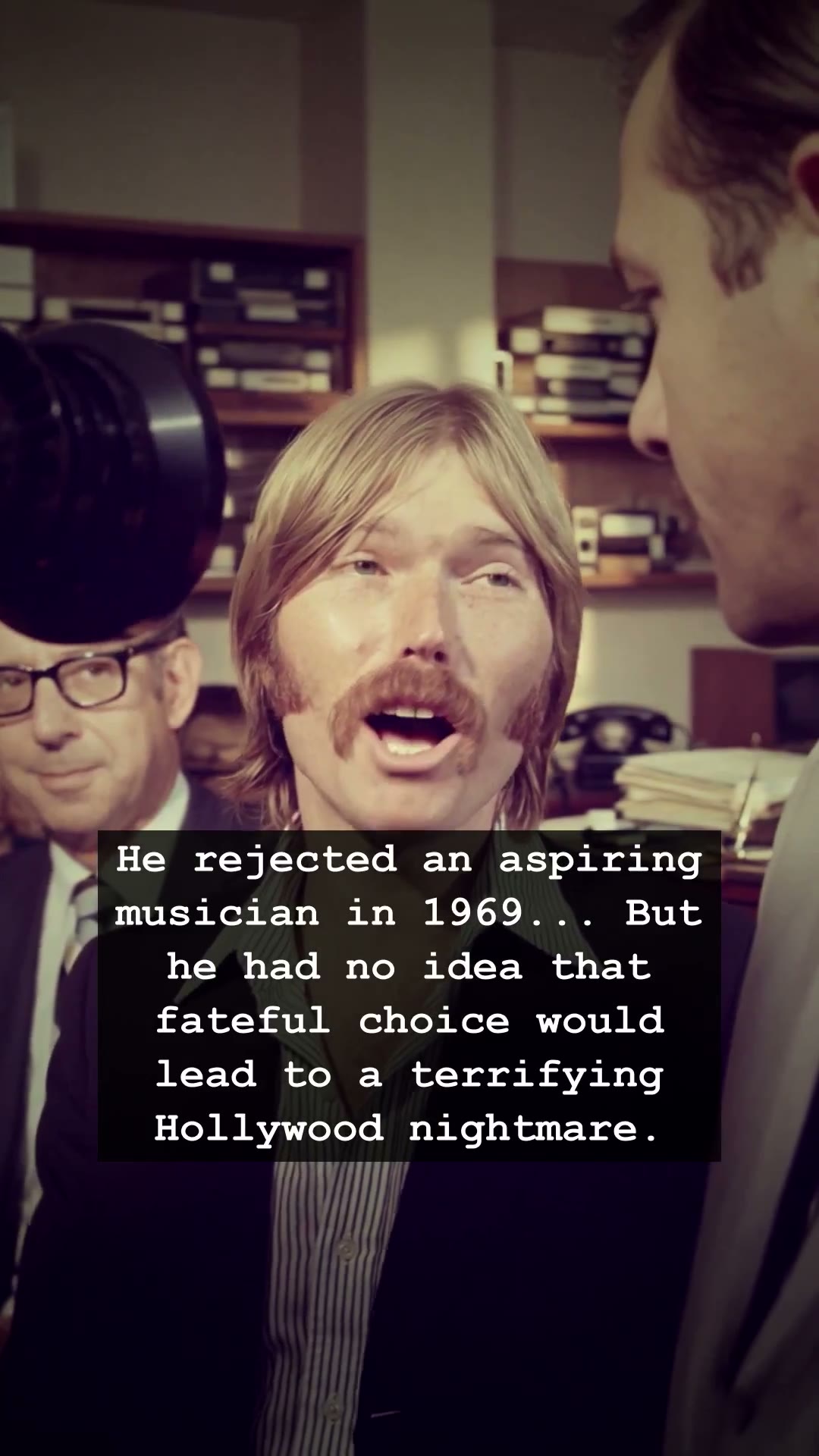
In the golden era of 1960s California, the sunshine was bright, but the shadows were growing deeper than anyone cared to admit. Terry Melcher, a visionary producer and a central figure in the sound of the West Coast, was riding the crest of a massive cultural wave. He was the man who helped shape the Beach Boys and was widely considered a musical gatekeeper in a world of jukeboxes, vinyl records, and endless studio sessions. Yet, one fateful day in 1969, Terry Melcher made a decision that would haunt him for the rest of his life. He turned away an aspiring, eccentric musician who was desperate for a break. That rejection was meant to be nothing more than a standard professional courtesy, but it would soon trigger a terrifying nightmare that left an indelible, blood-stained mark on the legacy of Hollywood.
The aspiring musician in question was Charles Manson, a man lurking on the fringes of the LA music scene with a cult of followers. Manson had expected Terry Melcher to launch his career into the stratosphere, envisioning himself as the next big star. When the industry door slammed shut, the resentment festered. The Manson family had already been scouting the luxurious residence at 10050 Cielo Drive, a home where Terry Melcher had previously lived and where he had entertained the brightest stars of the era. The dark irony of the situation is that Melcher had moved out shortly before the infamous August 1969 murders occurred, yet he remained the phantom target in the minds of those who sought to strike out against the establishment he represented.
For years, Terry Melcher carried the weight of this connection. He was a man who lived in the vibrant world of pop hits and harmonic bliss, suddenly forced to confront the violent underbelly of the culture he helped cultivate. While his peers were attending Woodstock or getting lost in the kaleidoscopic sounds of psychedelic rock, Melcher was forced to testify and live under the shroud of a tragedy that was never supposed to involve him. The industry itself was changing, moving away from the polished production of the early 60s toward a grittier, more paranoid reality. The innocence of the decade had officially died in a flurry of headlines and courtroom drama.
Even decades later, the story of Terry Melcher serves as a chilling reminder of how quickly the glamour of the entertainment industry can curdle into chaos. The contrast between his musical contributions and the grim history he became entwined with remains one of the most haunting tales of the 20th century. Whenever we listen to the sun-drenched harmonies of that era, it is worth remembering that the music was often a thin veil over a city holding its breath in fear. Terry Melcher remained a legendary producer, but he would forever be a survivor of a nightmare that defined a generation’s dark transition.
To look back at the life of Terry Melcher is to peer into the complex heart of American music history. It is a story of ambition, talent, and the tragic intersection of reality and myth. As the era of the jukebox and the analog studio fades further into our past, the cautionary tale of that 1969 rejection remains a somber note in the symphony of the twentieth century. Perhaps, in the end, it teaches us that even the brightest lights in Hollywood cast the longest, darkest shadows of all.