
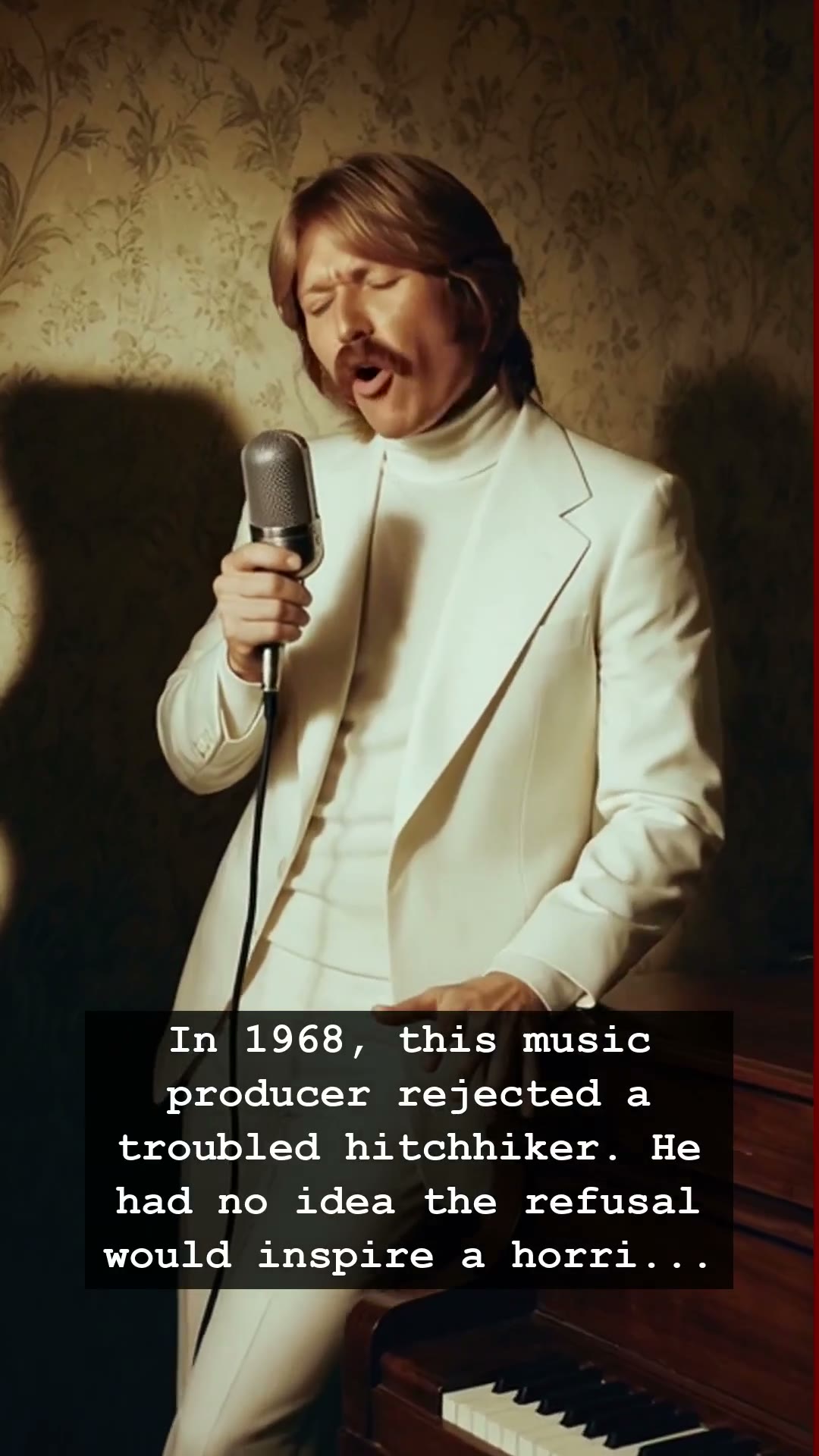
The golden age of 1960s California rock promised sunshine, surf, and endless possibility. Yet, behind the shimmer of the Hollywood Hills and the upbeat melodies playing on every transistor radio, a sinister shadow was stretching across the canyon. In the center of this collision between the music industry’s elite and a burgeoning counterculture darkness sat Terry Melcher. A successful producer known for polishing the sounds of the Beach Boys and the Byrds, Terry Melcher was a golden boy of the Los Angeles scene. But in 1968, a seemingly routine professional interaction with a struggling, long-haired hitchhiker spiraled into a chilling saga that would forever change the American consciousness.
That hitchhiker was Charles Manson, a man who saw himself as a failed rock star rather than a cult leader. Manson had been desperate for a record deal, hoping that Terry Melcher would be the bridge to stardom he had been chasing. When Terry Melcher ultimately declined to sign him, the rejection did not just sting; it ignited a toxic resentment within Manson. For a man who obsessed over the Beatles and believed music held the key to apocalyptic prophecy, the silence from Terry Melcher was an unforgivable insult. The music that once represented peace and love in the Haight-Ashbury era suddenly took on a macabre, distorted meaning.
Most people today remember Terry Melcher for his studio brilliance, but those who lived through the era recall the palpable terror that gripped the music industry after the Manson Family murders. The tragedy hit close to home when it was revealed that 10050 Cielo Drive, the site of the horrific Tate murders, was the very house where Terry Melcher had previously lived and where he had hosted Manson. The paranoia was absolute. The industry, which had felt like an open-armed community during the Woodstock era, suddenly shuttered its doors. Artists feared that the very fans who worshipped their records might harbor dangerous, disillusioned souls lurking in the shadows of the canyons.
In the aftermath, the innocence of the decade evaporated. Terry Melcher largely retreated from the public eye, his life forever marked by the brush with a madness that no studio engineer could mix out. It is a haunting reality that the same industry that fueled the creative highs of the late sixties could also inadvertently spawn such darkness. The songs from that era, once symbols of rebellion and artistic freedom, were suddenly viewed through a lens of suspicion and fear, turning the dream of the sixties into a haunting, gothic nightmare that persists in our cultural memory to this day.
Looking back, the story of Terry Melcher serves as a sobering reminder of the fragility of fame and the unpredictable intersections of art and madness. It forces us to ask what happens when the music stops and the reality of the human condition forces its way into the light. Even decades later, when we hear the sounds of classic rock and surf, we are reminded of the price of the dream. Does the song still sound the same when you consider the shadows in which it was born?