
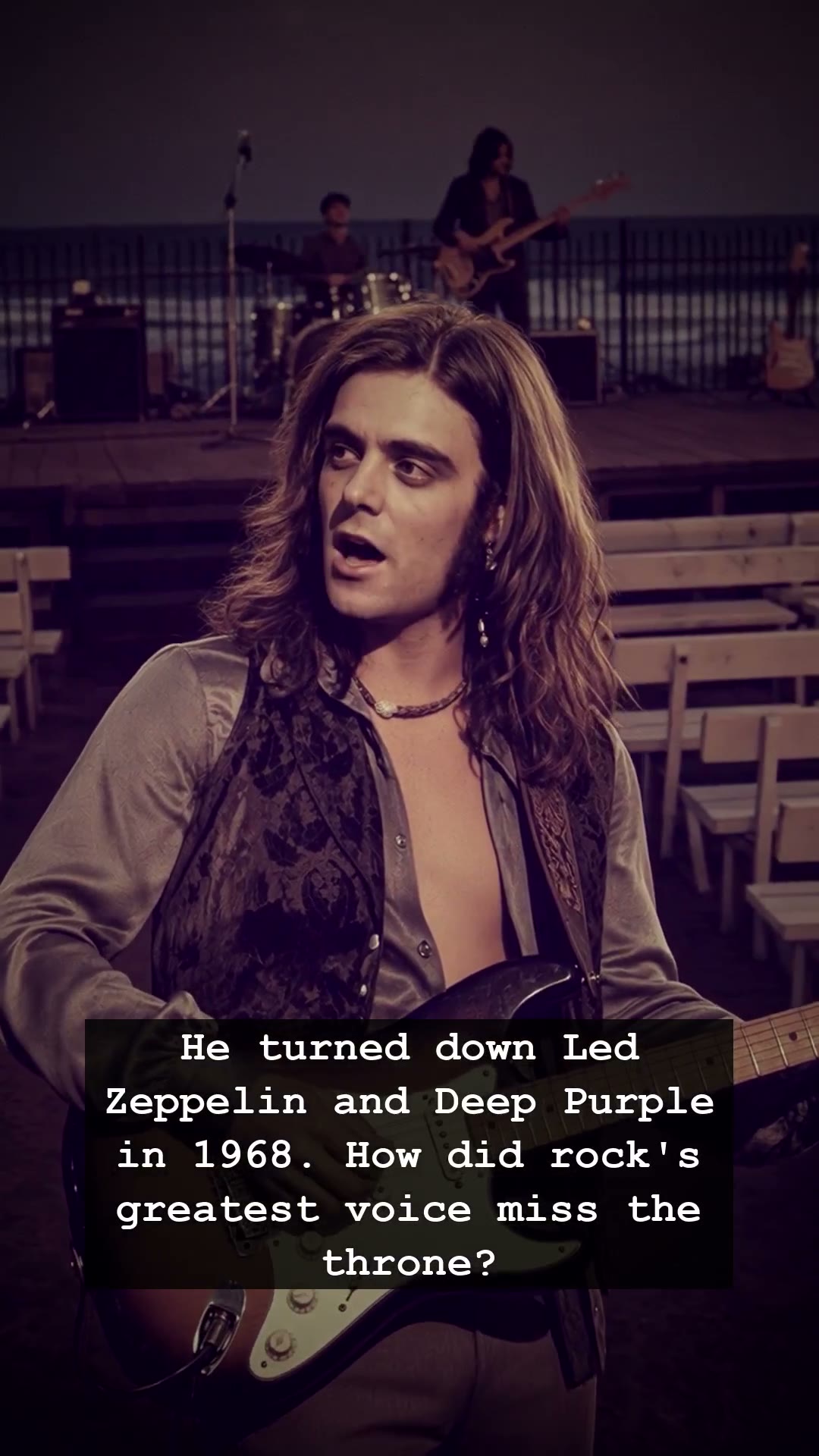
In the golden haze of 1968, the rock and roll landscape was shifting beneath our feet. While the world was glued to their flickering television sets or spinning records on heavy turntables, a young man from Huntingdon, England, stood at the crossroads of destiny. His name was Terry Reid, and to those in the industry, he possessed a voice that could crack the sky—a raspy, soulful, and powerful instrument that made seasoned legends pause in their tracks. Yet, when the heavy giants of history came knocking, Terry Reid did something that still leaves music historians breathless. He walked away from the chance to lead two of the greatest bands to ever walk the earth: Led Zeppelin and Deep Purple.
Jimmy Page, then searching for a frontman for his new project, had Terry Reid in mind for the throne of what would become the legendary Led Zeppelin. Around the same time, the architects of Deep Purple were equally desperate to secure his raw talent. Imagine the scene: the smokey basements, the frantic energy of the late sixties, and the pressure of a rising industry. Most artists would have traded their souls for a fraction of that opportunity, but Terry Reid was built differently. He was committed to his own path, a solo journey that felt more authentic to his artistic spirit than the massive machinery of a supergroup. It remains the ultimate rock and roll what-if, a haunting question that echoes through every jukebox and vintage vinyl collection.
Why would anyone turn down such stardom? For Terry Reid, it wasn’t about missing the boat; it was about honoring his own rhythm. While the world remembers the thunderous riffs of Led Zeppelin and the progressive intensity of Deep Purple, Terry Reid carved out a niche that was uniquely his own. He was the artist’s artist, the man who stayed true to his vision even when the glitter of global fame was practically blinding. In an era dominated by the excess of the Sunset Strip and the legendary nights at venues like the Fillmore, he chose to prioritize his creative integrity over the safety of a guaranteed chart-topping career.
Looking back, his story serves as a poignant reminder of the price of fame. We often romanticize the idols who reached the summit, but there is a strange, melancholy beauty in the one who stood by the wayside and watched the empire be built by someone else. Terry Reid eventually toured with the Rolling Stones and played iconic festivals, but the shadow of 1968 followed him forever. It is a tale of missed connections, high stakes, and the quiet dignity of a man who simply wanted to play music on his own terms.
Today, his voice continues to move those of us who still feel the pull of the past. When you drop the needle on a Terry Reid track, you aren’t just hearing a song; you are listening to a piece of history that could have sounded entirely different. He remains the most fascinating protagonist in a story that never quite reached the ending everyone expected. Perhaps, in the end, it was never about the throne at all, but about the haunting, beautiful sound of a road not taken.