
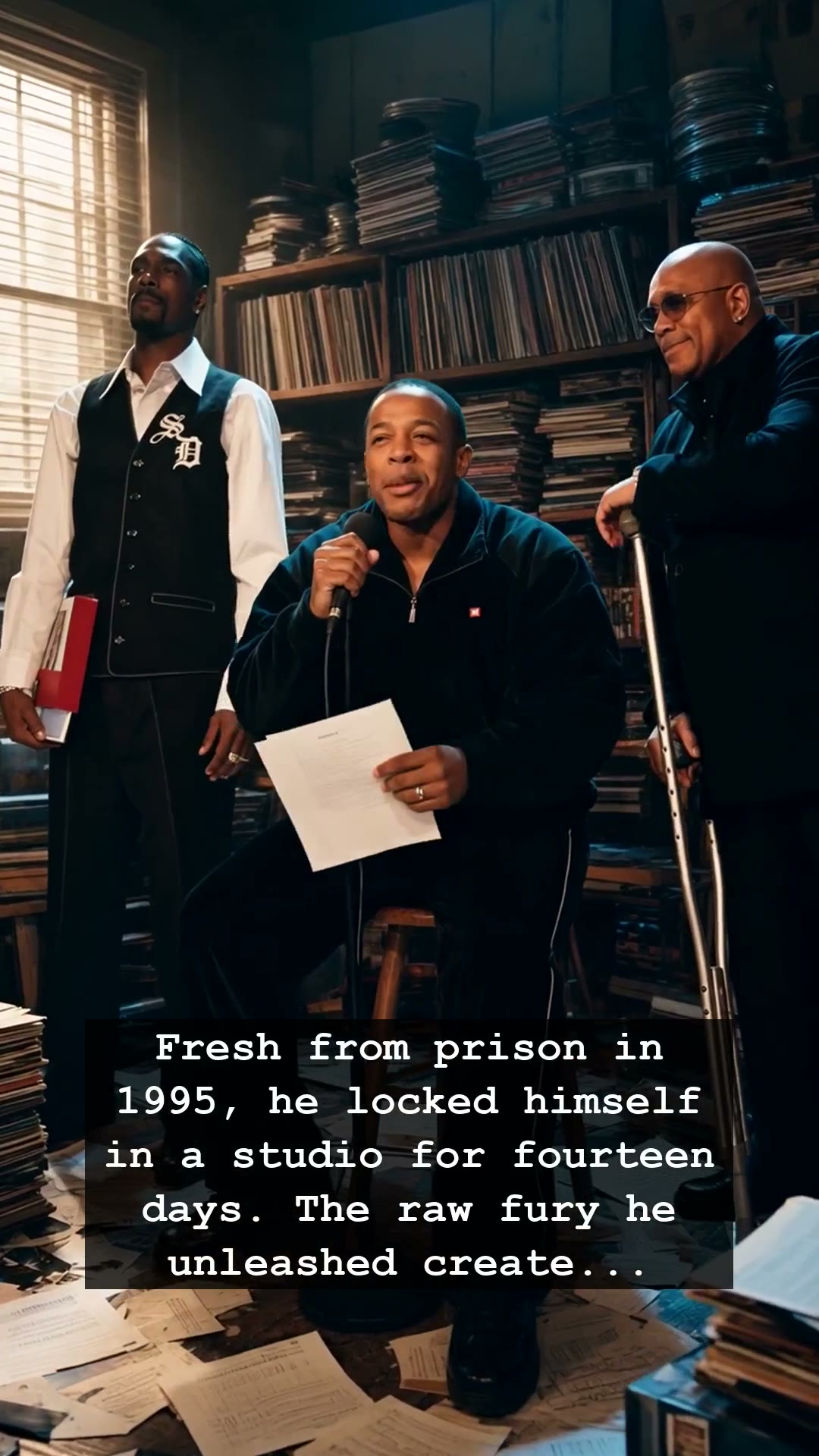
The year was 1995, and the air in Los Angeles crackled with an uncontainable, electric tension. Tupac Shakur, the most polarizing and magnetic force in music, had just walked out of prison. He did not return to the sunlight to celebrate or play the part of a freed man. Instead, he went straight into the sanctuary of the studio, consumed by a fire that only art could extinguish. Locked away in a grueling fourteen-day marathon, Tupac Shakur transformed his raw, unfiltered fury into a sonic manifesto. This wasn’t just music; it was the West Coast reclaiming its throne, a desperate, defiant roar that would echo through the history of hip-hop forever.
To understand the gravity of that fortnight, you have to remember the atmosphere of the mid-90s. The industry was a powder keg, divided by the bitter friction between the East and West coasts. While fans were tethered to their Walkmans and glued to the explosive, rapidly evolving world of MTV, Tupac Shakur was living in a pressure cooker of his own making. He had become a lightning rod for controversy, a man who saw the world through a lens of profound betrayal and blinding ambition. The studio became his confessional booth, a place where he could transmute the darkness of his incarceration into a anthem of unadulterated California pride.
Inside those walls, the legendary Dr. Dre joined him, and the synergy was nothing short of seismic. As the clock ticked down those fourteen days, the track California Love began to take shape, emerging from the haze of studio smoke and exhaustion. It captured the specific, golden-hued grit of the West Coast, marrying a funk-drenched bassline with the visceral, spoken-word intensity that only Tupac Shakur could deliver. It was a masterpiece of urgency, recorded at a time when he felt that every breath was a battle and every verse a final testament to his identity.
Listening to the record today, you can still feel the palpable adrenaline of that session. It carries the weight of a man who felt he was running out of time, creating art that functioned as both a battle cry and a celebration. For those who lived through the era, hearing those opening synths brings back the visceral memory of a culture on the edge—where the juke-box hits and the street-level drama collided in a violent, beautiful spectacle. Tupac Shakur did not just write a song; he crystallized the mood of an entire generation, leaving behind a piece of history that refuses to fade into the background.
Decades later, the legacy of that two-week explosion remains untouched. We still look back at Tupac Shakur as a complex, tragic, and utterly brilliant enigma whose influence transcends the boundaries of the genre. He turned his personal chaos into a global phenomenon, proving that when the pressure is at its peak, the most enduring art is born. As the notes play on, we are reminded of the power of a voice that refused to be silenced, even when the world tried its hardest to drown it out.