
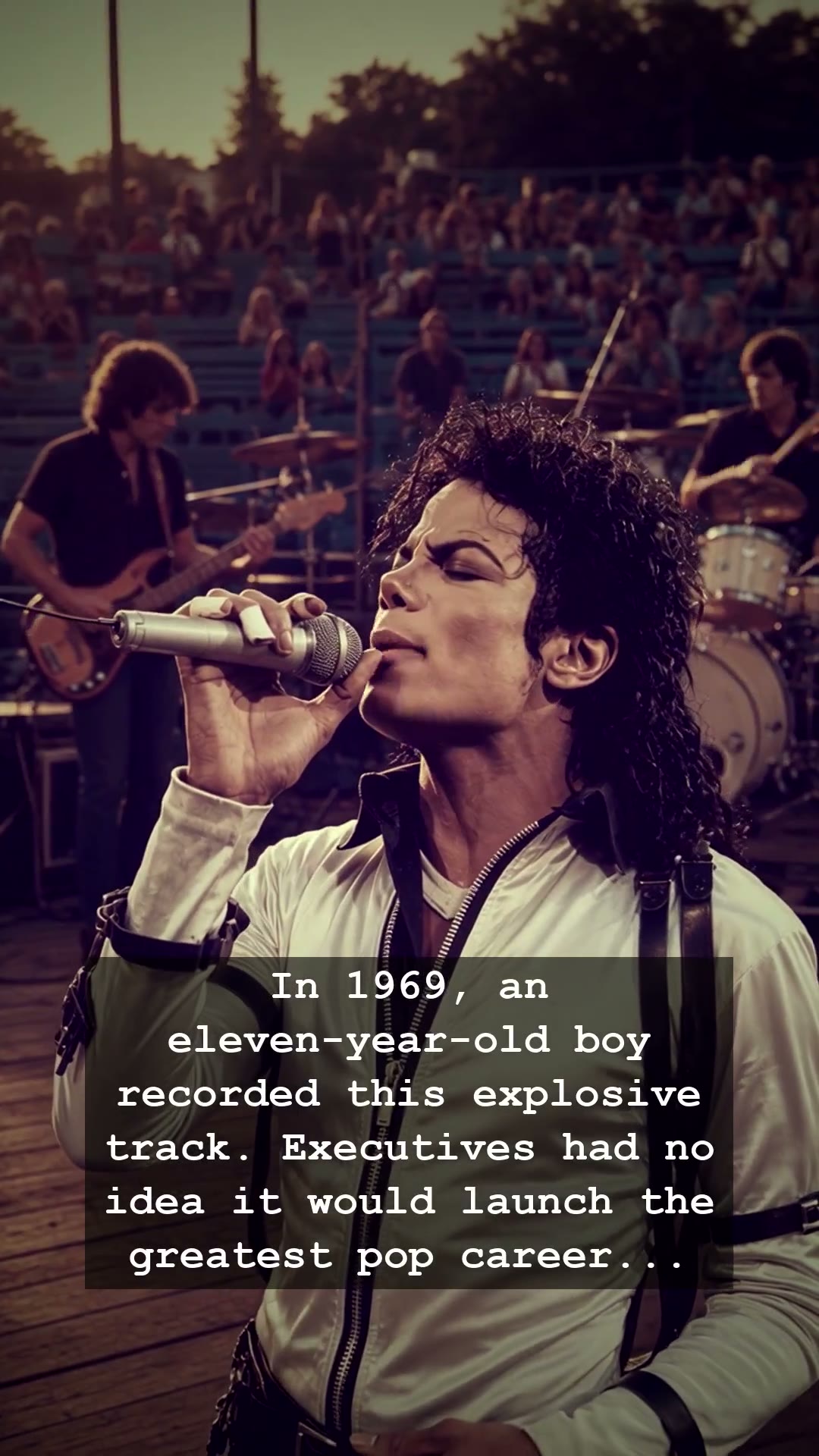
In the sweltering heat of a Detroit summer in 1969, an eleven-year-old boy stood before a massive microphone inside the legendary Motown studios. He was small for his age, clutching the lyrics to a song that would soon define an entire generation. While the world was reeling from the turbulence of the late sixties—with the echoes of Woodstock still ringing and the social fabric of America fraying at the edges—nobody inside that sterile recording booth suspected they were witnessing the birth of a cultural titan. That boy was Michael Jackson, and the innocence in his voice was about to ignite a fire that would never be extinguished.
The track, I Want You Back, was a bouncy, infectious anthem that defied the grittier sounds beginning to emerge from the radio. At the time, Motown was a machine, a factory of hits that demanded perfection from every artist. Yet, Michael Jackson brought something beyond technical precision; he brought a raw, soulful maturity that seemed to exist outside of his thin frame. As the rhythm section clicked into place, the boy transformed. The terrified child disappeared, replaced by a performer whose vocal inflections and rhythmic instincts sounded like a seasoned bluesman from the Delta. It was a paradox that would define his entire career: the man-child who belonged to the world, yet remained perpetually isolated by his own genius.
Looking back at that era through a lens of nostalgia, it is easy to forget how much pressure resided on such young shoulders. While teenagers across America were tethered to their bulky transistor radios or saving up for the latest vinyl, Michael Jackson was living a life dictated by studio schedules and demanding rehearsals. This was long before the era of the Walkman or the visual spectacle of MTV, when a star was made purely by the power of their voice carving through the static of a jukebox. The success of those early recordings did more than just launch a career; it transformed the landscape of American pop music forever.
The tragedy and the triumph of his journey began in that very moment. The music industry, with its dazzling lights and hidden traps, had claimed him as its most precious asset. As the decades rolled on—from the disco fever of Studio 54 to the arena-rock dominance of the eighties—the boy who sang of wanting love back evolved into the King of Pop. Yet, the ghost of that 1969 recording session always lingered. It was a time of relative simplicity before the tabloids, the surgeries, and the intense global scrutiny stripped away the boyish charm to reveal a life fractured by the sheer weight of superstardom.
Today, when we spin those early records, we are not just hearing a pop hit; we are hearing the echo of an American icon at the dawn of his reign. We are transported back to a time when music felt like a unified force, binding a fractured nation together through the melody of a young prodigy. Michael Jackson left behind a complex legacy, but in the crackle of those vintage grooves, we can still find the spark of the child who dared to dream of changing the world one note at a time. It remains a timeless reminder of how a single voice can echo across the decades, never truly fading into the silence.