
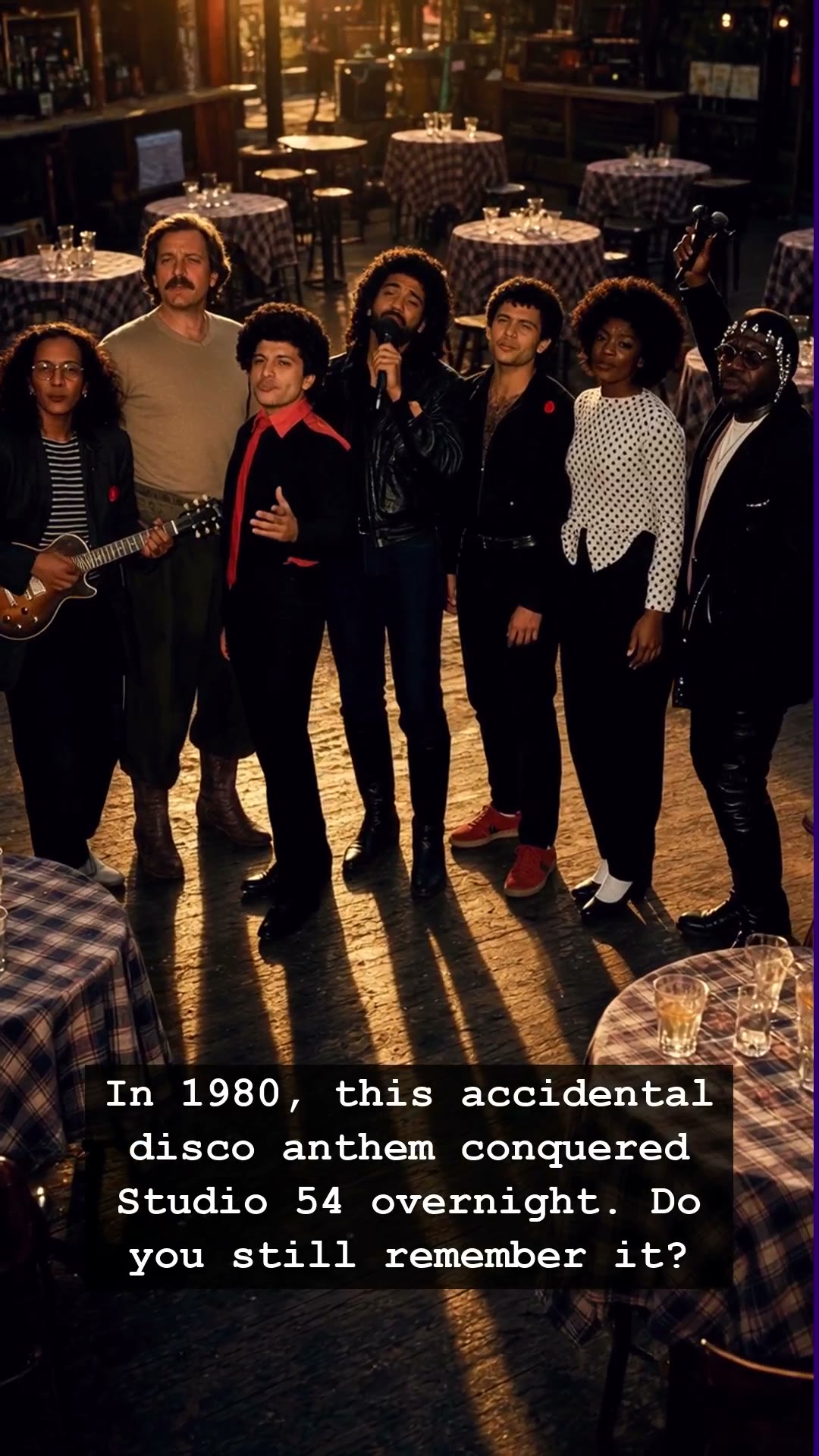
It was 1980, and the air inside the legendary Studio 54 was thick with the scent of decadence, hairspray, and the palpable tension of a decade reaching its neon-soaked peak. Suddenly, a rhythmic, infectious synth-bass riff tore through the room, igniting the dance floor like wildfire. The crowd didn’t just move; they surrendered. This was the moment Lipps Inc. transformed from a quiet studio project in Minneapolis into a global musical phenomenon with their accidental anthem, Funkytown.
Most people assume that such a perfectly crafted dance floor weapon must have been birthed in the heart of New York or Los Angeles, but the truth is far more humble. Steven Greenberg, the mastermind behind Lipps Inc., was living in Minneapolis, a city far removed from the glitzy pulse of the disco elite. He spent his hours in a modest studio, obsessed with the mechanical precision of synthesizers and the untapped potential of electronic rhythms. He wasn’t trying to capture the world; he was simply trying to translate his own restlessness into a sonic landscape. When he finally pressed record, he had no idea he was bottling the lightning that would define the final, desperate gasp of the disco era.
Lipps Inc. was never intended to be a conventional band in the spotlight. The project was the embodiment of the studio-first mentality that began to dominate the transition between the late seventies and the dawn of the MTV generation. With Cynthia Johnson’s powerhouse vocals layered over Greenberg’s crisp, futuristic synthesizers, the track possessed an uncanny ability to burrow into the listener’s subconscious. It was synthetic, cold, and yet undeniably human in its rhythm. It wasn’t long before the record traveled from that Minnesota basement to the turntables of the most exclusive clubs in the world, leaving a trail of exhausted dancers in its wake.
Yet, for all the global success, there was a bittersweet irony to the rise of Lipps Inc. While they were topping the charts and becoming a permanent fixture in the soundtrack of 1980, the disco movement itself was starting to face a vicious cultural backlash. The very sounds that filled Studio 54 were being labeled as shallow by critics and rock purists alike. Despite the noise, Funkytown became a resilient monument to a specific moment in time—a bridge between the analog soul of the seventies and the rigid, programmed perfection of the synth-pop eighties.
Today, the legacy of Lipps Inc. remains a fascinating study of creative unpredictability. It serves as a reminder that the greatest hits in history often don’t come from massive budgets or carefully planned marketing schemes, but from one person’s singular vision and a dash of cosmic luck. Every time those first electronic notes start to chime, we are transported back to a world of glitter balls and the promise of a night that would never end. It is a hauntingly catchy piece of history that refuses to fade away, continuing to force us to get up and move, no matter how much time has passed.