
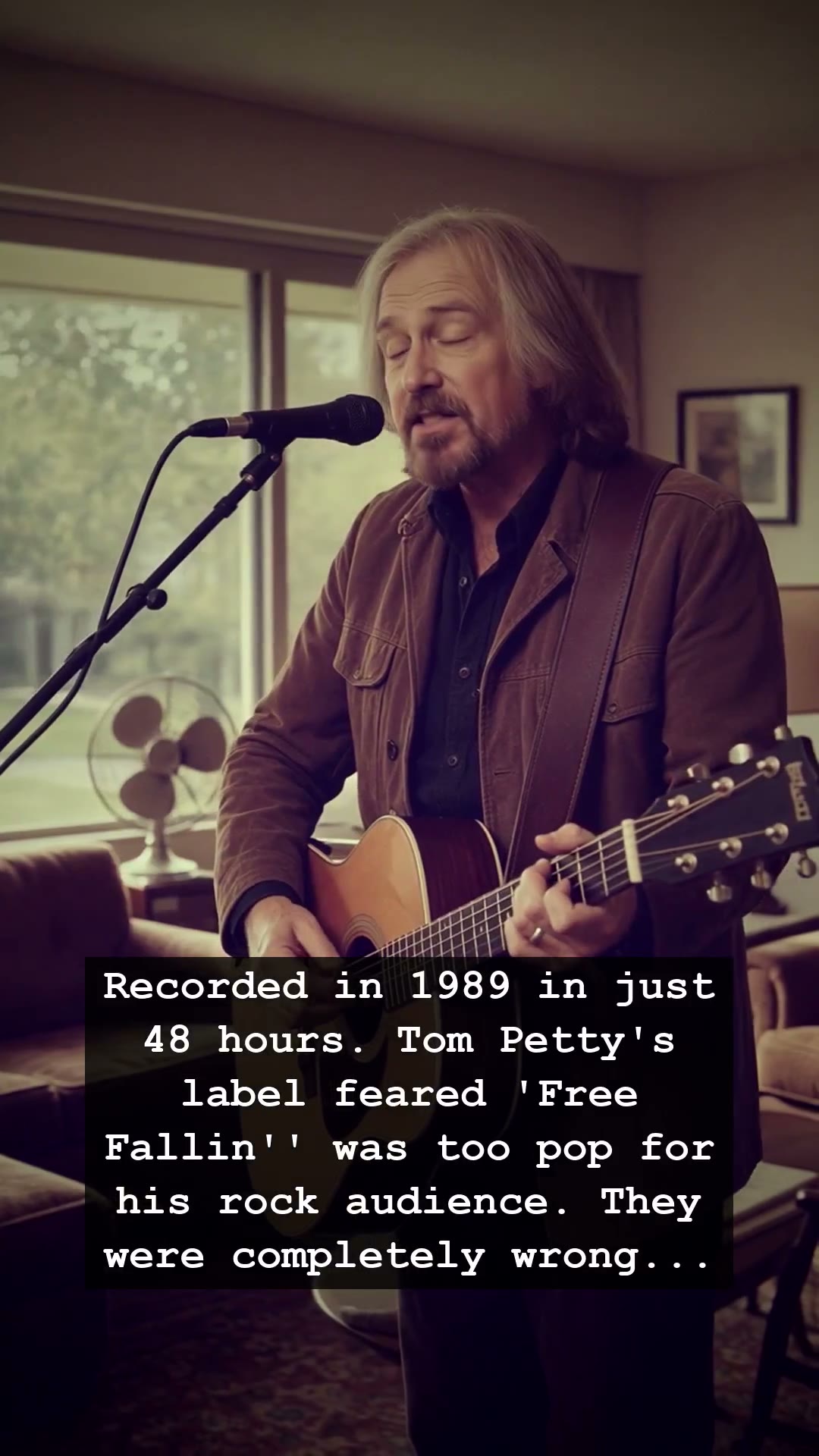
In the sweltering heat of a late-eighties Los Angeles studio, Tom Petty was essentially playing a game of musical chicken with his own label. By 1989, the rock and roll landscape was shifting beneath his feet. The era of the vinyl-crushing arena anthem was fading, and the industry was desperate to repackage classic icons for a changing, pop-oriented MTV generation. Petty, however, was a purist at heart. When he walked into the studio to record what would become his greatest commercial triumph, nobody—not his producers, not his bandmates, and certainly not his record executives—expected the outcome to be anything more than a fleeting experiment. They were wrong.
It took only forty-eight hours to craft the song that would define the rest of his career. As the legend goes, Tom Petty and his collaborator Jeff Lynne were essentially messing around with melodies, chasing a vibe rather than a chart-topping hit. When the label executives heard the early cuts of Free Fallin, they were visibly panicked. They were convinced that the track was far too soft, too melodic, and dangerously ‘pop’ for a man who had built his reputation on gritty, blue-collar rock and roll. They feared the transition would alienate his core audience, those loyal fans who had been with him since the mid-seventies, and ultimately destroy his credibility.
But the magic of the late eighties was that the boundaries between genres were blurring in unexpected ways. The song was stripped-back, relying on a hypnotic, jangling guitar riff and a vocal performance from Tom Petty that felt both world-weary and liberated. It tapped into a uniquely American sense of longing—a feeling of driving down Ventura Boulevard with the windows down, watching the sun dip behind the palm trees. It wasn’t just a song; it was a postcard from the California dream, delivered with the kind of sincerity that only a seasoned songwriter could provide.
Looking back, the success of the track feels almost like an act of rebellion. It became the highest-charting hit of his career, soaring to the top of the charts and embedding itself into the collective consciousness of a generation. The very thing the suits were afraid of—its accessibility—was precisely what made it immortal. It resonated not because it chased trends, but because it felt honest. For those who grew up listening to him on the radio or spinning his records at home, the success of the single proved that Tom Petty didn’t need to change who he was to stay relevant.
Even today, the song carries the same weight of nostalgia. It reminds us of an era when rock legends could still surprise us, when a lightning-in-a-bottle studio session could produce a masterpiece in just two days. It stands as a testament to his genius, a reminder that sometimes the best art isn’t the result of meticulous, over-thought planning, but the byproduct of a musician following his intuition. While he is no longer with us, that familiar, soaring chorus still echoes, reminding us all of what it feels like to fly.