
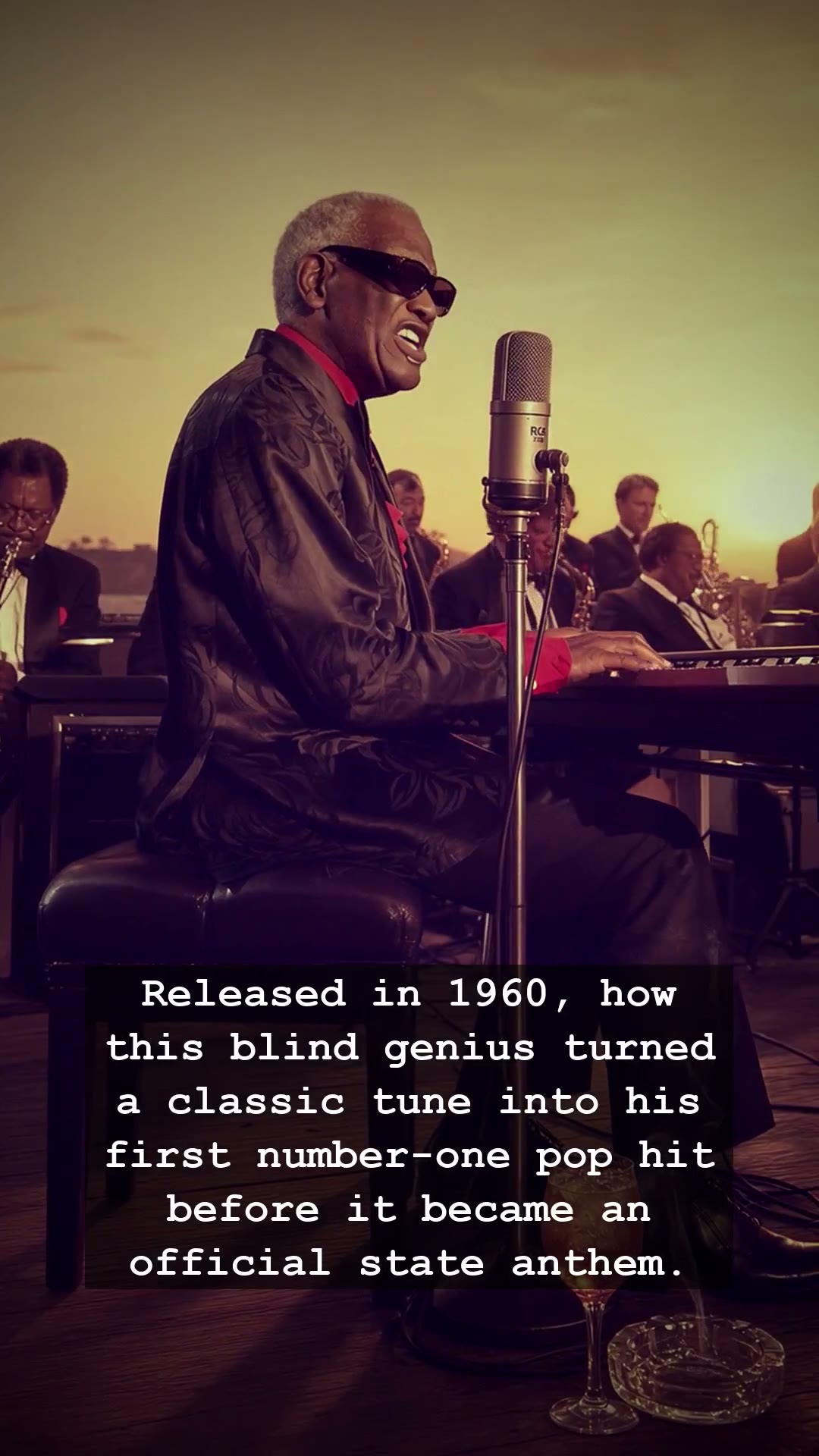
Picture a smoky, dimly lit lounge in 1960. The air is thick with the scent of tobacco and the sound of a lone piano navigating through the shadows. Amidst this haze sits a man who didn’t just play music; he felt the very pulse of the American soul. Ray Charles, a blind virtuoso who had already conquered the blues and R&B charts, was about to take a risk that would define his career and change the landscape of pop music forever. He wasn’t just recording a song; he was breathing life into a classic, transforming a forgotten melody into an immortal anthem that would eventually become the official song of the state of Georgia.
Ray Charles was never one to follow the rules of the mainstream industry. While the era was dominated by the shiny, manufactured pop hits of the day, Ray Charles possessed an uncanny ability to find the raw, unvarnished truth in every composition he touched. When he decided to record Georgia On My Mind, he wasn’t looking for a chart-topper; he was looking for a way to express a deep, aching longing. His version was slow, orchestral, and dripping with a vulnerability that had rarely been heard on the radio stations of the early sixties. It was the sound of a man baring his soul, and the world was utterly unprepared for the emotional force of his delivery.
Before the digital revolution and the saturation of the internet, people discovered music through the warm glow of a Jukebox or the crackling fidelity of a transistor radio. When Ray Charles released this track in 1960, it became an instant bridge between the segregated musical landscapes of the time. It wasn’t just a hit; it was a phenomenon. By hitting the number-one spot on the Billboard Hot 100, Ray Charles proved that a soulful, jazz-inflected ballad could shatter the barriers of genre. It was a moment of pure musical rebellion, disguised as a gentle, heartfelt tribute to a place he called home.
What makes the story of this recording so poignant is the contrast between the artist’s inner darkness and the vivid, colorful imagery he painted through his piano keys. Ray Charles navigated a world he could not see, yet he possessed a vision for melody that was crystal clear. The tragic beauty of the track resonated with millions who, in the post-war era, were searching for a sense of belonging. The song became a sanctuary for the weary, a staple that would play in living rooms and town squares for decades to come, eventually earning its place as Georgia’s official state anthem in 1979.
Even today, if you close your eyes and listen to those opening chords, the decades melt away. You are transported back to a time when music felt tactile, when a single voice could command the attention of a nation. Ray Charles left an indelible mark on history, proving that genius isn’t defined by sight, but by the depth of one’s spirit. As the final notes fade out, one cannot help but appreciate the legacy of a man who took a simple melody and gave it a heartbeat that continues to echo through the halls of musical eternity.