
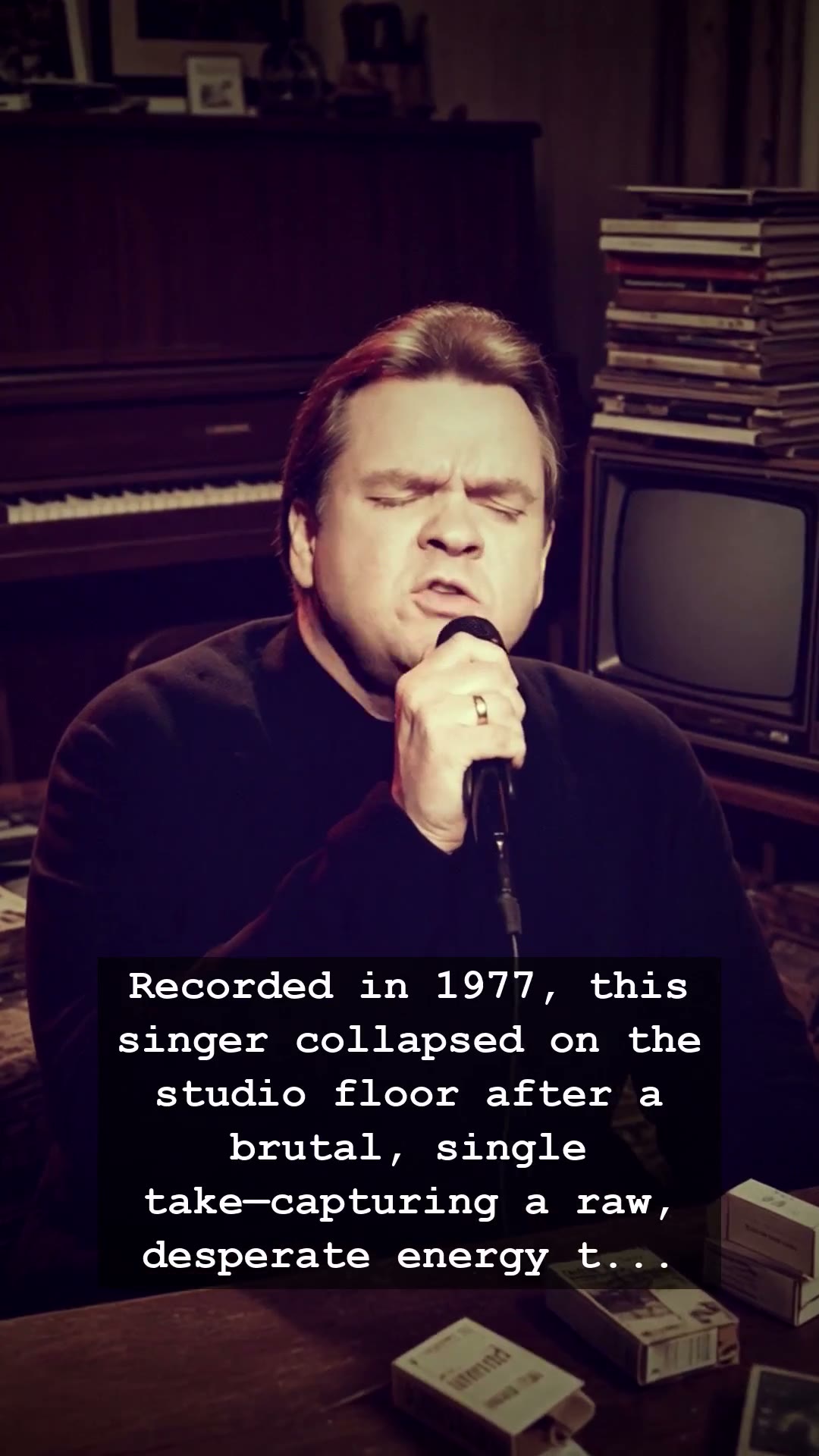
In 1977, the air inside the recording studio was thick with the scent of stale coffee and pure, unadulterated tension. Meat Loaf, a man whose physical presence was as large as his operatic voice, stood before the microphone for the title track of Bat Out of Hell. He wasn’t just singing; he was performing an exorcism of his own soul. After a grueling, single take that pushed his lungs and heart to their absolute breaking point, Meat Loaf didn’t just walk away from the mic. He collapsed, falling flat onto the cold studio floor, completely drained of life. His producer, Todd Rundgren, stood in the control room, stunned into silence. He knew they had captured something visceral, something that went beyond mere rock and roll. It was a raw, desperate energy that would go on to define one of the most successful albums in music history.
To understand the magnitude of this moment, you have to transport yourself back to the late seventies. This was an era dominated by the glitz of disco and the polished production of FM radio. Yet, Meat Loaf and composer Jim Steinman were cooking up something entirely different. They were crafting a theatrical rock masterpiece that felt like a Broadway show set in a hellish landscape of high-speed motorcycles and teenage heartbreak. While the rest of the world was dancing under the lights of Studio 54, Meat Loaf was channeling the angst of the American suburban dream. The music was heavy, orchestral, and unabashedly dramatic, mirroring the intensity of a man who gave every single ounce of his being to the recording process.
The collapse wasn’t just a physical failure; it was a testament to the uncompromising nature of the era. Recording sessions back then were physical battles. There were no digital shortcuts or pitch-correction tools to hide behind. If you didn’t have the fire in your belly, it showed on the tape. Meat Loaf brought a legendary intensity that transformed the recording booth into a pressure cooker. He inhabited the songs, living through the tragedy and the romance of Steinman’s lyrics until he literally had nothing left to give. That desperate, gasping breath heard at the end of the tracks wasn’t acting—it was the sound of a man pushing himself past the brink of exhaustion.
Even decades later, the legacy of Meat Loaf remains etched into the fabric of rock history. Whenever we hear that iconic piano intro or the roaring guitars, we are reminded of a time when rock stars were larger-than-life figures who walked the line between genius and madness. The album became a permanent fixture in collections across the globe, often played until the vinyl grooves wore thin. It resonates today because it feels authentic, untamed, and deeply human in a world that often prizes perfection over passion.
Looking back at that 1977 studio floor moment, we see the grit that defined a generation. It serves as a reminder that behind the greatest hits we still spin on our turntables, there were stories of blood, sweat, and profound sacrifice. Meat Loaf proved that to create something truly immortal, you have to be willing to fall apart in the process. As the last notes fade, we are left to wonder if we will ever see that kind of reckless, beautiful dedication in music again.