
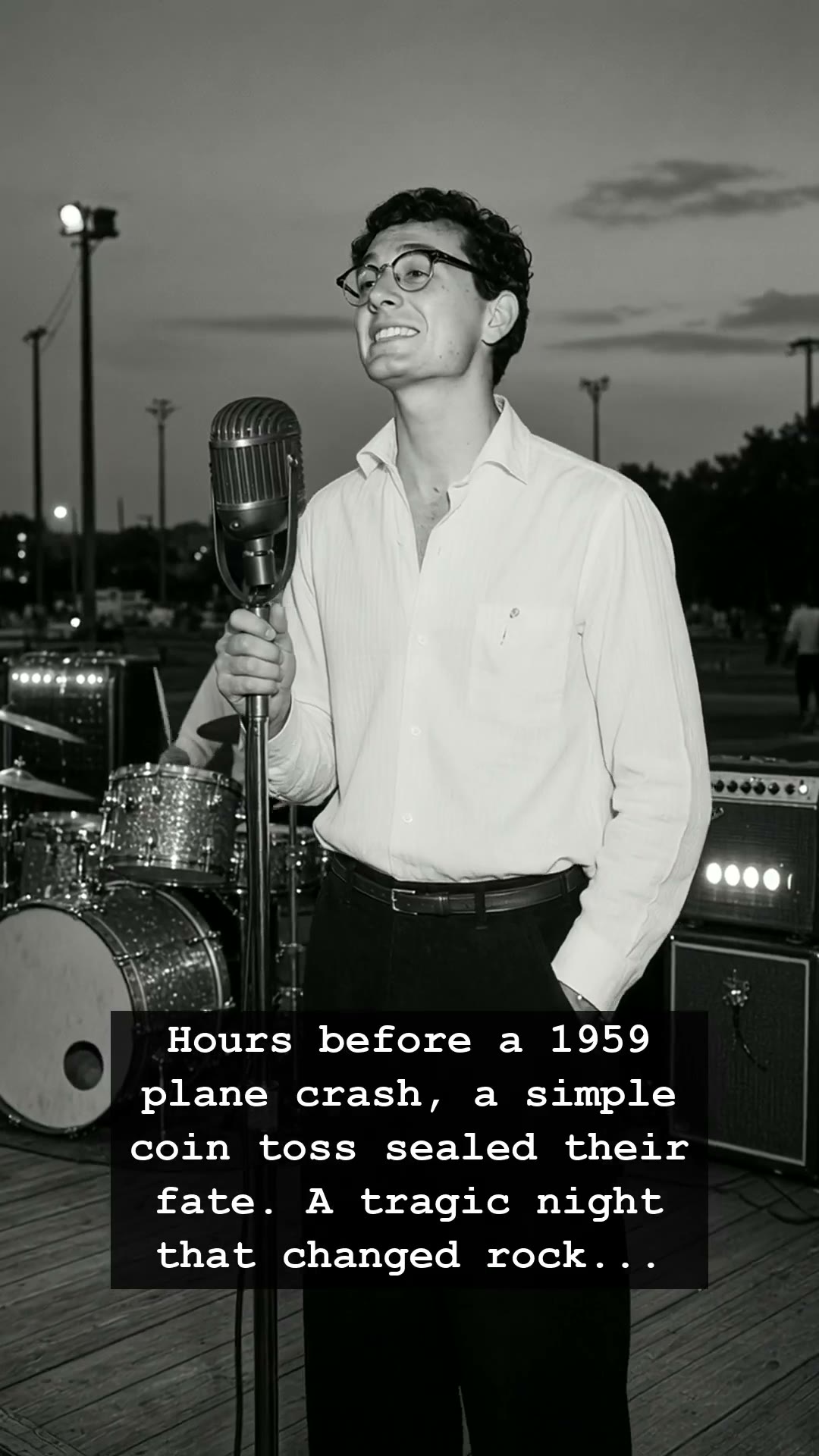
The year was 1959, and the air was thick with the scent of stale cigarette smoke and the restless energy of the Winter Dance Party tour. For young fans huddled around their Jukeboxes, Buddy Holly was not just a musician; he was the bespectacled architect of a new American sound. Yet, on a biting February night in Clear Lake, Iowa, the music did not just stop—it died in a tangle of twisted metal and freezing snow. We often romanticize the golden age of rock and roll, but beneath the pomade and the upbeat melodies lay a fragility that would be shattered in a single, impulsive moment of chance.
As the tour bus struggled through the relentless Midwestern winter, the heating system failed, leaving the performers shivering in sub-zero temperatures. Exhausted and desperate for a warm bed, Buddy Holly made a fateful decision to charter a small plane to their next stop. History remembers the tragedy, but few dwell on the chilling banality of how the seats were filled. It came down to a simple coin toss. The toss pitted Waylon Jennings against J.P. Richardson, the Big Bopper, and decided who would take to the skies and who would remain grounded in the relative safety of the bus. In that moment of casual competition, fate was sealed with the flip of a silver dollar.
Buddy Holly was only 22 years old, but his influence had already rippled across the nation. He brought a sense of cerebral sophistication to rock and roll that his peers lacked. With his Fender Stratocaster and those signature thick-rimmed glasses, Buddy Holly proved that you did not have to be a leather-clad rebel to change the world. He was the bridge between the raw energy of the early 50s and the sophisticated pop structures that would define the decades to come. When the Beechcraft Bonanza plummeted into a snow-covered field, it took more than three young men; it took the innocence of an era that believed the music would never end.
Years later, Don McLean would immortalize the event as the day the music died, a phrase that resonates with every generation that followed. The vacuum left by Buddy Holly was palpable. The industry was suddenly terrified of its own volatility, and the carefree, spontaneous spirit of the rock tour began to shift under the weight of grief and newfound professionalism. That cold February night remains a dark footnote in the history of music, a grim reminder of how thin the line is between legendary stardom and a sudden, quiet exit into the ether of memory.
Today, we look back at the life of Buddy Holly not only through his hit records but through the lens of what might have been. Would he have evolved into the introspective singer-songwriter of the 70s? Would he have stood alongside the British Invasion icons he so heavily inspired? We will never know. His legacy endures in the hum of every guitar and the rhythmic snap of every classic rock track, serving as a poignant, haunting echo of a voice that was silenced far too soon.